Thanks for subscribing.
Your gift is on the way.



Mobile and web applications are indispensable tools for businesses, from customer-facing platforms like booking or delivery apps to internal solutions that streamline operations. Consider Uber, which built its service model entirely around a mobile app connecting riders and drivers in real time, or Slack, which transformed workplace communication into a faster, more organized process.
These examples show how apps can drive both customer engagement and operational efficiency. They enable real-time interaction, deliver personalized experiences, integrate with third-party services, and automate workflows.
In this article, we’ll explore the key factors to consider when choosing app development vendors and the most suitable technology. With the right consulting approach, businesses can make informed decisions that accelerate their app’s success.
Understanding their impact is just the starting point. The real question is whether your business needs a custom solution.
Building an app with this level of impact involves critical decisions such as selecting the right technology stack, planning for scalability, and ensuring security. These choices can make or break a project, which is why app development consulting becomes an essential resource.
App development consulting covers a wide range of services, including requirement analysis, UX design guidance, project management, security and compliance advisory, and post-launch scaling strategies, helping align every phase of the app lifecycle with business goals to deliver maximum value.
One area where this support is especially important is mobile app development. The mobile segment is experiencing rapid growth, which often demands specialized guidance on vendor capabilities and technology selection to address its unique challenges.
Today, there are 8.93 million apps worldwide, and the global mobile app market is projected to reach $781.70 billion by 2029, with a steady Compound Annual Growth Rate (CAGR) of 7.48% from 2022 to 2029.
But before consulting or vendors can help, businesses need to get clear internally about their goals and requirements.
Do you have software development needs?
Before moving on to vendor selection or consultation, clearly define what your app needs to achieve. Start with the basics: will it be a mobile app, a web app, or both? Then, identify the must-have features.
For example:
List these requirements in order of priority, focusing on the functionality that directly supports your core business goals.
Finally, consider technical demands. If your app will process a lot of real-time data or attract high traffic, you will need technology choices that prioritize performance and scalability. With your app goals clarified, the next challenge is finding the right partner who can turn that vision into reality.

Outsourcing app development has become a strategic choice for many businesses looking to access specialized expertise, reduce time-to-market, and optimize development costs. However, this approach requires careful consideration to select a reliable development vendor that aligns with your project goals and quality standards. Making the best choice involves thoroughly evaluating potential vendors across several key areas. Here’s a breakdown of what to consider:
When picking a vendor, prioritize those who demonstrate a strong understanding of your business needs and have relevant industry experience. Even if you don’t yet have a fully defined solution, choosing a vendor with expertise in your sector can provide valuable insights and guidance throughout development. Review their portfolio to see if they have delivered projects that address challenges similar to yours or operate within your industry. Additionally, explore client testimonials, request case studies, or arrange consultations to assess how well they grasp your specific requirements and can tailor their approach accordingly. Vendors familiar with your market are better equipped to anticipate potential obstacles and deliver solutions aligned with your goals.
It might prove valuable to research online reviews and ask for client references to assess the vendor’s reliability and work quality. Reviews on platforms like Clutch, GoodFirms, or Trustpilot can provide valuable insights into their strengths and weaknesses, helping you make a more informed decision. Hearing directly from former clients will give you a clearer picture of what to expect in terms of project management, communication, and post-launch support.
The right vendor should be skilled in the latest technologies, with experience in the programming languages, frameworks, and tools best suited for your project. Assess their ability to handle technical complexities such as third-party API integrations, real-time data processing, or advanced security features. Ask about their development process, code quality standards, and how they handle scalability or performance under load. Reviewing technical case studies, requesting code samples, or conducting a technical interview with your in-house expert can provide valuable insight into their technical capabilities.
Effective communication is essential for accurately conveying and executing your vision. During the Request for Proposal (RFP) or Request for Information (RFI) stage, observe how vendors present their proposals. Look for clarity, attention to detail, and responsiveness to your outlined requirements. Vendors who provide structured, relevant input and proactively address potential challenges demonstrate a strong foundation for future collaboration. Early signs of clear and transparent communication help align expectations and build trust before the development work begins.
It’s not just about the vendor’s brand; it’s about the people executing the work.
The professionals assigned to your project should have the right combination of skills and experience, including developers, project managers, and designers. It’s important to have a well-rounded team that brings together different areas of expertise, such as frontend and backend development, UX/UI design, quality assurance, and project management. For more complex projects, roles like DevOps engineers, solution architects, or data specialists may also be essential. The success of your app depends on the combined expertise and collaboration of everyone involved in the project.
The development process doesn’t stop once the app is launched. Ongoing maintenance, bug fixes, and updates are necessary to keep everything running smoothly. App development consulting plays an important role here by helping businesses plan for long-term support early in the project. A good consultant will advise you on selecting a vendor that offers structured post-launch services and a clear roadmap for future updates. This foresight is critical in adapting the app to evolving market demands, technology changes, and user feedback.

Vendor choice is only part of the equation. The technologies they use will determine scalability, security, and long-term success. The table below outlines some of the most widely used and trusted technologies in app development across frontend, backend, databases, and cloud platforms, along with their main advantages and potential drawbacks to help you align your stack with your project’s goals.
| Category | Technology | Strengths | Weaknesses |
|---|---|---|---|
| Frontend | React.js | Fast, flexible, strong community, reusable components | SEO limitations for SPAs need extra tooling |
| Vue.js | Lightweight, easy to learn and integrate, clean syntax | Smaller ecosystem, limited enterprise adoption | |
| Flutter | Cross-platform, high-performance, consistent UI on iOS/Android | Larger app size, smaller talent pool | |
| Backend | Node.js | Fast, scalable, real-time capabilities | Not ideal for CPU-heavy tasks |
| Django (Python) | Secure, scalable, rich ecosystem, quick development | Heavier for small apps | |
| Ruby on Rails | Rapid development, suitable for MVPs | Slower performance at scale, shrinking community | |
| Databases | PostgreSQL | Strong with complex queries and data integrity | Steeper learning curve |
| MongoDB | Schema-less, scalable, great for unstructured data | Less effective for relational data or complex transactions | |
| Cloud | AWS / GCP / Azure | Scalable, secure, extensive tools and services | Requires expertise, potentially complex pricing |
Now that we’ve discussed the technologies commonly used in app development, let’s explore how to make the right choice among them. App development consulting plays a crucial role in this process by carefully evaluating your project’s requirements, long-term goals, and constraints. Through this comprehensive assessment, app development consultants help identify the most suitable programming languages, frameworks, databases, and infrastructure. Their guidance aligns the chosen technology with your business objectives while optimizing the user experience. Here are the key factors to consider:
As your app grows and attracts more users, it should be able to handle the increased load without performance degradation. Choosing technologies known for their scalability helps avoid major overhauls later on.
For example, cloud platforms like Amazon Web Services (AWS) or Google Cloud are highly scalable, allowing your app to dynamically adjust resources as traffic increases. Flexibility is also essential – a technology that easily adapts to new features or changes allows the app to grow alongside your business needs. React (for frontend development) or Node.js (for backend) are examples of flexible technologies that can quickly accommodate new features, integrations, or changes without disrupting existing functionality.
Some technologies can speed up development time, enabling faster time-to-market. However, speed shouldn’t come at the expense of long-term maintainability. It’s a good practice to select a technology that allows for fast development and ease of future maintenance. Technologies that are widely supported and documented will make updates and bug fixes simpler as your app grows.
Security is a crucial aspect of any app, particularly those that handle sensitive data. Technologies like HTTPS for secure communication, OAuth for secure authentication, and AES encryption for data protection are essential to safeguarding your app and user data.
Many apps rely on third-party tools and APIs, such as payment processors, analytics platforms, and social media services. The technology stack you choose should be compatible with these services. A technology that integrates easily with third-party tools will save time and effort during development while reducing potential compatibility issues.
Do you have software development needs?
When selecting a development vendor, it’s important to consider how various factors influence the overall cost. Rates can vary depending on the complexity of the project and the technology stack.
Location plays a significant role in determining costs, with North American and Western European rates typically being higher. At the same time, Eastern Europe, Latin America, and Southeast Asia offer more cost-effective options.
Additionally, the complexity of the technology can impact pricing. Specialized technologies like Blockchain or enterprise solutions (such as SAP) often command higher rates due to the advanced expertise required to develop and maintain them. The table below summarizes average rates based on these factors to help guide your decision-making process.
| Technology | Price per hour in higher-cost regions (e.g., US, Western Europe) | Price per hour in lower-cost regions (e.g., Latin America, Eastern Europe) | Considerations |
|---|---|---|---|
| Mobile app development (iOS/Android) | $50-$250 | $25-$75 | Requires specialized skills. Prices are typically higher for experienced developers, particularly for native apps. |
| Web app development (React, Angular, Vue) | $40-$150 | $25-$75 | Costs vary based on complexity. Popular for building interactive user interfaces with varying feature sets and integrations. |
| Backend development (Node.js, Python, Ruby on Rails) | $60-$150 | $35-$75 | Involves data handling, server logic, and integrations. Rates tend to increase for more advanced or complex systems. |
| Enterprise app development (SAP, Oracle) | $100-$250 | $50-$150 | Enterprise solutions are typically more expensive due to their complexity and the need for specialized skills. |
| Blockchain development | $100-$250 | $50-$150 | Due to its emerging nature, blockchain development demands specialized expertise, driving up costs. |
The data in this table is based on general industry trends and estimates. For more accurate and current information that fits your specific project, app development consulting can offer valuable insights, including vendor pricing benchmarks and market salary data from sources like Glassdoor and Levels.fyi.
App development consultants increasingly incorporate AI-powered tools into their workflows, helping clients achieve faster delivery and better design outcomes. These tools enhance efficiency, enabling developers and designers to create high-quality applications faster.
For instance, AI-assisted programming with tools like Claude is preferred for starting new projects due to its ability to generate code and provide contextual suggestions. For larger or existing projects, developers often turn to Gemini 2.5 Pro for its robust capabilities in handling complex codebases. In design, tools like Relume, an AI website builder, or even Claude, accelerate the creation of visually appealing prototypes. For landing pages, Lovable stands out as a go-to solution for crafting engaging, conversion-focused designs.
In 2026, building a successful app requires a focus on user-centric design, effective promotion, and strategic planning. Here are key strategies to ensure your app thrives:
Rather than addressing multiple problems, apps should focus on 1 or 2 core user needs and solve them exceptionally well with a simple, intuitive interface. This approach enhances user satisfaction and retention by delivering a seamless experience.
A well-designed app enhances users’ perception of quality, while thorough testing to minimize bugs reinforces trust. Visually appealing and nearly bug-free apps significantly improve user experience and brand reputation.
For mobile apps, listening to user feedback and implementing changes is critical. Involving User Researchers to engage with the target audience ensures the app evolves to meet user expectations, fostering loyalty and reducing churn.
App Store Optimization (ASO) is vital for driving inbound traffic. Researching targeted keywords, crafting detailed descriptions, and using high-quality marketing images boost app visibility. App store ads further amplify reach and guarantee your app stands out in crowded marketplaces.
While SEO remains a growth strategy, its popularity is declining in 2026 as users increasingly turn to large language models (LLMs) like ChatGPT for answers instead of relying on Google. Still, for web-based or hybrid apps, organic search can provide some traction and long-term value.
Mature apps benefit from ranking on platforms like Capterra, G2, SoftwareSuggest, and Trustpilot. Positive reviews on these platforms enhance credibility and attract users, which is especially valuable for established apps.
For new, early-stage apps, launching a prototype on Product Hunt can attract an initial user base and provide valuable feedback, driving early traction.
DevsData LLC recommends starting app development with business consulting sessions to align with clients on the app’s purpose, create low-fidelity mockups, determine the screen count, and outline user flows. This planning phase optimizes resource allocation and sets a clear project direction.
Building an app is relatively straightforward; the bigger challenge is promotion. DevsData LLC focuses on finding product-market fit, acquiring paying users, and minimizing churn through strategic marketing and user engagement efforts.
DevsData LLC has developed numerous apps, including Orange Charger, which serves as a case study highlighting their ability to deliver tailored solutions. Their extensive portfolio demonstrates expertise in building successful applications across industries. In cases where clients are dissatisfied with their previous development agency, DevsData LLC has significant experience taking over app development projects. They work closely with clients, maintaining transparent progress updates, discussing decisions collaboratively, and proactively proposing business-driven solutions.
Their team, led by senior project managers – many holding MBAs or being native English speakers – provides multiple options to simplify decision-making, reducing the need for clients to micromanage. The core development team is primarily based in Poland and throughout the European Union. They do not have staff in Ukraine, but through their IT recruitment service, they have expertise in sourcing contractors from that region when clients require it.
If the initial phase of the app proves successful, transitioning to an in-house team by recruiting full-time developers is a natural next step. DevsData LLC supports this process through its recruitment services, helping clients build sustainable teams for long-term growth.
While DevsData LLC offers highly personalized, flexible, and transparent development services, some businesses may explore other agencies depending on their needs.
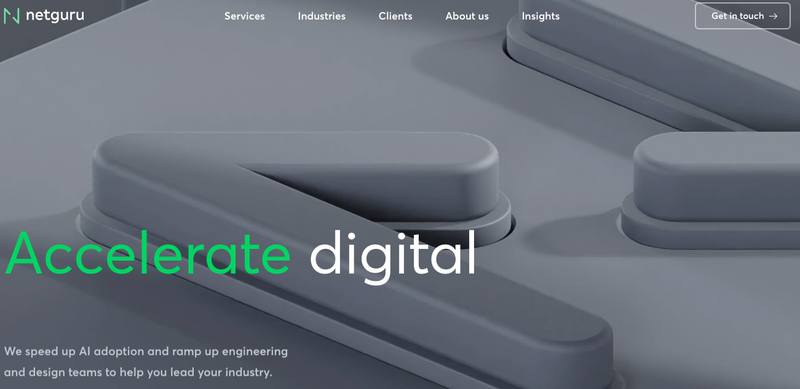
One well-known alternative is Netguru, a Poland-based agency recognized for its polished design and engineering quality. However, it’s worth noting that Netguru typically focuses on large-scale, enterprise-level projects, which may not be ideal for startups or smaller teams looking for close collaboration and cost efficiency.
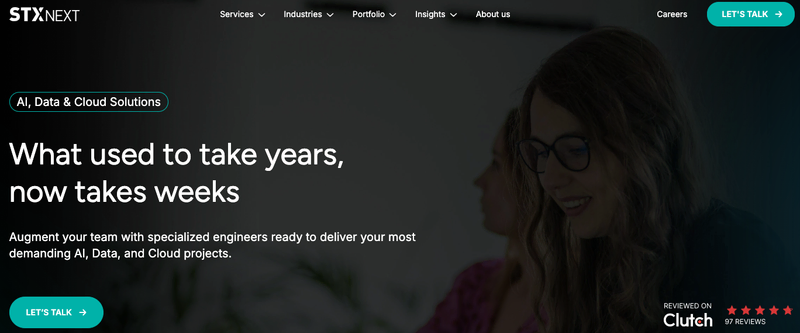
Another option is STX Next, a European software agency that specializes in Python development and supports both startups and enterprises. They have a solid track record but often cater to more technically complex or backend-heavy projects.
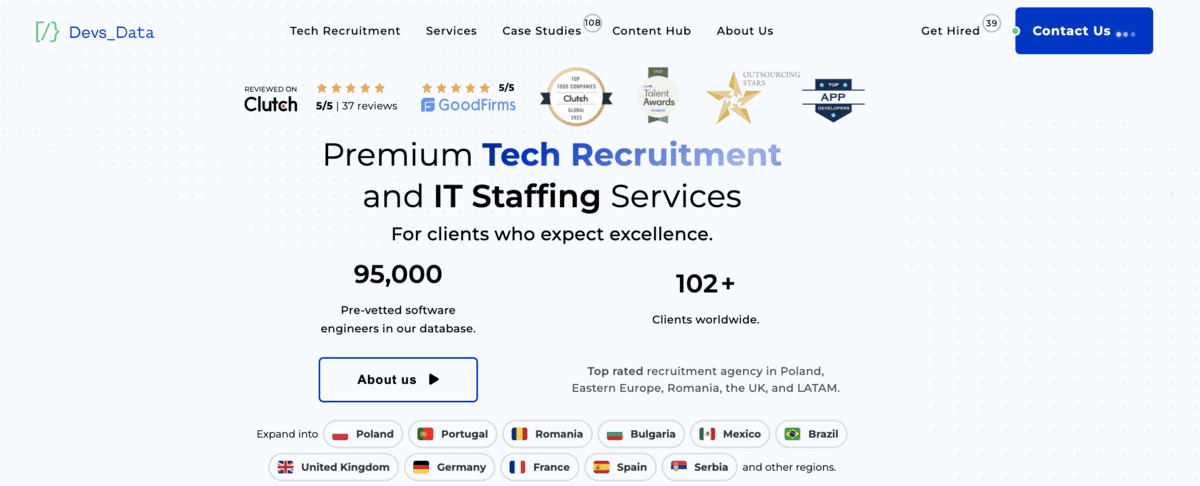
Website: www.devsdata.com
Company size: ~60 employees
Founding year: 2016
Headquarters: Warsaw, Poland, and Brooklyn, New York
DevsData LLC is a leading software development agency with over 8 years of experience specializing in scalable, high-quality app development solutions. Beyond development, DevsData LLC offers comprehensive app development consulting that helps businesses select the optimal technology stack and vendor. Their expertise covers every stage of the app lifecycle, from strategic planning and design to technical optimization, offering tailored solutions that align with business goals and enhance user experience. With a strong focus on vendor reliability, DevsData LLC embodies the qualities necessary for successful technology partnerships.
Their global team, composed of Google-level professionals from the US and Europe, provides top-tier services across various sectors, ensuring that every project meets performance, functionality, and scalability requirements. DevsData LLC has completed over 100 projects for more than 80 clients, including startups in the US and Israel, as well as major global corporations. Their portfolio includes names such as Cubus, Skycatch, Varner, and Novartis.
DevsData LLC stands out for its ability to guide clients in choosing the right technology for their projects. In one notable project, when developing a hiking app for outdoor enthusiasts in Norway, DevsData LLC carefully assessed the app’s needs and selected technologies that ensured optimal performance, scalability, and a positive user experience.
The app features a database of attractions, rentals, hotels, and restaurants, along with navigation tools, user-targeted advertisements, and community features to enhance trip planning. It also integrates a weather warning system for real-time updates across regions. This collaboration resulted in a functional and engaging app that significantly enhanced outdoor experiences in Norway.
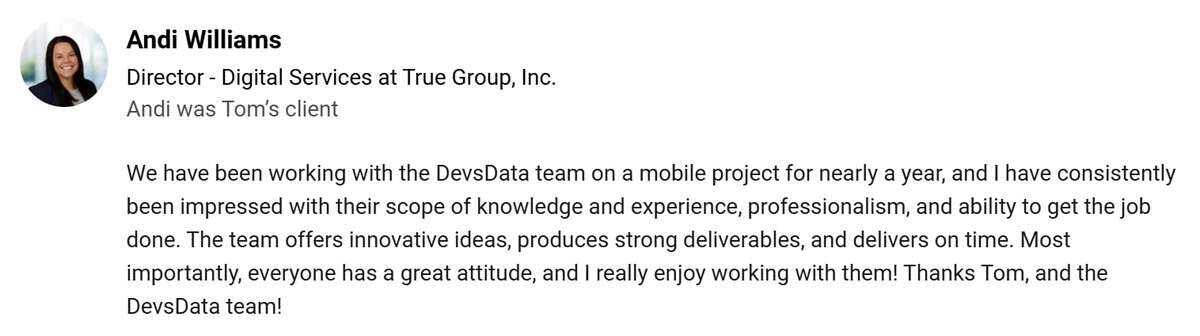
In addition, DevsData LLC excels in IT recruitment, utilizing a rigorous hiring process consisting of in-depth 90-minute technical interviews and problem-solving tasks to select top app developers. With a government-approved recruitment license and access to a network of 95000 developers, they are able to provide customized solutions that meet the unique demands of each client.
Do you have software development needs?
Contact DevsData LLC at general@devsdata.com or visit www.devsdata.com to explore how they can help your business thrive.
Developing a successful mobile or web application involves navigating a complex landscape of decisions, including vendor selection, technology choices, and long-term planning. App development consulting plays a vital role by providing expert guidance that aligns technical solutions with your unique business objectives and user needs. By thoroughly assessing vendor expertise, communication practices, technical capabilities, and commitment to post-launch support, consulting helps reduce risks and sets the stage for a smooth development process.
Partnering with a company like DevsData LLC can simplify this journey. With over 8 years of experience, DevsData LLC delivers high-quality, scalable applications tailored to user expectations and business goals. Beyond app development, they offer IT recruitment, EoR (Employer of Record), and BPO (Business Process Outsourcing) services. Their EoR service simplifies global hiring, payroll, taxes, and compliance, while BPO streamlines non-core functions like customer support and data entry. With DevsData LLC’s comprehensive solutions, businesses can optimize resources, scale efficiently, and focus on growth.
Any questions or comments? Let me know on
Twitter/X.
Discover how IT recruitment and staffing can address your talent needs. Explore trending regions
like Poland, Portugal, Mexico, Brazil and more.
 Frequently asked questions (FAQ)
DevsData – your premium technology partner
DevsData is a boutique tech recruitment and software agency. Develop your software project with veteran engineers or scale up an in-house tech team of developers with relevant industry experience.
Free consultation with a software expert
🎧 Schedule a meeting
FEATURED IN


DevsData LLC is truly exceptional – their backend developers are some of the best I’ve ever worked with.”

Nicholas Johnson
Mentor at YC, serial entrepreneur


 Build your project with our veteran developers.
Explore the benefits of technology recruitment and tailor-made software.
Learn how to source skilled and experienced software developers.
Build your project with our veteran developers.
Explore the benefits of technology recruitment and tailor-made software.
Learn how to source skilled and experienced software developers.

Rebecca Botvin

Commercial Director

Tom Potanski
Manager




Categories: Big data, data analytics | Software and technology | IT recruitment blog | IT in Poland | Content hub (blog)














careers@devsdata.com









general@devsdata.com

"I interviewed about a dozen different firms. DevsData LLC is truly exceptional – their backend developers are some of the best I've ever worked with. I've worked with a lot of very well-qualified developers, locally in San Francisco, and remotely, so that is not a compliment I offer lightly. I appreciate their depth of knowledge and their ability to get things done quickly."

Nicholas Johnson
CEO of Orange Charger LLC,
Ex-Tesla Engineer,
Mentor at YCombinator
"DevsData reached out to us, as we've been looking to grow our engineering team in Europe and Poland. Communicating efficiently and professionally, DevsData made a strong impression with their understanding of the recruitment challenges we were facing. They designed a tailored recruitment process for our needs. I was impressed with the technical depth of their approach."

Karim Butt
Co-Founder & CTO at GlossGenius, Inc.
"Out of all the vendors we work with, DevsData clearly stands out. The quality of developers they deliver is beyond what we've received from any other vendor, and they've been able to send profile recommendations very quickly. I'm happy to be their reference for other companies from Israel and talk about their recruitment abilities and what they delivered for us."

Ran Eyal
Senior Manager at
ZIM Integrated
Shipping Services Ltd.
"DevsData demonstrated a strong degree of proactivity, taking time to thoroughly understand the problem and business perspective, and continuously suggesting performance and usability enhancements. Their app exceeded my expectations. I've worked with DevsData on numerous projects over the last 3 years and I'm very happy. Being both responsive and honest in communication."

Jonas Lee
Partner & Executive VP of Verus,
Financial LLC, Investor,
& Serial Entrepreneur
Acknowledgments