Thanks for subscribing.
Your gift is on the way.



With the increasing demand for cost-efficient software development, many businesses are turning to offshore teams to harness the expertise of Java developers at a reduced cost. The IT outsourcing market size is estimated at USD 618.13 billion in 2025 and is forecast to reach USD 732.38 billion by 2030, reflecting a 3.45% compound annual growth rate (CAGR) during the period. Software development accounts for 72% of this market. In 2025, Java is still among the top 5 most widely used programming languages. Java’s enduring popularity means the talent pool is vast, but finding the right experts is a challenge. Offshoring provides a strategic solution to this.
For offshoring to be successful, companies must carefully consider the strategic reasons behind their decision to offshore, such as the need for speed, expertise, or cost savings. At the same time, understanding the key benefits – from scalability to access to cutting-edge technologies – is crucial for maximizing success.
Moreover, choosing the right destination and offshoring model is critical. Whether you’re exploring emerging markets with competitive pricing or well-established hubs with specialized expertise, the location of your offshore team can significantly impact the quality and efficiency of your development efforts. In addition, selecting the right offshoring model can shape the outcome of the partnership.
This guide will overview the factors driving businesses to offshore Java development, examine the benefits of doing so, explore the top destinations for outsourcing Java expertise, and provide insights into selecting the right model for a successful collaboration.
The decision to hire offshore Java developers is driven by several strategic factors that enhance development capabilities while optimizing costs and resources. Businesses turn to offshoring to reduce expenses, gain access to specialized expertise, improve flexibility, and accelerate project timelines. Offshore teams provide a scalable and cost-effective way to manage software development while maintaining high-quality standards.
Cost efficiency remains one of the biggest drivers for offshoring Java development. Companies can reduce expenses by over 50% by hiring offshore developers, especially when operating in high-wage markets like the United States, Canada, or Western Europe. This reduction in costs does not necessarily mean lower quality, as many offshore teams utilize industry best practices, automation tools, and well-established development methodologies to maintain high standards. Additionally, outsourcing eliminates recruitment, onboarding, and administrative burdens, as offshore providers handle hiring, payroll, and team management. By redirecting these savings, businesses can reinvest in innovation, infrastructure, or other critical areas without compromising their software development quality.
A recent report indicates that by 2026, 90% of businesses worldwide will face IT skills shortages. Offshore Java development opens the door to a vast talent pool of experienced professionals with specialized expertise in various technologies and industry domains. Companies working on complex software solutions, cloud-based applications, or enterprise systems can quickly assemble teams with the required technical knowledge. Offshore developers stay updated on industry trends, best practices, and emerging technologies, ensuring that projects align with modern standards. Many offshore firms have engineers skilled in advanced Java frameworks, such as Spring Boot and Hibernate, microservices architecture, and cloud platforms, providing a depth of expertise that can be difficult to find locally. By leveraging offshore talent, businesses can speed up development and reduce technical risks.
As projects evolve, in-house teams may lack the specific skills needed to tackle specialized tasks. Offshore Java developers help bridge this gap by providing expertise in areas such as backend services, mobile applications, AI-driven solutions, and data integration. This allows businesses to augment their existing teams with highly skilled professionals without the delays of traditional hiring. Unlike in-house recruitment, where hiring for niche skills can take months, offshore teams are readily available to fill these roles on demand. This flexibility is particularly valuable for businesses undergoing digital transformation or launching new products that require expertise beyond their internal capabilities.
Offshoring enables businesses to build resilient development teams by integrating diverse skill sets and expertise. Offshore Java providers offer access to multidisciplinary teams, including engineers, testers, DevOps specialists, and business analysts who work together to ensure efficient development cycles. This flexibility allows businesses to scale resources up or down based on project demands without long-term commitments. Additionally, offshore firms can quickly source niche experts, ensuring that specialized project requirements are met without delays. By maintaining an adaptable workforce, companies can better navigate shifting priorities, reduce development risks, and maintain consistent project momentum.
For startups and businesses with fluctuating workloads, offshoring provides the flexibility to scale development capacity as needed. Companies facing tight deadlines or sudden increases in demand can quickly onboard offshore developers, avoiding delays of local recruitment. This scalability ensures that critical milestones are met without overburdening in-house teams. Startups, in particular, benefit from this model, as they can assemble a skilled development team without the financial strain of hiring full-time employees. Whether launching an MVP, pivoting a product, or expanding development efforts, offshore teams provide an agile and cost-effective way to adapt to changing business needs while maintaining high efficiency.
Offshoring Java development allows companies to stay ahead of industry trends and continuously innovate. With access to offshore talent skilled in emerging technologies such as AI, IoT, and blockchain, businesses can integrate new capabilities into their software solutions more effectively. Many offshore firms also follow DevOps and Agile methodologies, enabling faster iterations and continuous improvements. Even during economic downturns, companies prioritize technology investments to maintain a competitive edge, and offshoring offers a cost-efficient way to drive innovation while staying within budget constraints. By leveraging offshore expertise, businesses can enhance their product offerings, improve user experiences, and maintain long-term competitiveness in the digital landscape.
Do you have software development needs?
Offshoring Java development offers cost advantages and access to global talent, but it also comes with challenges that require proactive management. Understanding these risks is essential to ensure project success. Below are the most common concerns, along with how DevsData LLC addresses each one.
When development teams operate across different countries, language differences, varied communication styles, and inconsistent documentation practices can lead to misunderstandings. These issues may cause delays, errors in project requirements, or unnecessary rework. A lack of clear communication channels also makes it harder to keep stakeholders informed and aligned throughout the project lifecycle.
DevsData LLC ensures that all offshore developers possess C1 English proficiency level or higher and are trained in concise, professional communication. Standardized documentation templates, structured reporting, and scheduled video meetings keep projects transparent and on track.
Large time gaps between client and offshore teams can make it difficult to hold real-time discussions, address urgent matters quickly, and maintain momentum. In some cases, project decisions may be delayed by a full working day, affecting delivery timelines and responsiveness to changes. This can be especially challenging for projects that require tight iteration cycles.
The company guarantees a minimum of 4-5 hours of overlapping work time with the client’s in-house team to facilitate real-time collaboration and stand-up meetings. Agile workflows, combined with clear task prioritization, ensure that progress continues even outside of shared business hours. Studies on offshore project management often highlight time zone differences as a primary challenge, and our approach of organizing overlapping working hours is a key strategy for mitigating this risk.
Workplace culture affects everything from decision-making to feedback styles. Cultural mismatches between offshore developers and the client’s in-house team can lead to misinterpretation of instructions, friction in teamwork, or differing expectations about deadlines and quality. Without alignment, these differences can subtly undermine productivity and overall project satisfaction.
DevsData LLC conducts behavioral interviews and cultural fit assessments as a dedicated step in the vetting process to ensure that developers understand Western business etiquette and communication styles. Cultural onboarding sessions prepare both sides for smooth collaboration, fostering mutual understanding and respect from the start.
Managing code quality across remote teams can be complex, particularly when developers follow different coding standards or lack consistent review processes. Without strong oversight, projects risk inconsistent output, bugs slipping into production, or features that fail to meet client expectations. Over time, these issues can increase costs and extend delivery timelines.
DevsData LLC’s vetting process includes a 90-minute live coding challenge, an in-depth systems design interview with a senior engineer, and a review of the candidate’s open-source contributions. Continuous code reviews, automated testing pipelines, and performance tracking systems keep quality high and prevent small issues from escalating.
Offshoring often involves navigating different legal frameworks, especially around intellectual property rights, data privacy regulations, and industry-specific compliance standards. A lack of familiarity with these requirements can expose businesses to costly disputes or penalties, particularly when handling sensitive information or operating in highly regulated sectors.
DevsData LLC understands that data security is a top priority for clients. Research shows the average cost of a single data breach in the US was $9.44 million in 2022. The company uses comprehensive legal agreements tailored to the client’s jurisdiction to protect intellectual property. The company also works with legal experts to ensure compliance with relevant regulations in all operating regions.
Transferring data to offshore teams can increase exposure to security threats if robust safeguards are not in place. Unauthorized access, data leaks, or breaches can damage both the client’s reputation and the project’s viability. Weak infrastructure or poor handling of sensitive information makes this risk more pronounced in offshoring arrangements.
The company enforces advanced cybersecurity measures, including encrypted communication channels, secure development environments, and strict access controls. Regular security audits further protect client data against evolving threats.
Do you have software development needs?
Choosing the right offshore destination for Java development is a critical decision for businesses aiming to balance cost, expertise, and project timelines. Various regions around the world have earned reputations for their strong technical talent and cost-effective development solutions. Here are some of the top destinations for offshore Java development:
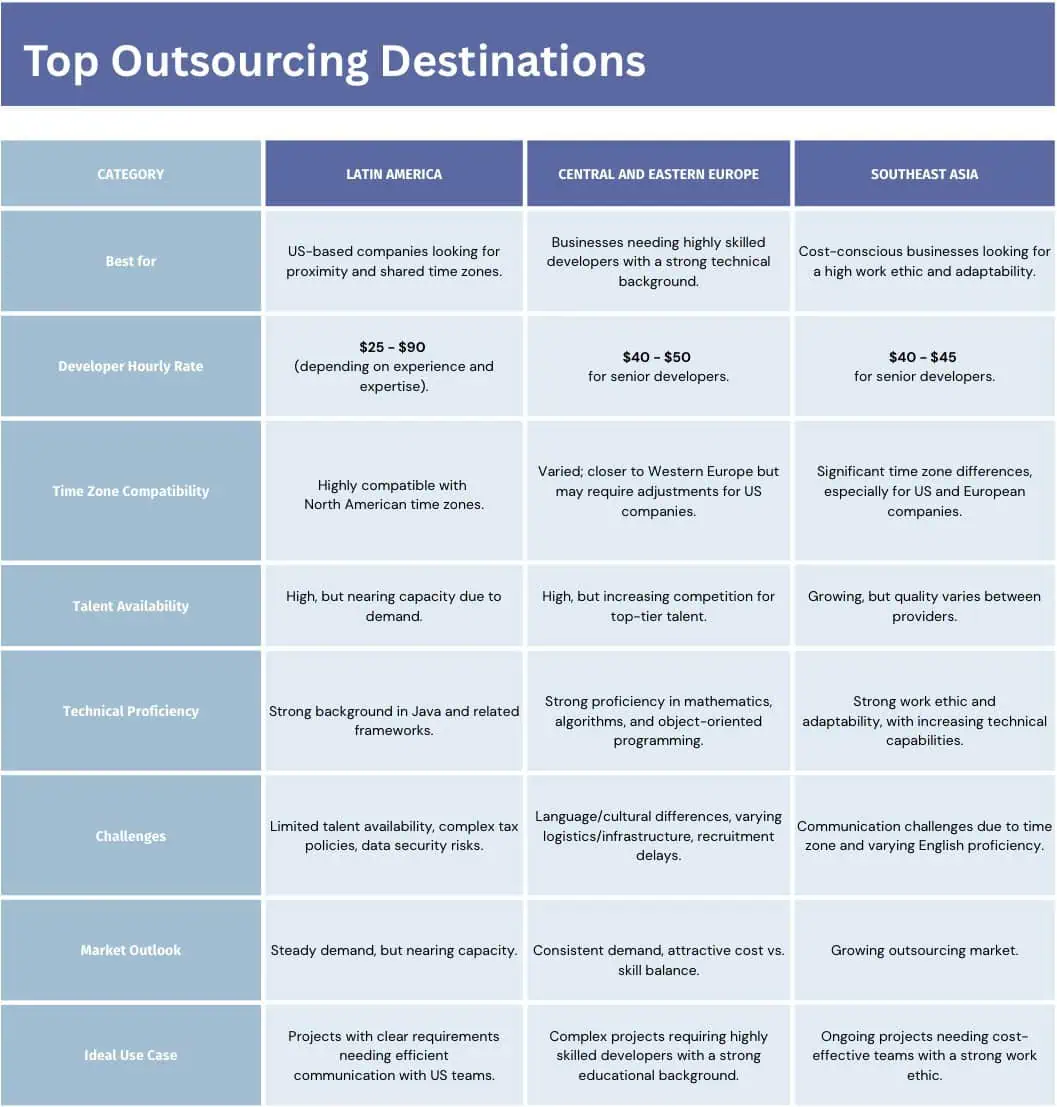
Latin America remains a favored outsourcing destination, particularly for companies in the United States, due to its proximity and shared time zones. The region’s familiarity with the English language further eases communication, making it a convenient choice for collaboration. However, as the demand for outsourcing services in Latin America has surged, the region is nearing its maximum capacity, with rates reflecting this trend. Java developer’s median salary in Latin America is around $25 per hour, with the highest rates reaching up to $90 per hour for top-tier talent.
Pros:
Cons:
Central and Eastern Europe (CEE) has long been a popular hub for offshore software development, and its reputation for technical proficiency continues to grow. Countries in the region, such as Poland, Lithuania, Bulgaria, Romania, and Serbia, boast a highly skilled workforce with strong backgrounds in mathematics, algorithms, and object-oriented programming. The region is known for its commitment to high-quality education and innovative problem-solving. While geopolitical challenges have impacted countries like Russia and Ukraine, the CEE region remains a top choice for Java development, with senior developers charging between $40 and $50 per hour.
Pros:
Cons:
Countries in Southeast Asia, such as Vietnam and the Philippines, are gaining traction as top outsourcing destinations for Java development. The region offers highly competitive rates, with senior Java developers in Vietnam costing between $40 and $45 per hour. In 2025, Vietnam’s outsourcing market is reached $259.10m, further solidifying its place in the global IT outsourcing landscape. Southeast Asia’s strong work ethic means teams are highly adaptable to changing project requirements, making it ideal for agile development.
Pros:
Cons:
When deciding to offshore Java development, selecting the right business model is crucial for ensuring a smooth collaboration, aligning expectations, and managing costs effectively. Typically, there are three main models that businesses choose from based on project scope, flexibility needs, and budget constraints:
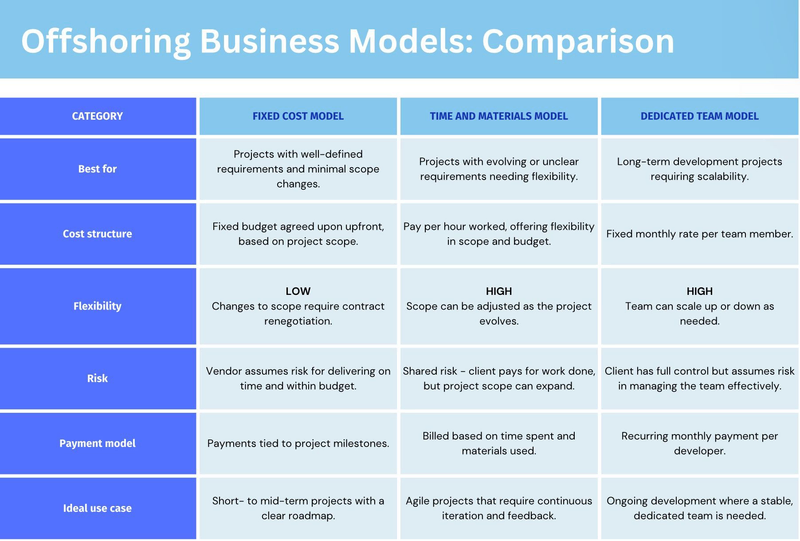
The fixed cost model is ideal for projects with well-defined requirements. In this model, the offshore vendor handles all the initial analysis to break the project into tasks and features, followed by providing a comprehensive estimate for cost and timeline. Once both parties agree on the terms, a contract is signed with payments tied to specific project milestones. This model works well when the project’s scope is clear from the outset and the risks of scope changes are minimal. However, vendors assume the responsibility for delivering the project on time and within budget, making this a suitable option for projects that require a predictable, set budget and timeline.
For projects with evolving or unclear requirements, the time and materials (T&M) model is often the best choice. Under this model, businesses pay for the hours worked by the offshore team, with the flexibility to adjust the scope as the project progresses. This model is advantageous for projects that require ongoing feedback and adjustments or those that develop iteratively. It is commonly preferred by both clients and vendors, as it allows for flexibility and transparency in billing while also accommodating changes in project direction as new requirements emerge.
The dedicated team model is perfect for businesses that need to scale their development capabilities over the long term without the overhead of hiring full-time in-house employees. This model involves building a team of offshore developers who are assigned exclusively to your project, essentially functioning as an extension of your internal team. You pay a fixed monthly rate per team member, allowing for consistent costs without the complexities of maintaining an in-house staff. This model is ideal for projects requiring ongoing work, such as long-term product development, and offers high flexibility and control over the development process.
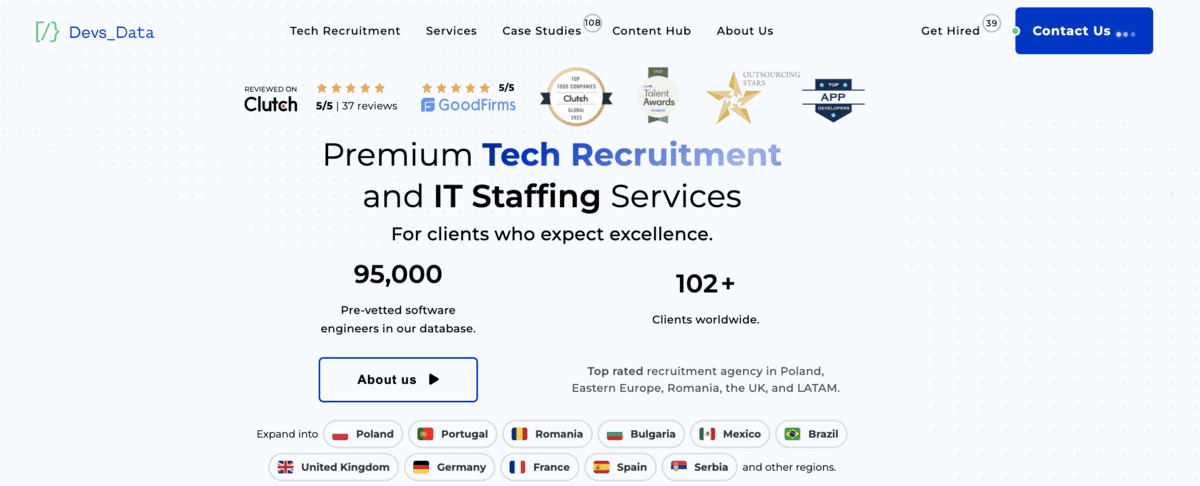
With over 10 years of experience, DevsData LLC has established itself as a reliable partner for offshoring Java development, offering tailored solutions to global clients. The company boasts a strong pool of engineers, including US-based Google-level talent with over a decade of experience, and has successfully completed more than 100 projects for over 100 clients ranging from high-growth startups to Fortune 500 companies, a testament to the company’s versatility and reliability. With offices in the US, Europe, and Latin America, DevsData LLC leverages local expertise in key offshoring destinations to serve diverse markets effectively.
Specializing in areas such as Big Data and Machine Learning, DevsData LLC is highly rated, earning a perfect 5/5 score on platforms like Clutch and GoodFirms. Its proven track record includes partnerships with innovative startups and established businesses across the US and Israel, showcasing its ability to deliver high-quality, customized solutions.

One notable example of DevsData LLC’s Java offshoring expertise is its collaboration with a financial services firm to develop a tailored ERP and project management system. Despite the complexity of handling sensitive data and integrating advanced features, the company efficiently managed the offshore collaboration. The resulting solution reduced redundant tasks by 35% and replaced Jira, saving the client an estimated $5000 per month in licensing fees. The new system replaced a standard industry tool, a testament to DevaData LLC’s ability to build custom solutions that are not just functional but superior to off-the-shelf alternatives.
In addition to the development services, DevsData LLC also specializes in Java developer recruitment, bringing over 10 years of market experience to help businesses find top talent. With access to a database of 95000 candidates, the company can present you with the top 3-5 candidates in as little as 2 weeks, drastically cutting down your time-to-hire. DevsData LLC operates with an official, government-approved license for recruitment services and follows a success fee model. They offer a guarantee period, ensuring peace of mind for businesses.
Do you have software development needs?
Looking to outsource your next Java project? Contact DevsData LLC at general@devsdata.com or visit www.devsdata.com to discuss your needs.
Offshoring Java development has emerged as a strategic solution for businesses seeking access to top-tier talent, cost efficiency, and operational flexibility. The benefits are clear: Companies can tap into expert-level knowledge, extend their teams quickly, and improve project resilience by collaborating with skilled developers across the globe. Moreover, offshoring offers competitive advantages, such as reduced overhead and the ability to scale resources as needed, making it an ideal choice for both startups and established enterprises.
When selecting an offshoring destination, regions like Latin America, Central and Eastern Europe, Southeast Asia, and South Asia stand out. Each offers unique advantages, from geographical proximity and time zone alignment to cost efficiency and a strong talent pool. Businesses can choose a region that aligns with their priorities, such as language proficiency, rates, or technical expertise, ensuring a partnership that meets their needs.
Equally important is choosing the right business model for offshoring. Whether it’s the structured approach of a fixed-cost model, the flexibility of time-and-materials contracts, or the long-term integration of a dedicated team, businesses can tailor their offshoring strategy to match project requirements and objectives.
Among the reliable partners in offshoring Java development, DevsData LLC stands out for its expertise, global reach, and commitment. With over 10 years of experience, the company combines a strong talent pool of seasoned engineers, a proven track record of over 100 successful projects, and offices in key outsourcing destinations. DevsData LLC’s ability to deliver tailored solutions is exemplified by its work on complex projects, such as the development of a custom ERP system for a financial firm. Leveraging its extensive recruitment database and rigorous hiring processes, the company ensures top-tier quality, making it a trusted offshoring partner for Java development.
Any questions or comments? Let me know on
Twitter/X.
Discover how IT recruitment and staffing can address your talent needs. Explore trending regions
like Poland, Portugal, Mexico, Brazil and more.
 Frequently asked questions (FAQ)
DevsData – your premium technology partner
DevsData is a boutique tech recruitment and software agency. Develop your software project with veteran engineers or scale up an in-house tech team of developers with relevant industry experience.
Free consultation with a software expert
🎧 Schedule a meeting
FEATURED IN


DevsData LLC is truly exceptional – their backend developers are some of the best I’ve ever worked with.”

Nicholas Johnson
Mentor at YC, serial entrepreneur


 Build your project with our veteran developers.
Explore the benefits of technology recruitment and tailor-made software.
Learn how to source skilled and experienced software developers.
Build your project with our veteran developers.
Explore the benefits of technology recruitment and tailor-made software.
Learn how to source skilled and experienced software developers.

Rebecca Botvin

Commercial Director

Tom Potanski
Manager




Categories: Big data, data analytics | Software and technology | IT recruitment blog | IT in Poland | Content hub (blog)
















careers@devsdata.com









general@devsdata.com

"I interviewed about a dozen different firms. DevsData LLC is truly exceptional – their backend developers are some of the best I've ever worked with. I've worked with a lot of very well-qualified developers, locally in San Francisco, and remotely, so that is not a compliment I offer lightly. I appreciate their depth of knowledge and their ability to get things done quickly."

Nicholas Johnson
CEO of Orange Charger LLC,
Ex-Tesla Engineer,
Mentor at YCombinator
"DevsData reached out to us, as we've been looking to grow our engineering team in Europe and Poland. Communicating efficiently and professionally, DevsData made a strong impression with their understanding of the recruitment challenges we were facing. They designed a tailored recruitment process for our needs. I was impressed with the technical depth of their approach."

Karim Butt
Co-Founder & CTO at GlossGenius, Inc.
"Out of all the vendors we work with, DevsData clearly stands out. The quality of developers they deliver is beyond what we've received from any other vendor, and they've been able to send profile recommendations very quickly. I'm happy to be their reference for other companies from Israel and talk about their recruitment abilities and what they delivered for us."

Ran Eyal
Senior Manager at
ZIM Integrated
Shipping Services Ltd.
"DevsData demonstrated a strong degree of proactivity, taking time to thoroughly understand the problem and business perspective, and continuously suggesting performance and usability enhancements. Their app exceeded my expectations. I've worked with DevsData on numerous projects over the last 3 years and I'm very happy. Being both responsive and honest in communication."

Jonas Lee
Partner & Executive VP of Verus,
Financial LLC, Investor,
& Serial Entrepreneur
Acknowledgments