Thanks for subscribing.
Your gift is on the way.
 Link copied



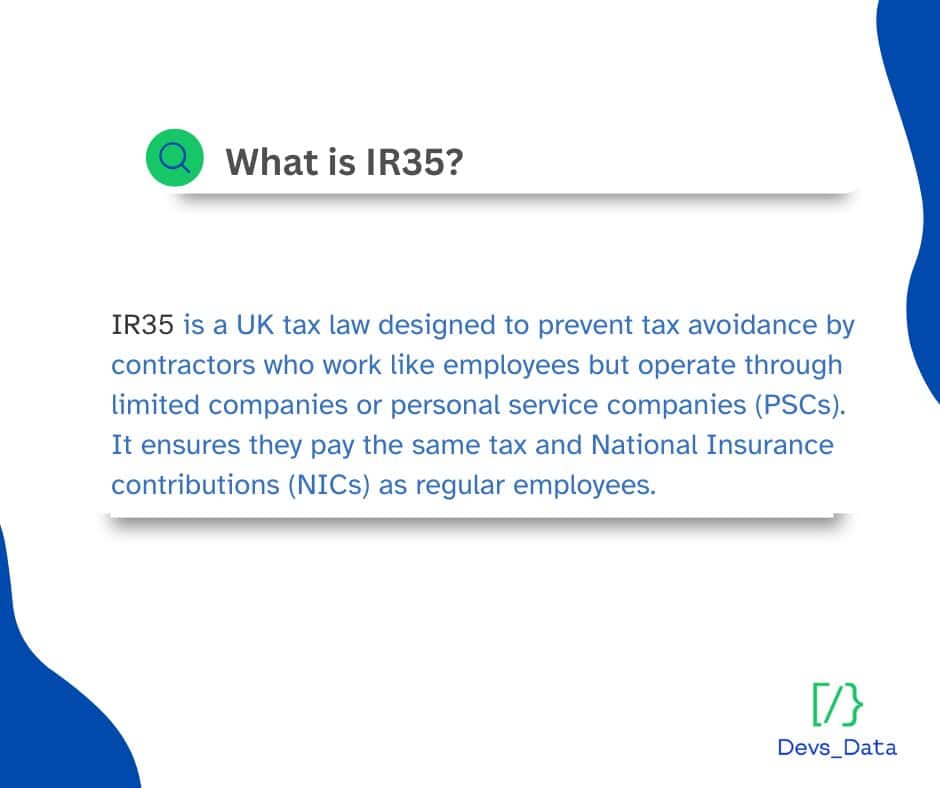
IR35 is an essential component of UK tax policy that aims to prevent tax evasion through disguised employment by assessing whether a contractor is effectively working as an employee. It ensures that full-time contractors pay the appropriate amount of tax and National Insurance Contributions (NIC). IR35 principally affects contractors employed by Personal Service Companies (PSCs), the firms that hire them, and the recruitment agencies that manage these contracts.
Since its introduction in 1999, IR35 has undergone several key changes. The Off-Payroll Working Rules (OPWR) were introduced in 2017 for the public sector and extended to medium and large private companies in 2021, shifting the responsibility for determining IR35 status from contractors to end clients.
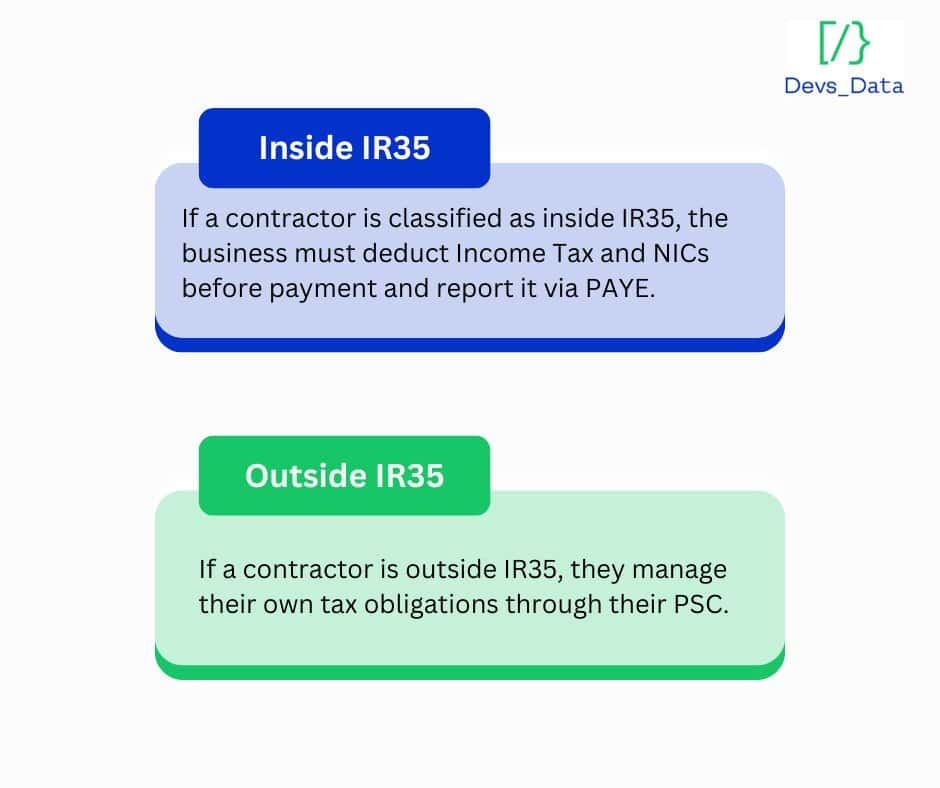
Failure to comply with IR35 can result in significant financial penalties for businesses. Contractors classified as inside IR35 lose the tax efficiency of the PSC structure because their income must first be processed as employment income through PAYE before reaching the company.
IR35 has far-reaching implications for numerous parties in the contractual and employment markets. Understanding who is affected is critical to compliance and risk management.
Businesses that hire contractors through Personal Service Companies (PSCs) or intermediaries must ensure compliance with IR35. If a contractor is classified as inside IR35, the end client may be responsible for deducting Income Tax and NICs before making payments. Medium and large companies that fail to assess IR35 status correctly risk significant tax liabilities and penalties from His Majesty’s Revenue and Customs (HMRC).
Individuals working through personal service companies (PSCs) or limited companies must evaluate their IR35 status to determine whether they fall inside or outside of IR35. Incorrect classification brings real financial consequences: Backdated tax payments, fines, and the loss of tax advantages such as treating income as dividends. For engagements with public sector bodies or medium and large private sector clients, the end client bears responsibility for determining the worker’s employment status under the off-payroll working rules introduced in 2017 and extended in 2021. Contractors providing services to small private sector clients, on the other hand, remain responsible for assessing their own status. Regardless of who makes the determination, workers should review their contracts and working arrangements to confirm the classification reflects reality and to avoid unexpected liabilities.
Agencies that place contractors in roles at client companies play a key role in ensuring compliance. They must pass on Status Determination Statements (SDS) to contractors and handle payroll for inside IR35 workers when required. Additionally, agencies face risks if they facilitate non-compliant engagements or fail to manage contracts in line with IR35 regulations properly.
An umbrella company is a third-party organization that employs contractors and handles their payroll, taxes, and administrative duties. Contractors who work under an umbrella firm are typically treated as employees of that umbrella firm. This removes IR35 risk but reduces tax efficiency and autonomy compared to operating through a Personal Service Company (PSC). Businesses that engage umbrella workers must ensure the umbrella company is legitimate and compliant with tax regulations.
Internal teams managing contractor engagements must implement IR35 assessment processes, track SDS compliance, and maintain records to safeguard against HMRC audits. Proper training is essential to ensure consistent decision-making and risk management.
As HMRC continues to enforce IR35 compliance through audits and penalties, all parties involved in contractor engagements must take proactive steps to avoid misclassification and financial consequences.
The Off-Payroll Working Rules (IR35) apply to businesses that hire contractors through PSCs or intermediaries. These rules were introduced to prevent “disguised employment,” where enterprises engage contractors who effectively work as employees but avoid paying employment taxes and NICs by operating through a PSC.
Implemented in April 2017 for the public sector and in April 2021 for the private sector, the rules require medium and large businesses to assess whether a contractor is genuinely self-employed for tax purposes or should be classified as an employee.
To avoid legal and financial penalties, employers must follow a structured process when engaging contractors. Below is a comprehensive guide outlining the key steps every medium or large business should take to stay IR35 compliant.
IR35 compliance responsibilities depend on the size of your company. If your organization meets two or more of the following thresholds, you must assess each contractor’s IR35 status:
If your company qualifies as small, the responsibility remains with the contractor, not the client.
Do you have recruitment needs?
Before hiring, evaluate whether the contractor falls inside or outside IR35. This determination must be made on a case-by-case basis, using key employment status tests such as:
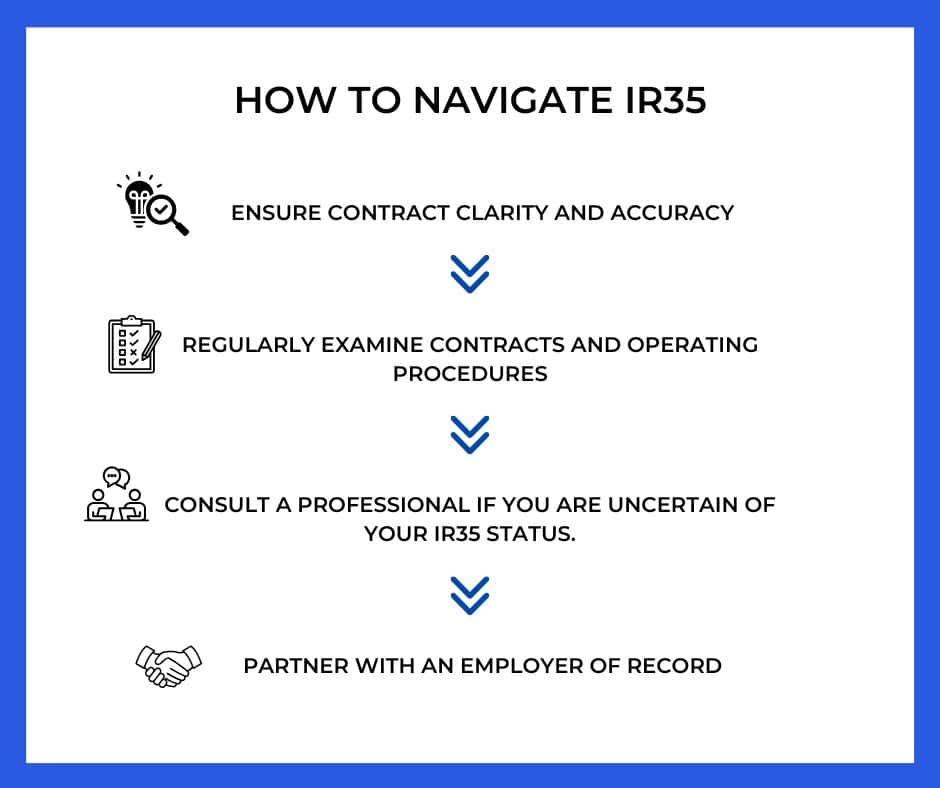
To ensure accuracy, use HMRC’s CEST tool or consult qualified legal/tax advisors. Conducting this due diligence reduces the risk of misclassification and potential penalties.
Once the status is assessed, issue a Status Determination Statement (SDS) that clearly states whether the contractor is inside or outside IR35. The SDS must:
You must share the SDS before the contract starts with both the contractor and any recruitment agencies involved.
Ensure all relevant parties receive the SDS promptly. You should also maintain:
Well-documented processes demonstrate reasonable care and provide essential protection in case of HMRC audits.
Contractors have the right to dispute an SDS if they believe it is incorrect. In this case, the employer must:
This process ensures compliance and promotes transparency with your contractor workforce.
If the contractor is deemed inside IR35, the employer or fee-payer is responsible for:
Failing to process these correctly may result in financial penalties and the employer being held liable for unpaid taxes.
Under IR35 legislation, HMRC expects businesses to exercise “reasonable care” when determining a Contractor’s status. fHMRC defines this as acting in a way expected of a prudent and reasonable person in the client’s position, and the standard scales with organizational size. Businesses that fall short face backdated tax, NICs, and Apprenticeship Levy payments, plus penalties ranging from 30% of unpaid tax for careless errors to 100% for deliberate concealment.
Each contractor must be assessed on their specific working arrangements, contract terms, and actual day-to-day practices. Applying a one-size-fits-all approach to entire departments or groups of workers (a “blanket determination”) has been explicitly discouraged by HMRC and can be considered non-compliant.
Employers should maintain comprehensive documentation for each assessment, including notes from status reviews, copies of the contract, any guidance used (e.g., CEST results), and rationale behind the conclusion. This record-keeping is critical for demonstrating that due diligence was performed.
In situations where status isn’t clear-cut, businesses are encouraged to consult with IR35 experts, legal counsel, or independent reviewers. This demonstrates to HMRC that the company took proactive steps to reach an informed and fair conclusion.
A consistent and lawful approach depends on internal stakeholders understanding the legislation. Companies should invest in training for HR, finance, and procurement teams involved in hiring contractors.
Ensuring compliance with IR35 requires a structured approach for both employers and contractors. Employers must implement rigorous checks, issue necessary documentation, and maintain records to mitigate risks. On the other hand, contractors must review contracts carefully, ensure their working practices align with their contractual terms, and be proactive in securing compliance.
Contractors must be aware of how their client determines IR35 status and ensure they receive an SDS when applicable.
Contracts should accurately reflect working conditions. Avoid boilerplate agreements, as they can misrepresent employment status.
Contractors should ensure their contracts include the following:
Contractors should document their actual working arrangements, including timesheets, project reports, and communications. If HMRC opens an investigation, this evidence demonstrates that day-to-day practices matched the contractual terms used to support an outside IR35 determination.
Contractors should seek legal or financial advice to confirm their IR35 status and avoid misclassification risks. As importantly, they should document this advice, keeping written records, legal opinions, or consultation notes as evidence of due diligence in case of an HMRC inquiry or legal challenge.
Step 1: Does the contractor use a PSC (Personal Service Company)?
Step 2: Is the client a small private business?
Step 3: Is the client in the public sector?
Step 4: Has the contractor provided services post-April 2021?
Do you have recruitment needs?
Once the Status Determination Statement (SDS) is received, the contract will be classified as either inside or outside IR35, which determines how tax obligations are handled.
If the contract is deemed inside IR35, the contractor is treated as employed for tax purposes. In this case, the fee-payer must deduct income tax and National Insurance contributions (NICs) before issuing payment. Additionally, the employer becomes responsible for paying employer NICs and, if applicable, the apprenticeship levy. Despite these deductions, the contractor may still need to submit a self-assessment tax return, with potential relief available for taxes already paid.
If the contract is classified as outside IR35, the contractor is considered self-employed for tax purposes. The fee-payer does not deduct income tax or NICs before payment, and the contractor’s limited company or intermediary remains fully responsible for meeting all tax obligations.
If a contractor disagrees with their status determination, they have the right to challenge the decision with the client. They may also use the CEST tool to independently verify their employment status. By following these steps, both employers and contractors can navigate IR35 with greater clarity, reduce compliance risks, and ensure alignment with UK tax regulations.
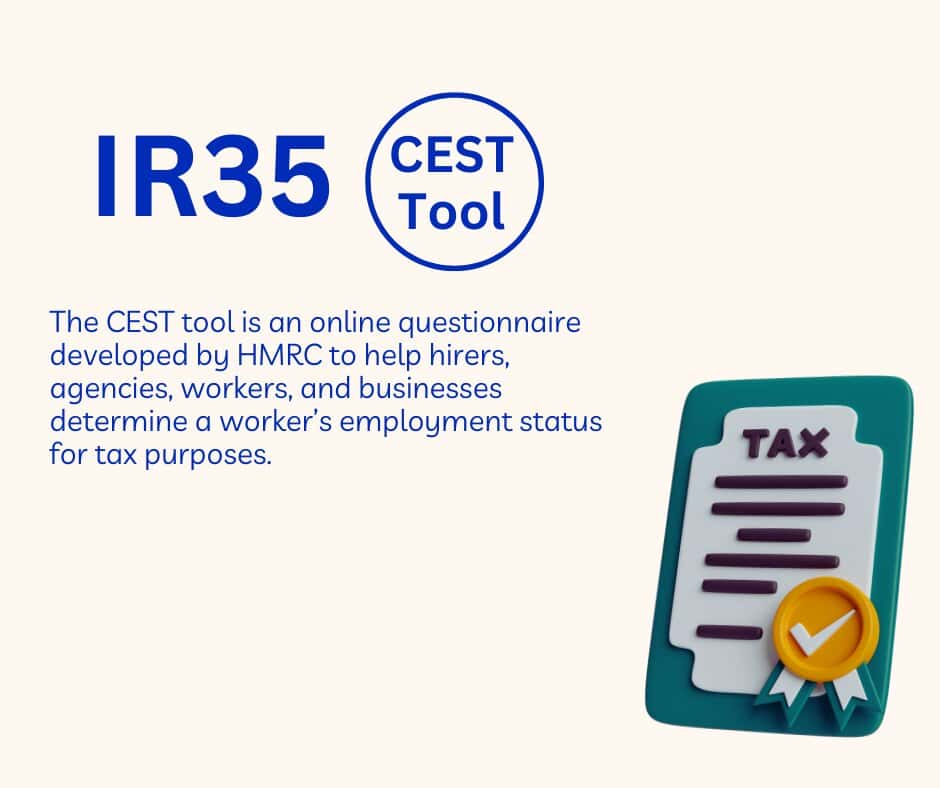
The Check Employment Status for Tax (CEST) tool is an online questionnaire developed by His Majesty’s Revenue and Customs (HMRC) to help hirers, agencies, workers, and businesses determine a worker’s employment status for tax purposes. It helps assess whether a contractor falls inside or outside the scope of IR35 by analyzing key factors such as control, who dictates what work is done, when, and how, substitution rights, which refer to whether the contractor can send a replacement, and Mutuality of Obligation (MOO), which considers whether the employer is obliged to provide work and the contractor is expected to accept it.
Based on the responses provided, the tool generates an automated status determination, offering guidance on whether IR35 rules apply to a particular contract. While CEST can be a useful compliance resource, it is not legally binding. HMRC typically honors the outcome if the input is accurate and complete, but they retain the right to challenge any determination during audits or formal investigations.
The CEST tool is available to various stakeholders involved in employment status decisions, including:
Hirers (businesses/clients)
Agencies & other suppliers
Workers (contractors & freelancers)
Despite being an official HMRC tool, CEST has faced criticism due to its limitations. One of the major drawbacks is that it does not fully account for Mutuality of Obligation (MOO) – a key factor in IR35 determinations. MOO refers to whether a client is obliged to provide work and whether a contractor is expected to accept it, an essential element in assessing employment status. Because CEST does not correctly evaluate MOO, it can lead to incorrect classifications, potentially exposing businesses to compliance risks.
Another issue is that CEST’s determinations are not legally binding.
HMRC has the authority to override the results, particularly if an audit finds discrepancies between the contractor’s actual working arrangements and the answers provided in the tool.
Businesses that rely solely on CEST without additional verification could face penalties if an incorrect classification leads to unpaid tax liabilities.
Additionally, CEST has been criticized for its binary, yes-or-no format, which does not always capture the nuances of individual cases. Complex contractor engagements may not fit neatly into the tool’s framework, leading to inconclusive or misleading results. This has prompted many businesses to seek independent IR35 assessments from tax specialists rather than relying on CEST alone.
CEST results are not static, and businesses or contractors should reassess their IR35 status whenever a contract or working arrangement changes. Re-running the tool becomes necessary if there is a change in the terms of the contract or service agreements, as such changes could impact the determination. It’s also important to revisit the assessment if the original determination relied on outdated or incorrect information. Additionally, if the worker’s identity was unknown during the initial check, a second evaluation may provide a more accurate and definitive result.
Despite its limitations, CEST can be a valuable tool when used strategically as part of a broader IR35 compliance process. It’s best employed as an initial assessment, completing the questionnaire before hiring a contractor can provide a useful preliminary indication of IR35 status. However, the outcome should not be treated as final. CEST is a guideline, not a definitive decision-making tool.
To ensure accuracy and compliance, employers should verify CEST determinations with IR35 specialists or legal advisors. Independent expert reviews help confirm that classifications are not only correct but also defensible and aligned with HMRC regulations.
It is also essential to maintain comprehensive records of every CEST assessment. This includes the responses entered into the tool, copies of contracts and working arrangements, and any supporting evidence related to the contractor’s employment status. A well-documented audit trail is crucial if HMRC challenges the determination.
Whenever contract terms, job responsibilities, or working arrangements change, businesses should re-run the CEST tool and update their records accordingly. Reassessments ensure that IR35 status reflects the current working relationship.
CEST should be used as one component of a broader compliance strategy. Accurate IR35 classification requires case law analysis, professional tax advice, and thorough record-keeping that includes SDS copies, contracts, CEST results, and notes from status reviews. Businesses that combine CEST output with expert insight and organized documentation are better positioned to defend their determinations if HMRC raises questions.
Contractors can challenge a Status Determination Statement (SDS) if they believe their IR35 status has been incorrectly assessed. A formal disagreement process ensures fairness and compliance while reducing the risk of disputes escalating into legal action.
Employers must respond to an IR35 challenge within 45 days of receiving it.
Employers are required to carefully review any concerns raised by the contractor and re-evaluate the original Status Determination Statement (SDS). After conducting this review, they have two possible courses of action.
They may choose to uphold the original SDS, in which case they must provide a clear and detailed explanation outlining why the initial determination remains valid. Alternatively, they can issue a revised SDS, acknowledging the Contractor’s concerns and making adjustments where appropriate. In either case, thorough documentation of the decision and its reasoning creates the audit trail needed to demonstrate compliance if HMRC reviews the process.
Failure to respond within the 45-day period results in the original SDS being disregarded, and the employer may become liable for any unpaid tax and NICs.
Employers should document all communication related to IR35 disputes, ensuring transparency in decision-making and providing evidence in case of an HMRC audit.
HMRC actively investigates businesses to ensure compliance with IR35. Inconsistencies in tax filings, contractor disputes, or random compliance checks can trigger an investigation. Employers and contractors must be prepared to provide evidence supporting their IR35 determinations.
To minimize risks, businesses should maintain detailed records of all IR35 determinations, including:
Ensuring that contract terms match actual working arrangements is essential. HMRC will examine the formal contract and how the contractor operates in practice. If a contractor’s daily responsibilities resemble a permanent employee’s, even a contract stating self-employment may not protect against an inside IR35 ruling.
Seeking IR35 legal and accounting expertise is highly recommended, particularly for businesses that engage many contractors. Tax specialists can conduct independent IR35 assessments, identify potential risks, and assist in preparing for compliance reviews or investigations.
Issuing blanket SDS determinations without conducting individual assessments is a common and risky mistake that can undermine IR35 compliance. Similarly, failing to keep detailed records of IR35 status reviews or misclassifying contractors due to poorly written contracts can lead to serious consequences. Ignoring contractor disputes not only damages trust but may also trigger HMRC intervention.
To avoid these pitfalls, businesses should proactively address IR35 compliance through regular internal audits, contractor training, and periodic legal reviews. Implementing a robust compliance framework helps mitigate financial and legal risks while promoting transparency and fair treatment. By staying vigilant and thorough in their approach, employers can reduce exposure to disputes and ensure alignment with HMRC expectations.
Many Contractors opt to work through umbrella companies to simplify payroll and tax compliance. Since umbrella workers are treated as employees of the umbrella company, responsibility for IR35 assessment shifts away from the Contractor. This arrangement removes the Contractor’s personal liability for status determinations, though compliance risk remains in the supply chain if the umbrella company fails to operate PAYE correctly or is itself non-compliant.
However, the trade-off is reduced autonomy and flexibility. Contractors working under an umbrella company receive a salary processed through PAYE, which means deductions for income tax and NICs are taken at the source. While this simplifies tax obligations, they also lose the financial benefits of operating through a PSC, such as dividend payments and tax-efficient expense claims.
Employers who engage contractors through umbrella companies must take several precautions to ensure compliance with UK tax regulations and protect both their business and the contractors they work with.
Employers must ensure that any umbrella company they work with fully complies with UK tax legislation, including PAYE and National Insurance obligations. This helps prevent potential liabilities or legal complications arising from non-compliant payroll practices.
It is essential to avoid umbrella companies that engage in tax avoidance schemes, such as disguised remuneration or offshore payment arrangements. These schemes may promise contractors higher take-home pay through non-taxable loans, offshore trusts, or other methods that HMRC considers unlawful. Engaging with such schemes can result in significant financial penalties and reputational damage for employers.
Employers should conduct due diligence to confirm that umbrella companies operate with a clear and transparent fee structure. Some non-compliant providers impose hidden deductions that unfairly reduce a contractor’s pay. Requesting a detailed breakdown of deductions, including administration fees, margin costs, and any additional charges, helps protect workers from unexpected pay reductions.
Partnering with a non-compliant umbrella company can expose employers to serious financial and legal consequences. HMRC can hold businesses accountable if they are found to have facilitated tax avoidance, even inadvertently. Employers must regularly review their payroll supply chain and seek independent advice if necessary to ensure they are engaging with reputable providers.
Do you have recruitment needs?
By taking these steps, employers can safeguard their business, maintain compliance with tax laws, and provide contractors with fair and lawful payment arrangements.

Website: www.devsdata.com
Team size: ~60 employees
Founded in: 2016
Headquarters: Brooklyn, NY and Warsaw, Poland
Ensuring compliance with IR35 and the Off-Payroll Rules can be a complex challenge for businesses engaging contractors. Employers must assess employment status accurately, manage payroll efficiently, and mitigate risks associated with misclassification. DevsData LLC, a leading recruitment and software development agency, offers a comprehensive solution to help companies confidently navigate these regulations.
With in-depth expertise in IR35 and the Off-Payroll Working Rules, DevsData LLC provides tailored support for businesses working with contingent workers and independent contractors. Their international payroll services streamline tax compliance, ensuring that deductions, NICs, and employment status determinations align with HMRC requirements. By partnering with DevsData, companies can minimize tax liabilities, avoid compliance pitfalls, and focus on business growth.
Businesses benefit from DevsData LLC’s Employer of Record (EoR) services, which handle payroll, HR responsibilities, and legal compliance. Beyond EoR and management services, DevsData LLC offers a comprehensive suite of IT solutions tailored to startups and established businesses. These include managed IT services, custom software development, and expertise in cutting-edge technologies such as AI and machine learning.

Since its founding in 2016, DevsData LLC has completed over 83 projects across multiple countries, consistently earning 5/5 ratings on platforms like Clutch and GoodFirms. Their hybrid delivery model pairs local market knowledge with standardized processes to reduce costs without compromising output quality.
DevsData LLC supported a London-based financial institution in establishing a specialized engineering team for algorithmic trading. This project required not only deep technical vetting but also full Employer of Record (EoR) support across borders. One of the key challenges was ensuring strict compliance with both UK and Polish labor laws, including tax handling, contracts, benefits administration, and GDPR-related documentation. DevsData LLC seamlessly managed all of this, acting as the legal employer while giving the client operational freedom.
What began as a single technical hire quickly evolved into the buildout of a full-scale engineering hub in Poland. Within six months, DevsData LLC had hired and onboarded 12 engineers, set up payroll and HR infrastructure, and ensured full legal compliance, allowing the client to scale without establishing a local legal entity. The result: zero compliance issues, 100% retention in the first year, and significant cost savings compared to hiring in the UK. For more examples of cross-border recruitment success, visit the DevsData LLC case studies page.
For companies looking to stay compliant with IR35, manage a contingent workforce, or streamline payroll operations, DevsData LLC is a trusted partner. Their specialists are available to discuss customized solutions that meet your business needs. Contact DevsData today to learn how they can support your workforce strategy while ensuring compliance with evolving employment regulations.
For more information, contact DevsData LLC at general@devsdata.com or visit www.devsdata.com.
IR35 remains a key compliance challenge for UK businesses, requiring diligence, transparency, and structured processes to navigate successfully. Businesses that fail to comply with IR35 regulations risk incurring financial penalties, facing legal disputes, and sustaining reputational damage. Companies must establish clear processes for assessing, documenting, and monitoring contractor engagements to ensure compliance.
Partnering with an expert in compliance and contractor management, such as DevsData LLC, can significantly ease the burden of IR35 compliance. With deep expertise in employment classification, payroll solutions, and tax compliance, DevsData helps businesses confidently navigate the complexities of the Off-Payroll Rules while minimizing tax liabilities and operational risks. Their tailored services, including international payroll management, Employer of Record (EoR) solutions, and legal advisory, ensure that contractor engagements align with HMRC regulations and industry best practices.
For expert guidance on IR35 compliance, contingent workforce management, or IT recruitment, contact DevsData LLC at general@devsdata.com or visit www.devsdata.com.
Discover how IT recruitment and staffing can address your talent needs. Explore trending regions
like Poland, Portugal, Mexico, Brazil and more.
 Frequently asked questions (FAQ)
DevsData – your premium technology partner
DevsData is a boutique tech recruitment and software agency. Develop your software project with veteran engineers or scale up an in-house tech team of developers with relevant industry experience.
Free consultation with a software expert
🎧 Schedule a meeting
FEATURED IN


DevsData LLC is truly exceptional – their backend developers are some of the best I’ve ever worked with.”

Nicholas Johnson
Mentor at YC, serial entrepreneur


 Build your project with our veteran developers.
Explore the benefits of technology recruitment and tailor-made software.
Learn how to source skilled and experienced software developers.
Build your project with our veteran developers.
Explore the benefits of technology recruitment and tailor-made software.
Learn how to source skilled and experienced software developers.

Rebecca Botvin

Commercial Director

Tom Potanski
Manager




Categories: Big data, data analytics | Software and technology | IT recruitment blog | IT in Poland | Content hub (blog)
Email copied
And many other regional partners across Latin and North America, as well as Central and Eastern Europe. Let's talk.
















careers@devsdata.com









general@devsdata.com

"I interviewed about a dozen different firms. DevsData LLC is truly exceptional – their backend developers are some of the best I've ever worked with. I've worked with a lot of very well-qualified developers, locally in San Francisco, and remotely, so that is not a compliment I offer lightly. I appreciate their depth of knowledge and their ability to get things done quickly."

Nicholas Johnson
CEO of Orange Charger LLC,
Ex-Tesla Engineer,
Mentor at YCombinator
"DevsData reached out to us, as we've been looking to grow our engineering team in Europe and Poland. Communicating efficiently and professionally, DevsData made a strong impression with their understanding of the recruitment challenges we were facing. They designed a tailored recruitment process for our needs. I was impressed with the technical depth of their approach."

Karim Butt
Co-Founder & CTO at GlossGenius, Inc.
"Out of all the vendors we work with, DevsData clearly stands out. The quality of developers they deliver is beyond what we've received from any other vendor, and they've been able to send profile recommendations very quickly. I'm happy to be their reference for other companies from Israel and talk about their recruitment abilities and what they delivered for us."

Ran Eyal
Senior Manager at
ZIM Integrated
Shipping Services Ltd.
"DevsData demonstrated a strong degree of proactivity, taking time to thoroughly understand the problem and business perspective, and continuously suggesting performance and usability enhancements. Their app exceeded my expectations. I've worked with DevsData on numerous projects over the last 3 years and I'm very happy. Being both responsive and honest in communication."

Jonas Lee
Partner & Executive VP of Verus,
Financial LLC, Investor,
& Serial Entrepreneur
Acknowledgments