Thanks for subscribing.
Your gift is on the way.
 Link copied



Diversity recruitment has grown into one of the central priorities for modern businesses, not only as a reflection of social responsibility but also as a proven driver of business performance. Organizations across industries recognize that diverse teams bring a variety of perspectives, foster innovation, and improve overall decision-making. In fact, studies show that diverse teams make better decisions 87% of the time – a statistic that underscores the tangible business value of embracing inclusivity in hiring practices.
At the same time, the market for diversity recruitment solutions has been expanding rapidly, reflecting this heightened demand. The Diversity Recruiting Software Market, for example, is projected to grow to $3.5 billion by 2033, with a compound annual growth rate (CAGR) of 12.5% from 2026 to 2033. These tools typically include bias-free screening platforms, analytics dashboards that track DEI metrics, structured interview systems, and AI-driven sourcing tools designed to widen and diversify talent pipelines. This growth demonstrates how businesses are increasingly investing in tools and services that help them attract, assess, and retain candidates from a wide range of backgrounds.
However, diversity recruitment is not without its complexities. It involves more than meeting quotas or broadening the applicant pool; it requires tailored strategies, unbiased evaluation processes, and a clear understanding of both the market landscape and organizational goals. These challenges arise because organizations must balance fairness with effectiveness, ensuring that hiring decisions are truly merit-based while also eliminating structural biases that are often invisible without a deliberate, methodical approach. Companies must navigate challenges such as unconscious bias, limited pipelines in certain technical fields, and balancing inclusivity with role-specific expertise.
Yet, research shows that even at its best, progress is limited: only 28% of UK employers train all interviewers on legal obligations and objective interviewing, and the numbers drop even further for other areas, just 18% test job advert wording for bias, and only 17% verify that their assessments are valid, reliable, and objective.
Against this backdrop, diversity recruitment agencies and service providers have become essential partners for organizations seeking to strengthen their workforce strategies. By leveraging specialized expertise, data-driven approaches, and access to diverse talent networks, businesses can overcome obstacles and build teams that are both representative and high-performing. This article will explore what diversity recruitment means, why it matters, the challenges it entails, and how experienced agencies, including DevsData LLC, approach this critical aspect of modern hiring.
Diversity recruitment is a strategic, intentional hiring approach designed to build a workforce that genuinely reflects a wide range of identities, experiences, and perspectives. Its purpose is to create fair, merit-based opportunities while ensuring that every candidate, regardless of background, has equitable access. This includes dimensions such as race, gender, age, socio-economic background, education, and more.
Importantly, diversity recruitment helps organizations align with legal compliance, such as equal opportunity regulations, reducing legal risks while reinforcing fairness in hiring practices. However, more importantly, organizations that prioritize inclusive hiring recognize that representation matters at all levels: when a workforce mirrors the society it serves, companies gain broader perspectives, foster innovation, and strengthen their relevance in diverse markets.
Several independent studies support this:
Companies with greater gender and ethnic diversity on leadership teams are significantly more likely to outperform their peers: from being 30% more likely for gender-diverse boards to 27% more likely for ethnically diverse boards.
Recent 2024 research established a plausibly causal connection between gender-diverse workforces and improved financial returns, measured by stock performance.
DEI-driven initiatives that foster inclusive cultures correlate with higher employee satisfaction and reduced turnover, particularly where leadership champions inclusion.
Diversity recruitment requires different priorities and methods than traditional approaches. Whereas conventional recruitment often focuses on filling roles as quickly and cost-effectively as possible, diversity recruitment places deliberate emphasis on inclusion throughout the process.
Diversity recruitment matters because it aligns talent acquisition with long-term business sustainability. By drawing on a wider range of perspectives, companies are better equipped to innovate, adapt to shifting markets, and build credibility with global stakeholders. In a competitive environment where talent and agility are decisive, it becomes increasingly important to focus on inclusivity alongside core business needs.
Diversity recruitment has become a strategic business lever. Organizations that actively build inclusive teams see measurable gains in profitability, innovation, retention, and risk management. Recent studies provide clear evidence that investing in diverse talent is directly linked to stronger performance and long-term resilience.
Recent large-scale studies continue to demonstrate a strong correlation between diversity and financial success. McKinsey’s 2023 analysis shows that companies in the top quartile for gender diversity on executive teams are 39% more likely to financially outperform those in the bottom quartile. A similar 39% outperformance likelihood applies to ethnic diversity, while companies in the bottom quartile for both are 66% less likely to outperform peers.
Further evidence from MSCI highlights that firms with at least 30% female directors delivered 18.9% higher cumulative returns than those with lower representation.
Diversity also fuels measurable innovation. A 2024 SSRN study found that companies with stronger employee-rated D&I practices were significantly more innovative, producing higher volumes of patents and of greater quality. Notably, the research established a causal link, showing that diversity initiatives actively contribute to innovation capacity rather than merely correlating with it.
Inclusive hiring is a proven driver of employee satisfaction and long-term retention. Gartner’s 2023 data revealed that diverse workforces see a 12% improvement in performance and a 20% increase in intent to stay, reducing turnover costs and strengthening organizational stability.
Leadership diversity is increasingly recognized as a safeguard against organizational risk. A 2024 study found that board diversity mitigates stock-price crash risk, with evidence showing diverse boards improve information flow and oversight. This positions diversity not only as a growth strategy but also as a resilience measure in volatile markets.
Recent research confirms that teams that draw from varied cognitive frames and domain experiences outperform more homogenous counterparts: a 2024 study showed a significant positive relationship between workplace diversity and innovation, with innovation mediating much of the performance gains.
Diversity recruitment is no longer just a social initiative; it’s a measurable business driver that boosts profitability, innovation, and organizational resilience.
The diversity recruitment market is being reshaped by several interconnected trends that reflect both technological advancement and evolving organizational priorities. These shifts highlight how companies approach inclusive hiring today and how they prepare for the future.
Artificial intelligence and machine learning are increasingly embedded into recruitment tools, helping organizations reduce unconscious bias, optimize job descriptions, and measure diversity outcomes more effectively. Integration with applicant tracking and candidate management systems has further streamlined processes, enabling recruiters to combine efficiency with fairness in candidate selection.
The rise of remote work has fundamentally altered access to diverse talent. Employers can now reach candidates across geographic boundaries, increasing representation from underrepresented regions. Alongside this, skills-based hiring is gaining momentum, shifting attention from credentials to actual capabilities. This approach broadens talent pools and supports inclusion by valuing potential over pedigree.
While gender and ethnicity remain central, socio-economic background, educational pathways, and other less visible dimensions are increasingly recognized. This shift reflects a deeper acknowledgment that inclusion must go beyond surface-level representation to address systemic inequities in the workforce.
Do you have diversity recruitment needs?
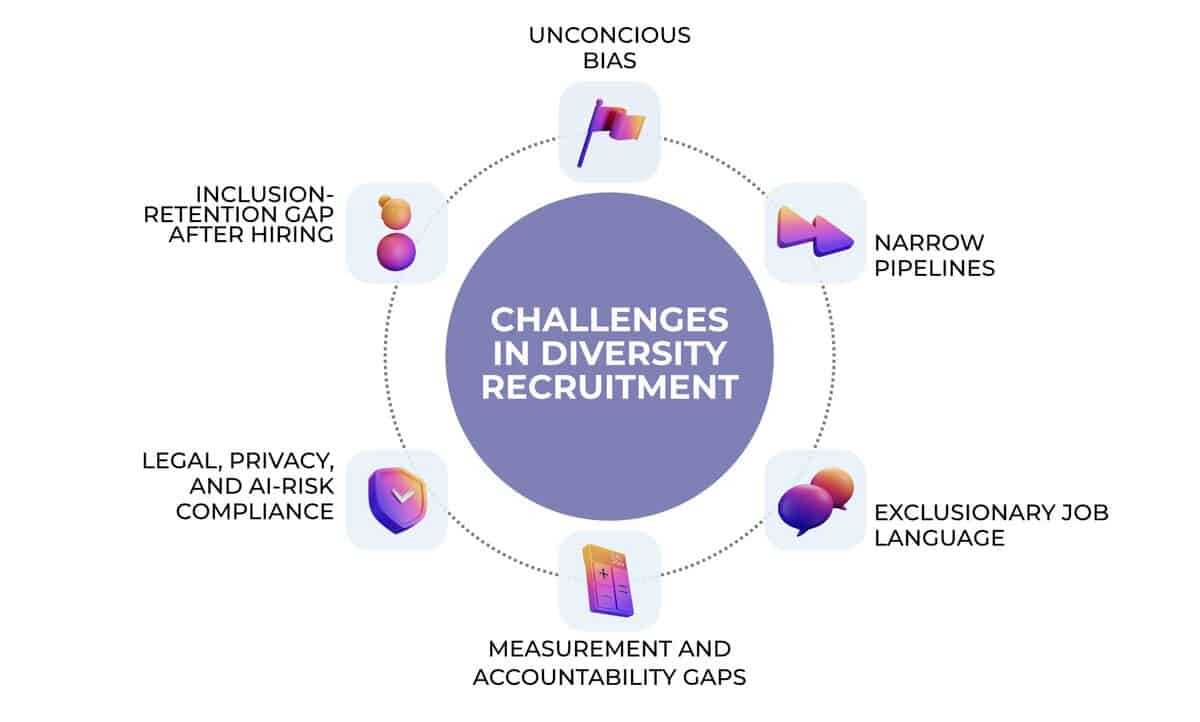
Even well-intentioned processes can disadvantage qualified candidates through halo effects, first-impression bias, and inconsistent evaluations. Research shows that structured, standardized interviewing reduces bias and improves hiring outcomes; anonymized/“blind” evaluations increase impartiality.
Our solution
DevsData LLC applies structured interviews with calibrated rubrics, consistent question sets, and anchored scoring; uses role-relevant work samples; and offers anonymized résumé passes where feasible before panel reviews. Interviewers are trained and calibrated on criteria to minimize variability across panels.
In many technical domains, the candidate supply skews due to historic underrepresentation, well documented in national statistics on women, minorities, and persons with disabilities in STEM. Overreliance on the same schools, geographies, and credential filters compounds the gap.
Our solution
DevsData LLC expands reach through multi-channel sourcing (regional universities, return-to-work programs, disability talent networks) and shifts emphasis from pedigree to demonstrable skills. We implement skills-first evaluation pathways to widen qualified pools while maintaining performance bars.
Seemingly neutral wording can depress application rates from qualified groups. The research shows that gendered wording in job ads influences belonging and job appeal, reinforcing an imbalance in male-dominated roles.
Our solution
DevsData LLC rewrites role descriptions using research-based language guidelines (neutral wording, clear essentials vs. “nice-to-haves,” accessible requirements), and audits employer-brand touchpoints for inclusion (imagery, benefits, flexibility). We A/B test postings and track conversion rates by source to validate impact against the cited evidence.
Many teams lack reliable baselines, cohort views, and funnel diagnostics; without them, improvements stall. In the US, larger employers are required to report workforce composition via EEO-1, illustrating the regulatory expectation for structured data. Research also ties DEI progress to leadership commitment, broad accountability, and tracking against defined metrics.
Our solution
DevsData LLC designs a lightweight metrics framework: source-to-offer funnel by stage, time-to-slate diversity thresholds, pass-through rates by assessment type, and quality-of-hire by cohort. Dashboards separate hiring from progression/retention to avoid masking effects and align with existing statutory reporting (e.g., EEO-1) where applicable.
Collecting and using demographic data engages privacy regimes (e.g., UK GDPR special-category data), and automated screening tools raise discrimination risks under Title VII in the US. Employment-related AI systems are categorized as “high-risk” under the EU AI Act, triggering obligations on transparency, monitoring, and risk management.
Our solution
DevsData LLC implements privacy-by-design practices, including voluntary self-ID with purpose statements and “prefer not to say,” access controls, data minimization, and retention limits. For AI/algorithms, we recommend vendor due diligence, bias testing/adverse-impact checks, human-in-the-loop review, and clear candidate notices aligned to EEOC and EU AI Act expectations.
Hiring diverse talent without building inclusive climates drives churn. Research shows that toxic culture (including failure to promote DEI, lack of respect) was the strongest predictor of attrition, far outweighing pay. Women in particular face early-career promotion bottlenecks (“broken rung”), impacting long-term representation.
Our solution
DevsData LLC partners with clients beyond offer acceptance: structured onboarding; manager enablement on inclusive leadership; ERG and sponsorship program design; and early-tenure sentiment checks to catch risks within the first 90-180 days. We feed retention and progression metrics back into hiring criteria to close the loop.
Across engagements, DevsData LLC operationalizes these solutions as process defaults: structured interviews and work samples, skills-first sourcing, evidence-based JD rewrites, clear metrics, privacy-compliant data handling, and post-hire inclusion mechanisms, so clients improve representation and performance without lowering hiring standards.
Do you have diversity recruitment needs?
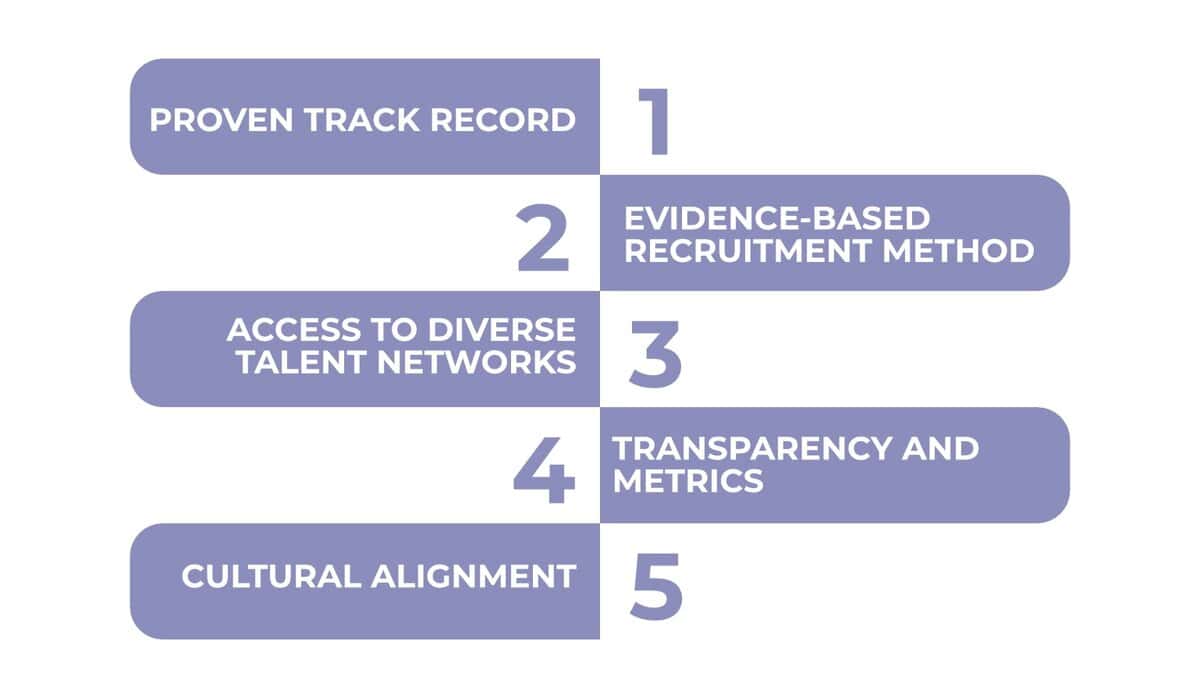
Selecting the right partner for diversity recruitment requires a careful balance between expertise, methodology, and alignment with business goals. A reliable agency does more than provide access to diverse candidate pools; it helps embed inclusive practices into the hiring process and ensures measurable outcomes. The following considerations can guide businesses in evaluating potential partners:
Look for an agency with demonstrable experience in executing diversity-focused searches. Case studies, client testimonials, and measurable outcomes, such as improved representation across senior roles, signal an agency’s ability to deliver results. Agencies that can showcase success across industries and markets often bring transferable best practices.
A strong diversity recruitment partner should rely on structured, research-backed methods rather than ad hoc processes. This includes tools like anonymized résumé reviews, structured interview frameworks, and skills-based assessments designed to reduce bias. Ask how the agency monitors these processes and ensures consistency at each hiring stage.
The effectiveness of diversity recruitment depends on reach. Agencies with established pipelines into underrepresented groups, through partnerships with universities, professional associations, return-to-work programs, or specialized platforms, are better equipped to deliver candidates who may not be accessible through conventional sourcing.
Measuring progress is essential. Agencies should be able to provide clear reporting on candidate pipelines, pass-through rates, and placement outcomes. Transparency in metrics not only builds trust but also enables businesses to refine their long-term DEI strategies based on reliable data.
Finally, the best agency is one that understands a client’s values, culture, and long-term goals. Beyond supplying candidates, the agency should act as a strategic advisor, helping to align recruitment practices with broader organizational objectives for inclusion and retention.
Overcoming challenges like unconscious bias, narrow pipelines, and compliance hurdles requires structured methods and access to diverse talent networks.
Website: www.devsdata.com
Company size: ~60 employees
Founding year: 2016
Headquarters: Brooklyn, NY, and Warsaw, Poland
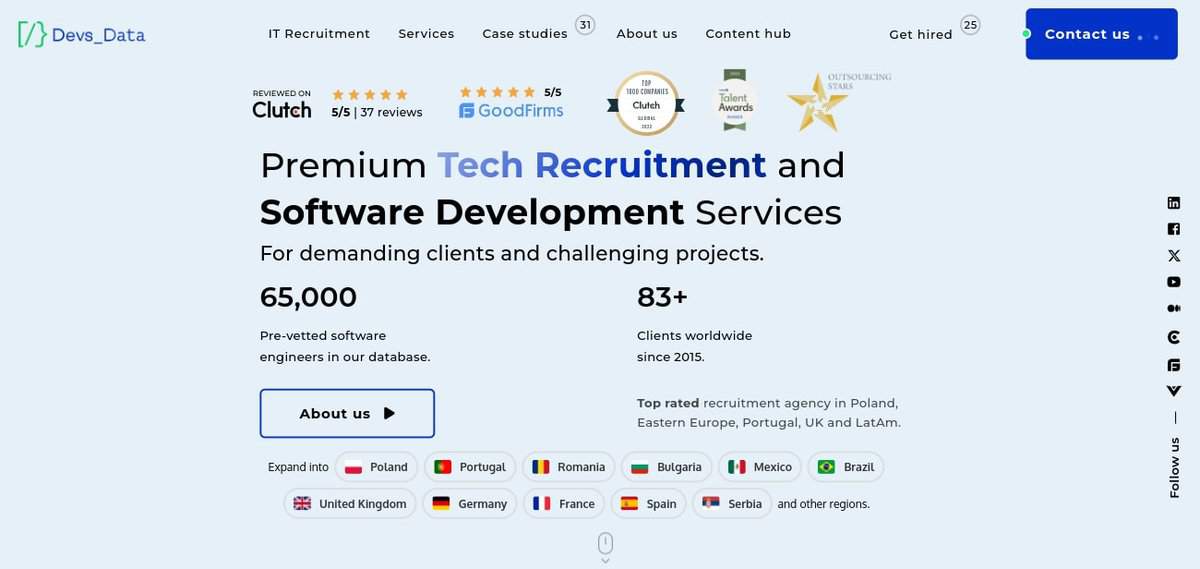
DevsData LLC combines proven expertise with a rigorous, data-driven approach, making it a reliable partner for businesses that treat diversity recruitment as a strategic priority. With more than nine years of market experience, the company has successfully completed over 100 recruitment projects for 80+ clients worldwide, including both large corporate enterprises and high-growth startups in countries such as the US and Israel. This breadth of experience enables DevsData LLC to tailor diversity-focused hiring strategies to different business environments and organizational cultures. The company is built around a diverse, international team that brings together specialists from various backgrounds and regions to reflect the inclusive practices it promotes.
A key strength lies in the company’s extensive reach. DevsData LLC maintains a proprietary database of more than 65000 candidates, providing immediate access to a broad, diverse talent pool. This is combined with advanced sourcing practices that ensure underrepresented groups are included in every search. Importantly, the firm holds an official, government-approved license for recruitment services, underscoring both compliance and professionalism in all hiring engagements.
The recruitment process itself is designed to maintain the highest standards of candidate evaluation while minimizing bias. Every candidate undergoes a structured assessment process, including a 90-minute problem-solving challenge and communication skills evaluation. This rigorous approach ensures that shortlisted professionals not only meet technical requirements but also demonstrate the collaboration and clarity essential for diverse teams to thrive.
Clients benefit from a success-fee model with a guarantee period, reflecting DevsData LLC’s commitment to accountability and long-term outcomes. With US-based specialists on the team, the company is also well-positioned to understand the dynamics of both domestic and international hiring markets. The quality of service is further validated by consistent top ratings: 5/5 on platforms such as Clutch and GoodFirms.
Taken together, these qualities position DevsData LLC as a trusted diversity recruitment agency that delivers measurable results while supporting businesses in building inclusive, future-ready teams.
DevsData LLC follows structured protocols to ensure that diversity is embedded at every stage of the hiring process:
One of many examples from DevsData LLC’s portfolio is the three-year collaboration with Paysera, a leading European FinTech company. Operating under strict regulatory standards, Paysera needed senior specialists across multiple domains: software development, QA, DevOps, AI, and project management, while ensuring strong cultural alignment and compliance expertise.
Paysera faced the dual challenge of hiring for niche technical roles in a highly competitive European market while also seeking candidates who could meet strict financial-sector compliance standards. Typical hurdles included skill mismatches, candidate dropouts, and attracting top engineers who often received multiple offers from global tech giants.
Key outcomes
This project illustrates how DevsData LLC applies diversity recruitment strategies to complex, high-stakes environments. By accessing varied talent pools and using rigorous evaluation methods, the company ensured that Paysera’s teams combined both technical excellence and diverse perspectives – an approach mirrored across over 100 successful recruitment projects in its broader portfolio.
Ready to strengthen your workforce with top-tier, diverse talent? Partner with DevsData LLC to access global candidate networks, reduce hiring bias, and build teams that drive innovation and growth. Contact us today by emailing general@devsdata.com or visiting our website at www.devsdata.com.
Diversity recruitment has evolved from a values-driven initiative into a clear business necessity. Companies that commit to building inclusive teams benefit from measurable advantages: higher profitability, stronger shareholder returns, enhanced innovation, improved retention, and reduced organizational risk. With research showing that diverse teams make better decisions the vast majority of the time, the case for integrating inclusivity into recruitment strategies is both compelling and practical.
The market landscape reflects this shift. Technological advancements in AI and analytics are reshaping how organizations source, evaluate, and track candidates, while remote and skills-based hiring are broadening access to talent pools. At the same time, companies face challenges such as unconscious bias, narrow candidate pipelines, compliance requirements, and the ever-present competition for specialized talent. Overcoming these hurdles requires structured processes, access to diverse networks, and an unwavering focus on measurable results.
For businesses evaluating partners, choosing the right diversity recruitment agency means prioritizing evidence-based methods, transparency in metrics, and cultural alignment. Agencies that combine reach with rigor can help organizations not only attract diverse candidates but also ensure that new hires contribute meaningfully to long-term goals.
DevsData LLC exemplifies these qualities. With more than nine years of experience, a licensed and structured recruitment model, and a proprietary database of over 65000 candidates, the company has successfully delivered tailored solutions to both global corporations and fast-growing startups. Its rigorous candidate assessments, success-fee model, and guarantee period ensure accountability at every step. By blending international reach with precision in evaluation, DevsData LLC supports businesses in building teams that are not only technically proficient but also diverse, resilient, and aligned with the demands of today’s competitive markets.
Any questions or comments? Let me know on
Twitter/X.
Discover how IT recruitment and staffing can address your talent needs. Explore trending regions
like Poland, Portugal, Mexico, Brazil and more.
 Frequently asked questions (FAQ)
DevsData – your premium technology partner
DevsData is a boutique tech recruitment and software agency. Develop your software project with veteran engineers or scale up an in-house tech team of developers with relevant industry experience.
Free consultation with a software expert
🎧 Schedule a meeting
FEATURED IN
DevsData LLC is truly exceptional – their backend developers are some of the best I’ve ever worked with.”

Nicholas Johnson
Mentor at YC, serial entrepreneur


 Build your project with our veteran developers.
Explore the benefits of technology recruitment and tailor-made software.
Learn how to source skilled and experienced software developers.
Build your project with our veteran developers.
Explore the benefits of technology recruitment and tailor-made software.
Learn how to source skilled and experienced software developers.

Rebecca Botvin

Commercial Director

Tom Potanski
Manager




Categories: Big data, data analytics | Software and technology | IT recruitment blog | IT in Poland | Content hub (blog)
Email copied
And many other regional partners across Latin and North America, as well as Central and Eastern Europe. Let's talk.














careers@devsdata.com









general@devsdata.com

"I interviewed about a dozen different firms. DevsData LLC is truly exceptional – their backend developers are some of the best I've ever worked with. I've worked with a lot of very well-qualified developers, locally in San Francisco, and remotely, so that is not a compliment I offer lightly. I appreciate their depth of knowledge and their ability to get things done quickly."

Nicholas Johnson
CEO of Orange Charger LLC,
Ex-Tesla Engineer,
Mentor at YCombinator
"DevsData reached out to us, as we've been looking to grow our engineering team in Europe and Poland. Communicating efficiently and professionally, DevsData made a strong impression with their understanding of the recruitment challenges we were facing. They designed a tailored recruitment process for our needs. I was impressed with the technical depth of their approach."

Karim Butt
Co-Founder & CTO at GlossGenius, Inc.
"Out of all the vendors we work with, DevsData clearly stands out. The quality of developers they deliver is beyond what we've received from any other vendor, and they've been able to send profile recommendations very quickly. I'm happy to be their reference for other companies from Israel and talk about their recruitment abilities and what they delivered for us."

Ran Eyal
Senior Manager at
ZIM Integrated
Shipping Services Ltd.
"DevsData demonstrated a strong degree of proactivity, taking time to thoroughly understand the problem and business perspective, and continuously suggesting performance and usability enhancements. Their app exceeded my expectations. I've worked with DevsData on numerous projects over the last 3 years and I'm very happy. Being both responsive and honest in communication."

Jonas Lee
Partner & Executive VP of Verus,
Financial LLC, Investor,
& Serial Entrepreneur
Acknowledgments