Thanks for subscribing.
Your gift is on the way.



Apple’s iOS platform powers an economy that grows more lucrative each year. According to TechCrunch, global consumer spending across the App Store and Google Play reached an estimated $155.8 billion in 2025, up 21.6% year over year. iOS accounts for the majority of that revenue, driven by subscription models and in-app purchases that now outpace mobile gaming in total spend. The demand for iOS apps keeps rising, and so does the need for Developers who can build them.
The Stack Overflow Developer Survey 2024 found that only 4.7% of respondents reported actively using Swift. Objective-C, Apple’s older language, registered at 2.1%.
Those numbers place iOS development far below languages like JavaScript (62.3%) or Python (51%), creating a significant talent gap for companies that depend on native Apple applications. Specialized technical work widens the gap even further, as roles demanding narrow platform expertise sit open far longer than positions in fields with broader talent pools. Recruiting qualified iOS Developers takes more time and effort than many hiring managers expect.
DevsData LLC has worked with organizations facing exactly this challenge. Through structured technical vetting, targeted sourcing, and hands-on evaluation of candidates’ coding ability, the team helps clients identify iOS Developers who match both the technical demands and working-style expectations of a given role, from communication habits to experience collaborating within agile teams. This article shares what that process looks like in practice, the common pitfalls companies encounter, and the strategies that produce the strongest hiring outcomes.
An iOS Developer designs, builds, and maintains applications that run on Apple’s mobile operating system. The work centers on writing code in Swift or Objective-C, integrating with Apple’s native frameworks like Core Data, Core Animation, and UIKit, and shipping polished products through the App Store. Beyond coding, iOS Developers collaborate with UX Designers, Product Managers, and backend engineers to translate feature requirements into functional interfaces that follow Apple’s Human Interface Guidelines.
The role extends well past initial development. iOS Developers write automated tests to catch regressions, tune memory usage and rendering performance, and manage the full release cycle from build configurations to App Store submission. They also handle API integrations, push notification systems, and local data persistence, making sure the app functions reliably across different device types, screen sizes, and operating system versions.
Modern iOS development increasingly calls for specialization in areas like SwiftUI for declarative interfaces, ARKit for augmented reality experiences, or Core ML for on-device machine learning.
The arrival of Apple Intelligence, introduced with iOS 18 and expanded in subsequent releases, added another dimension to the role. Developers now integrate features such as Writing Tools, Image Playground, Genmoji, and the upgraded Siri through APIs like the Foundation Models framework, App Intents, and Visual Intelligence, allowing apps to tap into on-device large language models without sending user data to external servers. As the Apple ecosystem expands to include wearables, Apple TV, and the Vision Pro headset, senior iOS Developers often architect shared codebases that serve multiple platforms while maintaining the responsiveness users expect from native applications.
Sourcing flexibility depends on the seniority and complexity of the role. Senior positions involving custom UIKit work, Metal-based rendering, advanced Core Data threading, or Apple Intelligence integration require narrow specialization in the Apple ecosystem, with engineers built around Xcode, Swift, and years of App Store submissions.
Mid-level and junior roles open up more options. macOS Developers working with AppKit and SwiftUI transition to iOS smoothly given the shared language, IDE, and overlapping framework ecosystem. visionOS Developers represent another natural pipeline, as the platform builds directly on iOS foundations. Engineers with strong Swift backgrounds from server-side projects using Vapor or Hummingbird also adapt quickly when paired with mentorship on UIKit lifecycle and memory profiling.
Cross-platform Developers from Flutter, React Native, or Kotlin Multiplatform backgrounds need closer evaluation. Some have built deep native bridges and contribute meaningfully on day one. Others have only touched the platform through abstraction layers, leaving gaps in concurrency handling, Instruments-based profiling, and App Store compliance that surface weeks into the codebase. Treat them as a viable pool when the role allows for ramp-up time and architectural oversight from a senior native iOS engineer, not as a direct substitute for a role responsible for performance-critical or AI-powered features. The widening range of sourcing pipelines reflects a broader reality: the iOS ecosystem has grown intricate enough that surface-level familiarity no longer signals readiness, and every candidate warrants evaluation against the specific demands of the role. That evaluation starts with a clear, repeatable process.
Do you have IT recruitment needs?
Hiring an iOS Developer who fits both the technical stack and the team’s working style requires a structured approach. The following table outlines the core stages of a typical hiring process, from defining the role to onboarding the selected candidate.
| Stage | Description |
|---|---|
| Define role and technical requirements | Specify Swift or Objective-C proficiency, frameworks (UIKit, SwiftUI, Core Data), target platforms (iPhone, iPad, Apple Watch), and any backend integration needs. |
| Choose a hiring model | Decide between full-time in-house, freelance, or partnering with a recruitment firm like DevsData LLC. |
| Source candidates | Post on iOS-focused boards, GitHub, and Apple Developer community forums. Use passive outreach for mid-senior talent. |
| Screen for technical depth | Review App Store portfolio, open source contributions, and experience with Xcode, Instruments, and CI/CD pipelines. |
| Conduct technical assessments | Use live coding or take-home tasks that test memory management, concurrency handling, and adherence to Apple’s Human Interface Guidelines. |
| Assess cultural fit | Run behavioral interviews focused on collaboration, problem-solving, and communication patterns. |
| Verify references and finalize offer | Confirm track record with previous employers. Structure compensation around specialization and seniority. |
| Onboard with clear expectations | Provide codebase documentation, team conventions, and a 30/60/90-day productivity plan. |
Each stage builds on the previous one, and skipping steps tends to produce mismatches that surface weeks or months into the engagement. DevsData LLC supports clients through this sequence by defining role requirements alongside the hiring team, sourcing from a proprietary database of vetted IT professionals, and running technical assessments that test memory management, concurrency handling, and App Store submission experience rather than surface-level Swift knowledge. Candidates reach the client only after passing multi-stage screening, which keeps evaluation load off internal teams and shortens time to a confident hire. Companies that invest in rigorous upfront evaluation, whether independently or through a partner like DevsData LLC, consistently report shorter ramp-up times and stronger long-term retention among their iOS hires.
Apple’s platform attracts users who spend more, engage longer, and retain at higher rates than their counterparts on competing operating systems. Hiring a skilled iOS Developer positions a company to capture that value directly.
The benefits go beyond writing functional code. They extend to revenue potential, access to a massive device ecosystem, and long-term platform stability backed by recent industry data.
iOS users consistently outspend Android users on apps, subscriptions, and in-app purchases. According to TechCrunch (2025), US App Store Developers generated $33.68 billion in gross revenue through Apple’s payment system in 2024. That spending concentration means a well-built iOS app reaches an audience already inclined to pay for digital products. A qualified iOS Developer understands how to implement subscription flows, in-app purchase logic, and paywall design patterns that convert this willingness into recurring revenue.
Apple’s installed base keeps expanding, and each new device creates another surface where a native iOS application delivers value. As reported by 9to5Mac 2026, Apple disclosed during its Q1 2026 earnings call that it now has over 2.5 billion active devices worldwide, up from 2.35 billion a year earlier. That figure spans iPhones, iPads, Macs, Apple Watches, and Apple TV units. An experienced iOS Developer builds applications that take advantage of shared frameworks across these devices, extending a single codebase to serve users on multiple screens without requiring separate teams for each platform.
Apple invests heavily in its development toolchain, releasing annual updates to Swift, Xcode, and its native frameworks. The JetBrains State of Developer Ecosystem 2024 report, based on responses from over 23000 developers, confirmed that Swift usage grew from approximately 7% in 2020 to 9% in 2024, reflecting steady adoption driven by Apple’s continued investment in the language’s performance, concurrency model, and safety features. Companies that hire iOS Developers proficient in Swift benefit from a language that receives predictable annual improvements, strong documentation, and tight integration with Apple’s hardware, reducing long-term maintenance costs and technical debt.
For companies that already ship an iOS app, the case for hiring shifts from building something new to extending what exists into territory the current team cannot reach. Apple’s platform keeps opening capabilities that reward specialized talent, and the Foundation Models framework is a recent example. Released to developers with iOS 26, iPadOS 26, and macOS 26, the framework lets third-party apps tap into the same on-device large language model that powers Apple Intelligence. A developer with hands-on experience here integrates on-device summarization, structured generation, or natural-language features into a mature codebase without routing user data to external servers, which turns a platform-level capability into a differentiator competitors running on abstraction layers struggle to match. The same logic applies to Metal-based rendering, advanced Core Data threading, or visionOS expansion. An existing app rarely needs a full rebuild, though it often needs one engineer who has shipped the specific feature the product roadmap now demands.
Do you have IT recruitment needs?
Even when organizations commit to hiring iOS Developers, the process often comes with obstacles that slow timelines, inflate costs, or lead to poor technical outcomes if the evaluation is shallow. iOS development sits at an intersection of platform-specific constraints, strict App Store enforcement, and a relatively small talent pool compared to cross-platform alternatives. DevsData LLC addresses these obstacles through targeted sourcing from a proprietary database of vetted IT professionals, multi-stage technical screening that tests Swift proficiency alongside memory management and concurrency handling, and practical coding assessments modeled on real iOS scenarios rather than generic puzzles. The section below sets out several challenges we encounter regularly in iOS recruitment, each supported by independent data.
Apple enforces one of the most rigorous app review processes in the industry, and every rejection delays product launches. According to MacRumors 2025, Apple’s 2024 App Store Transparency Report showed the company reviewed 7.77 million app submissions and rejected 1.93 million, with performance, legal, and design issues leading the rejections. Hiring an iOS Developer unfamiliar with Apple’s Human Interface Guidelines and submission requirements creates a recurring cycle of rejections that slows time to market and raises engineering costs.
Our approach at DevsData LLC
We evaluate candidates on their track record with App Store submissions, including their experience handling rejection feedback, resolving compliance issues, and structuring apps to pass review on the first attempt.
iOS applications operate in a security environment that demands constant vigilance. Apple patched seven actively exploited zero-day vulnerabilities in 2025 alone, as documented in advisories published on Apple Support and reported by AppleInsider. These ranged from WebKit memory corruption flaws to kernel-level privilege escalation bugs. An iOS Developer who does not actively track Apple’s security bulletins, implement App Transport Security correctly, or apply proper data protection classes puts the application and its users at risk.
Our approach at DevsData LLC
We screen for security awareness through scenario-based questions covering topics like keychain usage, certificate pinning, biometric authentication implementation, and response protocols for newly disclosed vulnerabilities.
Cross-platform frameworks like Flutter and React Native have blurred the line between iOS specialists and mobile generalists. The JetBrains State of Developer Ecosystem 2024 report found that almost half of mobile developers use cross-platform technologies. These tools serve valid purposes, but candidates working primarily within them often lack depth in native iOS concepts like Core Data threading, UIKit lifecycle management, or Instruments-based profiling. Mistaking a cross-platform generalist for a native iOS specialist leads to architectural decisions that compromise app performance and long-term maintainability.
Our approach at DevsData LLC
We screen specifically for native iOS ownership. Candidates must demonstrate decisions around framework selection, memory management, concurrency handling, and Xcode Instruments profiling rather than surface-level familiarity with Swift syntax.
Apple releases major updates to iOS, Xcode, and its SDK frameworks every year, and each cycle introduces deprecations, new APIs, and shifting best practices. TechCrunch 2025 reported that Apple now provides developers with over 250000 APIs as part of frameworks like HealthKit, Metal, Core ML, MapKit, and SwiftUI. The sheer breadth of this surface means that an iOS Developer who stopped learning after SwiftUI’s initial release in 2019 will struggle with current patterns around structured concurrency, observation frameworks, and visionOS compatibility.
Our approach at DevsData LLC
We assess candidates on their familiarity with recent Apple platform changes, including adoption of Swift concurrency, migration from UIKit to SwiftUI where appropriate, and understanding of privacy-related API changes introduced in the latest iOS versions.
Recruiting iOS Developers requires careful role definition and technical evaluation. Differences in App Store compliance knowledge, security awareness, native versus cross-platform depth, and adaptability to annual platform changes often determine whether a hire strengthens or weakens a team’s long-term output. A structured hiring process helps organizations identify developers who can deliver production-grade iOS applications and maintain them as Apple’s ecosystem continues to evolve.
An iOS development partner covers the full lifecycle of an Apple application, from early architecture decisions through App Store release and ongoing maintenance. Some engagements start a product from scratch, where the partner shapes the codebase structure and sets conventions that determine how the app grows. Others scale an existing team by supplying vetted Swift and SwiftUI engineers who slot into an active codebase to contribute to feature work or a migration already underway. Narrower situations come up too, like recovering a project stalled by repeated App Store rejections or extending a mature app into on-device AI features. The right partner adjusts to where a product sits in its lifecycle.
That choice affects how stable your applications remain under real-world usage, how efficiently they scale across devices, and how maintainable your codebase stays over time. A strong partner does far more than build UI screens, since the work demands command of iOS architecture, performance optimization, Apple ecosystem constraints, and long-term product evolution.
Production depth separates a real iOS partner from a general app shop. Ask what they have published on the App Store and how those apps held up under load, then look for direct work with Swift, UIKit, SwiftUI, and Apple frameworks on features that punish shallow experience: offline mode, media-heavy flows, and performance-sensitive screens where a dropped frame shows.
Most apps that survive past launch grow into systems with many modules, external integrations, and competing demands on the same codebase. The partner’s track record should show that scale is handled in practice through architectures like MVVM or Clean Architecture, clear modularization, disciplined dependency management, and clean integration with backend services, analytics tools, and third-party SDKs.
Users abandon iOS apps that stutter or load slowly, which puts performance at the center of the evaluation. A qualified partner brings proven work optimizing rendering, managing memory efficiently, and reducing app size, with responsiveness holding steady across older devices and the range of OS versions still in active use.
Publishing on the App Store means clearing strict guidelines and an unpredictable review process, where a single rejection stalls a launch. The partner needs fluency in Apple’s policies, hands-on command of provisioning and certificates, working CI/CD pipelines, and release cycles that ship on schedule rather than stalling at submission.
Website: www.devsdata.com
Company size: ~60 employees
Founding year: 2016
Headquarters: Brooklyn, NY, and Warsaw, Poland
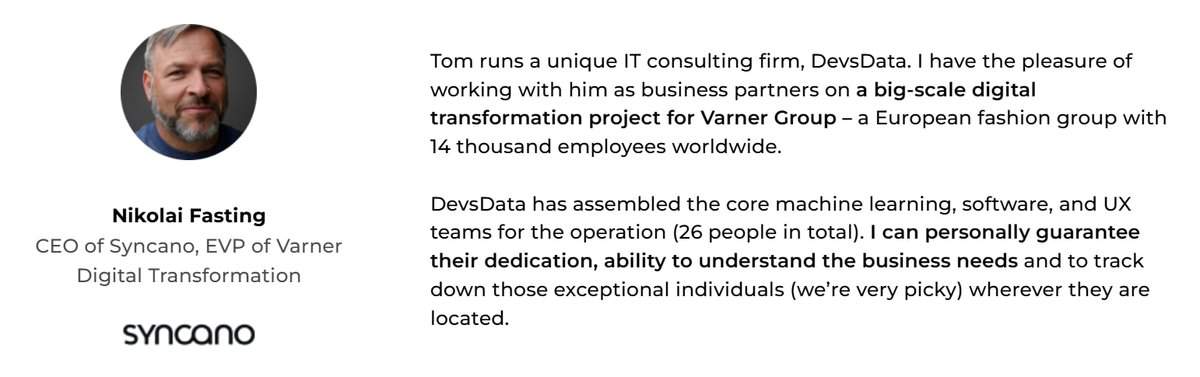
At DevsData LLC, we have helped companies across the US, Europe, and Israel hire and scale iOS development teams, from consumer-facing apps and enterprise mobile platforms to cross-device solutions spanning iPhone, iPad, and Apple Watch. Our vetting process is tailored specifically to iOS Developers, evaluating Swift proficiency, UIKit and SwiftUI architecture, Core Data implementation, App Store submission experience, security practices, and performance optimization through Xcode Instruments. With a proprietary database of 95000+ vetted IT professionals worldwide and an official, government-approved recruitment license, we operate with full compliance and disciplined standards.
Our experience shows that writing functional Swift code is not enough. Strong iOS Developers must design maintainable architectures, adopt each yearly iOS SDK and Xcode release on schedule while patching deprecated APIs and keeping apps compatible across the operating system versions still in use, implement secure data handling and keychain storage, and collaborate effectively across backend, design, and product teams. We prioritize production readiness, security awareness, and disciplined engineering practices over surface-level familiarity with the language.
Across 80+ satisfied clients and 100+ technical engagements, we have helped organizations avoid poorly architected codebases, repeated App Store rejections, and costly mismatches between cross-platform generalists and native iOS specialist roles. With consistent 5.0 ratings on Clutch and GoodFirms, our focus remains on predictable delivery and building reliable iOS teams that support long-term application performance and stability.
GlossGenius, a US-based beauty-tech company, partnered with DevsData LLC to recruit senior engineers capable of scaling its mobile-first platform used by independent beauty professionals for scheduling, payments, and client management. The application serves tens of thousands of users daily through native iOS and Android clients, requiring developers with a deep understanding of mobile UI performance, real-time data synchronization, and App Store deployment workflows. Our vetting focused on native mobile architecture experience, ability to contribute to a rapidly evolving codebase, and familiarity with subscription-based monetization flows.
Key learning: the candidates who performed best were those who could demonstrate concrete ownership of mobile features in production, from UI rendering optimization to payment integration, rather than developers whose work stopped at building demos and proofs of concept they never carried through to a live App Store release.
Kanary, a US-based privacy-focused SaaS company, engaged DevsData LLC to recruit a senior backend developer responsible for strengthening the infrastructure that handles sensitive user data across web and mobile clients. Our vetting emphasized production system ownership, secure coding practices, distributed service performance, and integration discipline.
Key learning: backend candidates often underestimate the complexity of secure data handling. The successful hire treated encryption, access control, and audit logging as core architectural concerns rather than afterthoughts. The same principle holds for iOS recruitment, since backend security awareness separates reliable mobile teams from those that quietly introduce risk at the API layer.
Mend.io, an Israeli technology company specializing in software composition analysis, partnered with DevsData LLC to recruit senior-level engineers with expertise in algorithm design and high-concurrency backend systems. The roles demanded deep specialization in areas like static code analysis, dependency scanning, and fault-tolerant service architecture, skills that overlap with the performance-critical thinking required when building native iOS applications that must handle concurrency, memory constraints, and complex data flows. We designed a tailored screening process targeting passive candidates in Eastern Europe and Israel, assessing both theoretical depth and production-grade delivery experience.
Key learning: in iOS recruitment, the strongest hires reason about system architecture, performance bottlenecks, and failure modes rather than leaning on framework conventions. SwiftUI fluency without architectural depth produces apps that hold up in demos but degrade under real-world load.
Across these engagements, one pattern remains consistent: effective iOS and mobile recruitment depends on validating production ownership, architectural reasoning, and security awareness rather than relying on years of experience or framework keyword matching.
Not sure whether working with an iOS hiring partner is the right move for your company? Use this quick self-assessment to evaluate your situation. Answer each question with “Yes” or “No”.
Mostly “Yes”: working with an iOS hiring partner can significantly improve your hiring outcomes. A structured recruitment process, combined with deep technical vetting, reduces hiring risk and shortens time-to-hire. DevsData LLC helps organizations access rigorously evaluated iOS Developers with proven experience in building scalable, production-ready mobile applications.
Mostly “No”: your current hiring process may be sufficient for now. However, as your mobile product grows or technical requirements become more complex, partnering with a specialized recruiter can help maintain quality and reduce internal workload.
Do you have IT recruitment needs?
While the mobile ecosystem continues to expand, the pool of engineers capable of building high-performance, scalable, and maintainable iOS applications remains limited. This creates a recruitment environment where precision, technical evaluation, and speed are critical.
DevsData LLC supports organizations through this process by combining targeted sourcing with deep technical vetting. With a global network of vetted IT professionals, a rigorous acceptance process, and experience across international markets, the company focuses on identifying candidates who deliver both technical excellence and strong collaboration skills.
Mobile applications shape user engagement and revenue directly. Hiring the right iOS Developer is an investment in your product’s performance, not just another role to fill.
Learn more at www.devsdata.com or contact general@devsdata.com.
Discover how IT recruitment and staffing can address your talent needs. Explore trending regions
like Poland, Portugal, Mexico, Brazil and more.
 Frequently asked questions (FAQ)
DevsData – your premium technology partner
DevsData is a boutique tech recruitment and software agency. Develop your software project with veteran engineers or scale up an in-house tech team of developers with relevant industry experience.
Free consultation with a software expert
🎧 Schedule a meeting
FEATURED IN

DevsData LLC is truly exceptional – their backend developers are some of the best I’ve ever worked with.”

Nicholas Johnson
Mentor at YC, serial entrepreneur


 Build your project with our veteran developers.
Explore the benefits of technology recruitment and tailor-made software.
Learn how to source skilled and experienced software developers.
Build your project with our veteran developers.
Explore the benefits of technology recruitment and tailor-made software.
Learn how to source skilled and experienced software developers.

Rebecca Botvin

Commercial Director

Tom Potanski
Manager




Categories: Big data, data analytics | Software and technology | IT recruitment blog | IT in Poland | Content hub (blog)















careers@devsdata.com









general@devsdata.com

"I interviewed about a dozen different firms. DevsData LLC is truly exceptional – their backend developers are some of the best I've ever worked with. I've worked with a lot of very well-qualified developers, locally in San Francisco, and remotely, so that is not a compliment I offer lightly. I appreciate their depth of knowledge and their ability to get things done quickly."

Nicholas Johnson
CEO of Orange Charger LLC,
Ex-Tesla Engineer,
Mentor at YCombinator
"DevsData reached out to us, as we've been looking to grow our engineering team in Europe and Poland. Communicating efficiently and professionally, DevsData made a strong impression with their understanding of the recruitment challenges we were facing. They designed a tailored recruitment process for our needs. I was impressed with the technical depth of their approach."

Karim Butt
Co-Founder & CTO at GlossGenius, Inc.
"Out of all the vendors we work with, DevsData clearly stands out. The quality of developers they deliver is beyond what we've received from any other vendor, and they've been able to send profile recommendations very quickly. I'm happy to be their reference for other companies from Israel and talk about their recruitment abilities and what they delivered for us."

Ran Eyal
Senior Manager at
ZIM Integrated
Shipping Services Ltd.
"DevsData demonstrated a strong degree of proactivity, taking time to thoroughly understand the problem and business perspective, and continuously suggesting performance and usability enhancements. Their app exceeded my expectations. I've worked with DevsData on numerous projects over the last 3 years and I'm very happy. Being both responsive and honest in communication."

Jonas Lee
Partner & Executive VP of Verus,
Financial LLC, Investor,
& Serial Entrepreneur
Acknowledgments