Thanks for subscribing.
Your gift is on the way.



Research and development centers have become the engine behind product innovation for global technology firms, allowing companies to concentrate engineering talent, accelerate experimentation, and build proprietary capabilities close to skilled labor markets. An R&D center operates as a dedicated unit where teams design, prototype, and refine software, hardware, manufacturing processes, and emerging technologies rather than handling routine maintenance, and it has grown into a strategic asset for organizations competing across artificial intelligence, cybersecurity, FinTech, advanced manufacturing, and cloud infrastructure.
Poland has positioned itself as one of Europe’s leading destinations for this kind of operation. Polish government trade data shows the country attracted 472 foreign greenfield R&D investments since 2003, producing 94 research and development units, with 19 of those established between 2022 and 2024, and the software and IT services sector accounting for 62.3 percent of all projects. The momentum extends beyond foreign capital alone.
WIPO analysis of two decades of innovation spending found that Poland’s R&D expenditure increased around sixfold since 2000, placing it among a small group of economies that expanded their global research footprint over that period.
That growth brings real complexity for any company setting up locally. Founders must work through entity formation, employment law, intellectual property protection, tax incentives tied to qualifying research activity, and the recruitment of specialized engineers in a market where demand often outpaces available senior talent. The early structural decisions a company cannot easily reverse, from where the office sits to how the team scales, shape costs and retention for years afterward, which makes the setup phase harder than it first appears.
At DevsData LLC, we have helped organizations establish R&D centers in Poland that pair strong technical teams with the kind of low engineer turnover that keeps institutional knowledge inside the company year after year. In this article, we explain how we approach location strategy, talent sourcing, and operational setup, walk through the engagement models available to companies, and share practical insights drawn from our own experience supporting clients on the ground.
An R&D center is a dedicated unit where a company concentrates its engineering and innovation work, staffed by teams who design, prototype, and refine products rather than handle routine support or maintenance. The term describes function rather than form. The unit exists to create new technology, improve existing systems, and develop intellectual property that belongs to the parent company, and its value comes from how closely that output ties to the company’s long-term product strategy.
The work inside an R&D center separates it from other foreign operations. Engineers tackle problems that sit at the core of the product, which covers software architecture, algorithm development, hardware and embedded systems design, applied research in fields like artificial intelligence or computer vision, and the kind of experimentation that does not always produce immediate revenue. A shared services center processes transactions and runs back-office functions, while an R&D center generates the technical assets a company competes on. This distinction shapes who gets hired, since the roles demand senior engineers, hardware designers, researchers, and specialists rather than generalists, and it shapes how the unit is measured, since output is judged on innovation and product impact rather than ticket volume or cost per task.
Ownership is the second defining feature. An R&D center operates as part of the company itself, either as a registered subsidiary or a directly employed team, which keeps intellectual property, source code, and institutional knowledge inside the organization.
That structure matters in jurisdictions where IP law treats work created by employees differently from work delivered by external contractors, and it gives the company direct control over hiring standards, technical direction, and the culture the team builds over time. The engineers identify with the parent company, follow its roadmap, and accumulate domain knowledge that stays in-house rather than walking out the door at the end of a contract.
An R&D center suits companies that want a permanent engineering presence built around proprietary work, rather than those seeking temporary capacity or a vendor relationship that ends when a project closes. The commitment is larger, the setup more involved, and the returns measured over years instead of quarters, which is what makes the structural decisions at the outset worth getting right.
Do you have IT recruitment needs?
Establishing an R&D center in Poland moves through a sequence of stages, though the work overlaps at the edges rather than stopping cleanly between steps. Knowing what each stage requires, and where the decisions lock in, is what separates a center that runs stably for years from one that stalls soon after launch.
Setting up a center begins with a clear definition of what it should produce, covering the technical domains it will own, the team size and seniority mix that work demands, and the timeline for reaching full capacity. Scope also settles how the unit slots into the wider organization, from the parts of the product roadmap it takes on to the way its output hands off to teams elsewhere, along with its place in reporting lines and decision rights so the Polish operation runs as part of the company rather than a satellite chasing its own agenda. Location follows from these choices. A center built around machine learning research draws on a different talent concentration than one focused on backend infrastructure, so the choice among Warsaw, Krakow, Wroclaw, Gdansk, and Poznań rests on where the relevant specialists cluster and what salary bands hold in each city. Getting scope right early carries weight, since the structural decisions made here shape recruitment, cost, and retention across the whole life of the center.
The next stage builds the legal and administrative foundation. This covers registering a subsidiary or arranging an employment vehicle, setting up payroll and benefits that comply with Polish labor law, and structuring the entity to capture the R&D tax relief. Intellectual property arrangements belong here too. Because an R&D center exists to generate proprietary assets, the entity structure has to keep source code, patents, and research firmly inside the parent company, which means aligning employment contracts and IP assignment with both Polish and home-country law from the outset.
Recruitment runs alongside the legal work rather than after it. This is the stage where most of the long-term value of the center is decided, since the engineers hired now will carry the institutional knowledge the company depends on for years. Scale shapes how hard this stage runs, since a center might open with a handful of engineers or ramp toward hundreds of hires inside a single year, and the larger the target, the more the pipeline has to sustain quality while moving at volume. The roles demand depth, covering Senior Developers, researchers, and specialists in fields like artificial intelligence and cybersecurity rather than generalists, and larger centers add senior leadership and C-level positions such as an Engineering Director or a local Managing Director to anchor the operation and keep it aligned with headquarters. Evaluation has to weigh technical ability, communication, and fit with the company’s working culture. A rushed or shallow hiring process plants problems that surface later as turnover and lost knowledge, which is why a rigorous vetting standard pays off across the entire operation. Demand often outpaces senior supply in the Polish market, so reaching the right candidates usually rests on local knowledge of where they sit and what secures them.
With the team forming, the operational layer comes together: office space or remote infrastructure, equipment, security and data-handling practices that meet EU requirements, and the tools and processes that connect the Polish team to the rest of the organization. The center adopts the parent company’s stack and communication rhythms during this stage so that engineers work as part of the wider product effort rather than as an isolated unit. Time zone alignment with the rest of Europe keeps daily coordination manageable, and a workable overlap window supports clients based in the US.
The final stage shifts from setup to growth. The center stabilizes its early hires, refines its processes, and expands as the roadmap demands, while retention becomes a central concern because losing experienced engineers undoes the knowledge the company spent months building. A center that has functioned as a genuine extension of the parent company accumulates product knowledge, working relationships, and operational habits that compound over time, which is the return the whole setup is designed to produce. Integration deepens at this point through documentation, shared ownership of technical decisions, and a working rhythm that ties the Polish team into the company’s long-term direction rather than treating it as a separate outpost.
Establishing an R&D center in Poland delivers returns that reach well past simple cost reduction. A well-structured center strengthens innovation capacity, anchors intellectual property inside the company, lowers the long-term cost of engineering, and positions the organization within one of Europe’s fastest-growing research economies. Each benefit below rests on independent research or government data.
Poland has expanded its research base faster than almost any comparable economy, which gives the center access to the surrounding ecosystem that sustained innovation work depends on. WIPO’s analysis of two decades of global innovation found that Poland’s R&D expenditure increased around sixfold since 2000, placing it among a small set of economies that grew their share of the global research footprint over that period. This matters because a center does not operate in isolation. A company entering a market where research spending is climbing finds research partnerships within reach, peers who have already solved comparable problems, and a labor pool shaped by years of demand for advanced engineering rather than one a single employer has to build from nothing.
Poland’s R&D incentive ranks among the most generous in Europe, which directly reduces the cost of the work a center is built to perform. The Tax Foundation’s comparison of 33 major European countries placed Poland behind only Portugal, with an implied tax subsidy rate of 36 percent for large profitable firms, well above the European average of 15.7 percent in 2024. For a center whose largest expense is engineering salaries, relief at this level changes the economics of every research hire and compounds across the years the unit operates.
The strength of a research center rests on the people it can recruit and replace as it grows, and Poland supplies graduates in the fields R&D work draws on. Government education data recorded more than 292600 students graduating from Polish higher education in 2022, with engineering, manufacturing, and construction producing the largest share at public universities. A steady flow of technically trained graduates keeps a center able to scale senior teams over time rather than competing for a fixed and shrinking pool, which is what separates a unit that grows from one that stalls after its first hires.
An R&D center exists to generate proprietary assets, so the legal environment around that output determines how much value the company keeps. Poland’s membership in the European Union places its intellectual property and data-handling rules within a framework familiar to Western firms, and the country’s record of attracting research investment reflects confidence in that protection. Polish government data shows the United States alone accounts for 41 percent of all capital expenditure in Poland’s R&D sector, with firms such as Google, Intel, and IBM building units in the country. Companies investing at that scale do so where they trust that the code, patents, and research their teams produce stay firmly under their own control.
Taken together, these benefits explain why an R&D center in Poland functions as a strategic investment rather than a cost play. The company gains a research-intensive setting, meaningful tax support, a renewing talent base, and legal protection for the assets its engineers create, which is the combination that turns a foreign engineering unit into a durable source of innovation.
Do you have IT recruitment needs?
Setting up an R&D center in Poland brings real obstacles, and underestimating any of them slows the launch, inflates running costs, or weakens the team over time. DevsData LLC handles the technical recruitment and operational groundwork behind these builds, placing vetted engineers and standing up compliant teams for international clients across Europe, the US, and Israel, which gives us a close view of where setups tend to run into trouble. The difficulties cluster around competition for talent, rising wages, legal and tax complexity, and the work of keeping a team productive once it scales. Below are the challenges we see most often, each paired with how we approach it.
Poland’s depth of talent does not remove the scramble for experienced people, and demand at the senior level outruns supply across the wider European market. Eurostat data places the EU at roughly 10 million ICT specialists in 2024, around 5.1 percent of total employment, against a Digital Decade target of 20 million by 2030. Although Poland fills ICT vacancies more easily than much of Europe, with Eurostat recording difficulty rates of 46.5 percent in Poland against 76.6 percent in Germany, the senior end of the market stays tight.
How we address it
We recruit against the specific seniority and specialization a center needs rather than filling seats with available generalists, and we draw on local knowledge of where experienced engineers sit and what secures them. Vetting weighs proven delivery and technical judgment over surface familiarity, which matters most for the senior hires a research unit depends on.
Poland remains cheaper than Western Europe, but wages have climbed fast enough to narrow the gap if a company does not plan for it. Statista figures show wages grew 13.7 percent in 2024, with more modest increases projected through 2027. For a center whose budget is dominated by engineering salaries, that pace compounds across years and can surprise a company that modeled costs on a single snapshot.
How we address it
We build compensation plans around current market bands and realistic growth rather than a fixed figure, and we factor the R&D tax relief into the cost model so the saving on qualifying salaries offsets part of the wage pressure. Accurate forecasting at the outset keeps the financial case durable rather than optimistic.
Standing up a compliant entity in Poland involves employment law, payroll obligations, data-handling rules, and the specific conditions that qualify activity for R&D tax relief, where missteps cost time and forfeit incentives. The relief itself is generous, with Poland ranking among Europe’s most supportive regimes at an implied subsidy rate of 36 percent against a European average of 15.7 percent in 2024, but capturing it depends on structuring the entity and documenting research activity correctly.
How we address it
We handle entity formation, payroll, and compliance with local labor law, and we structure employment and IP-assignment contracts so that source code and research stay inside the parent company under both Polish and home-country rules. Getting the legal foundation right early prevents the disputes and lost relief that surface later.
A research center’s value rests on knowledge that accumulates inside the team, so turnover does more damage here than in transactional work. The pressure is structural, since the EU’s wider shortage means competitors are always hiring, with European Commission data showing ICT specialists at just 4.8 percent of the workforce against a 2030 target of 10 percent. A center that loses experienced engineers undoes months of domain learning and slows the product work it was built to accelerate.
How we address it
We focus on the conditions that hold senior people, including meaningful technical ownership, integration with the parent company’s roadmap, and competitive total reward rather than salary alone. The aim is a team that identifies with the company and stays long enough for its knowledge to compound.
Running an R&D center in Poland rewards careful planning across recruitment, cost modeling, legal structure, and retention. The gap between a center that strengthens a company’s product capacity and one that drains resources usually traces back to how seriously these obstacles were addressed before the first hire. Each one compounds the others, since rushed recruitment feeds turnover, an underbuilt cost model strains retention, and a weak legal foundation puts intellectual property at risk. Splitting that work across separate vendors tends to leave gaps between the pieces.
A partner that covers recruitment, entity and compliance work, cost forecasting, and retention under one roof keeps the technical bar, the legal structure, and the staffing plan aligned. DevsData LLC works this way, pairing government-licensed technical recruitment with the operational support a center needs from first hire to full scale.
Deciding how to build engineering capacity abroad means weighing ownership, control, risk, and long-term cost against one another. An in-house R&D center sits at one end of this spectrum, where the company owns the team and its output outright, while outsourcing and contractor models keep the work at arm’s length. Setting the common options side by side clarifies what each delivers and where a dedicated R&D center earns its place. The table below compares the four approaches across the dimensions that matter most when the goal is durable, owned innovation capacity.
| Dimension | In-house R&D center | Traditional outsourcing | Staff augmentation | Build operate transfer |
|---|---|---|---|---|
| Ownership of output | Full; IP and team stay with the company | Vendor retains the team and much of the knowledge | No team to own; individual contractors | Company owns the team after transfer |
| IP control | Strong; code and research held in-house | Governed by contract, weaker by default | Varies by contractor agreement | Strong once transfer completes |
| Innovation focus | High; built for proprietary, open-ended work | Low to moderate; geared to defined deliverables | Task-level; little structural ownership | High after handover |
| Speed to operational | Slower; full setup and recruitment required | Fast | Fastest | Fast during build, ownership delayed |
| Launch risk | Carried entirely by the company | Carried by the vendor | Low, but no lasting asset built | Carried by the partner during build |
| Knowledge retention | High; accumulates inside the company | Stays with the vendor | Leaves when contractors leave | High; team and knowledge transfer together |
| Cost profile | Higher upfront, lower owned cost over time | Ongoing service margin indefinitely | Markup per contractor | Setup and operate fees, then owned cost base |
| Tax incentive access | Direct; qualifies for R&D relief | Indirect or unavailable | Generally unavailable | Available once the entity is owned |
| Best suited to | A permanent presence built on proprietary work | A function the company never wants to own | Short-term capacity gaps | Owned outcome with de-risked entry |
The comparison shows why an in-house R&D center holds a distinct position rather than sitting on a sliding scale of convenience. Outsourcing and staff augmentation never produce an owned asset, so a company that wants proprietary technology and lasting domain knowledge eventually has to build that capacity itself, and the intellectual property its work generates stays partly outside its control in the meantime. An R&D center carries the opposite trade-off. Ownership, IP protection, and access to Poland’s R&D tax relief come built in, though the company absorbs the full setup and recruitment effort and waits longer to reach operational scale. A partner that has built centers before helps weigh those factors against the alternatives. DevsData LLC supports that decision and the setup that follows, taking on much of the recruitment and operational load so a company reaches a stable, owned team without carrying every part of the build alone.
Choosing the right R&D center partner has a direct impact on how quickly your operation becomes productive, how effectively you attract top engineering talent, and how smoothly the transition from setup to long-term operation unfolds. A strong partner does far more than recruit developers. They must understand local regulations, talent market dynamics, operational infrastructure, and the realities of scaling a technology organization in Poland.
A reliable partner should show documented case studies of R&D centers built for international clients, references from those clients willing to speak to the outcome, and a track record measured in centers established rather than roles filled, which separates a genuine setup partner from a recruitment agency repositioning itself. Setting up an R&D center involves legal structuring, operational planning, employment compliance, office strategy, and long-term workforce development. Look for evidence that they have supported organizations through the entire process, from initial planning to operational maturity.
Poland’s technology ecosystem varies significantly between cities. Warsaw, Krakow, Wroclaw, Gdansk, and Poznań each offer different advantages in terms of talent availability, salary expectations, university pipelines, and industry specialization. A strong partner should provide practical guidance on location strategy, compensation benchmarking, and local hiring conditions rather than offering generic recommendations.
Launching an R&D center requires navigating employment law, intellectual property regulations, tax considerations, payroll administration, and compliance obligations. A qualified partner should be able to explain how these areas affect setup decisions and provide access to trusted legal, accounting, and operational support. Early mistakes in these areas can create long-term costs that are difficult to reverse later.
The initial team is only the beginning. A strong partner should demonstrate how they support growth beyond the first hires. This includes workforce planning, employer branding, retention strategies, onboarding processes, and ongoing recruitment support as the operation expands. The best partners help organizations scale from a small engineering team into a mature R&D function without disrupting productivity.
Trustworthy R&D center partners provide clear communication around timelines, costs, hiring expectations, and potential risks. They should be transparent about market realities rather than promising unrealistic hiring outcomes. Equally important, they should understand your product vision, technology stack, and long-term business objectives so that operational decisions align with strategic goals.
Choosing the right R&D center partner requires evaluating far more than recruitment capabilities alone. Long-term success depends on local expertise, operational knowledge, access to high-quality talent, and the ability to support sustainable growth over many years.
Website: www.devsdata.com
Company size: ~60 employees
Founding year: 2016
Headquarters: Brooklyn, NY, and Warsaw, Poland
At DevsData LLC, we have handled the technical hiring behind R&D centers that companies across the US, Europe, and Israel have built in Poland, staffing product-focused engineering units, applied research teams, and full development centers with engineers across backend, frontend, and emerging technologies. Our recruitment process is tailored to the seniority and specialization a research center depends on, evaluating technical depth, architectural judgment, secure engineering practices, communication ability, and the production experience that separates capable engineers from those who merely pass a coding screen. With a proprietary database of 95000+ vetted IT professionals worldwide and an official, government-approved recruitment license, we operate with full compliance and disciplined standards.
Our experience shows that recruiting individual developers is not enough. A strong R&D center needs engineers who design maintainable systems, hold institutional knowledge as the team scales, handle intellectual property responsibly, and collaborate across product, design, and infrastructure teams spread over different locations. We prioritize long-term stability, security awareness, and disciplined engineering over surface-level familiarity, because the people hired during setup are the ones a company relies on for years.
Across 80+ satisfied clients and 100+ technical engagements, we have helped organizations avoid rushed hiring, high early turnover, and costly mismatches between generalists and the specialist roles a research unit requires. Whether you want to understand the IT market in Poland or stand up a complete engineering team on the ground, our focus stays on predictable delivery and a center that holds together as it grows. With consistent 5.0 ratings on Clutch and GoodFirms, we build R&D centers in Poland that support stability at scale.
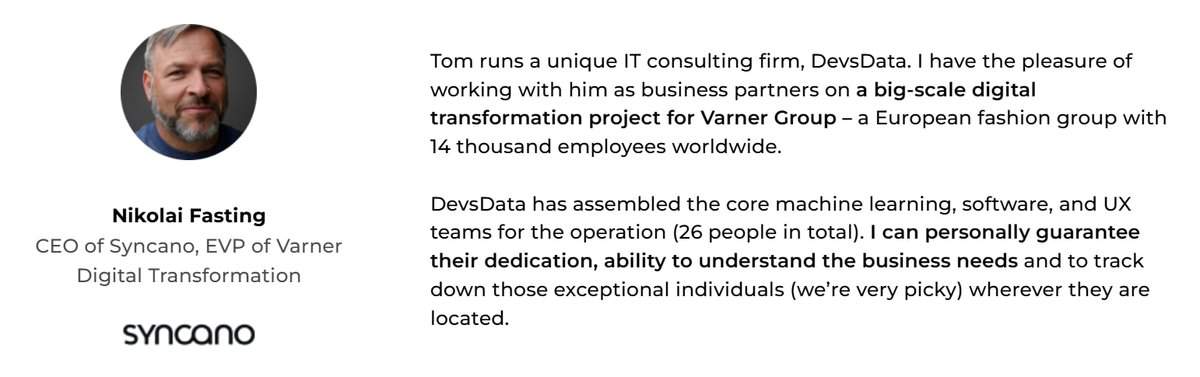
DotData, Inc., a US-based enterprise analytics company, partnered with DevsData LLC to expand its research and development capacity beyond headcount and into genuine innovation capability across AI, big data, and distributed systems. We placed 16 senior professionals across Poland and Japan, running parallel hiring tracks that put backend and DevOps roles in Warsaw alongside data science and technical writing in Tokyo, each track tuned to local expectations and time zones while staying aligned with the company’s global engineering roadmap. Evaluation went well past language proficiency in Scala or Python, using task-based exercises that mirrored cloud-native architecture challenges, ETL workflows, fault tolerance, and latency optimization.
Key learning: a research center spanning multiple locations holds together only when each regional pipeline runs against the same technical bar and the same product direction. The strongest hires were engineers who reasoned about system architecture and failure modes rather than those who knew framework conventions, which is the profile that sustains innovation work over years.
Papaya Gaming, an Israeli gaming company with nearly 500 employees and roughly $35 million in annual revenue, set up a key engineering hub in Warsaw and partnered with DevsData LLC to staff it across QA, design, backend, Unity, and data engineering. Operating at the intersection of mobile gaming and regulated payments, the company needed people comfortable with compliance-heavy workflows who could still move at the pace of a fast-growing product organization. We sourced passive candidates across Poland and applied role-specific screening that weighed both domain depth and architectural reasoning and scheduled interviews with quick feedback so the company could secure candidates ahead of competitors in a tight market.
Key learning: building a center in a regulated field demands a different vetting lens than ordinary hiring. The candidates who fit combined performance-tuning skills with an understanding of regulatory and payment-system constraints, a reminder that a center’s recruitment standard has to reflect the specific product it supports rather than a generic engineering checklist.
Haptiq, a fast-scaling American artificial intelligence startup, partnered with DevsData LLC to grow a hybrid team in Warsaw. After placing two Node.js developers who made an immediate impact, the company widened the scope to add a Business Analyst role as it recognized the need to strengthen operational capacity alongside engineering. Starting with a tight core of vetted engineers before widening the scope, paired with local market insight, let Haptiq secure talent aligned with both its technical needs and its longer-term integration plans.
Key learning: a research center rarely launches at full size. The companies that build durable units start with a small core of strong engineers, confirm the model works, and then expand into adjacent roles, which keeps early hiring quality high rather than diluting it under pressure to scale fast.
Not sure whether establishing an R&D center in Poland is the right move for your organization? Use this quick self-assessment to evaluate your situation. Answer each question with yes or no.
Mostly Yes: an R&D center in Poland could be a highly effective strategic investment for your organization. The combination of strong engineering talent, competitive costs, government incentives, and EU-level legal protections creates an environment well-suited to long-term innovation. Working with an experienced partner can significantly reduce setup complexity while accelerating time-to-productivity.
Mostly No: your organization may be better served by alternative engagement models such as staff augmentation, project outsourcing, or a Build-Operate-Transfer (BOT) arrangement. These options provide access to technical talent with lower operational commitment while preserving flexibility as business needs evolve.
Do you have IT recruitment needs?
Building an R&D center is one of the most significant strategic decisions a technology-driven organization can make. While the benefits can be substantial, including stronger innovation capabilities, greater control over intellectual property, and long-term access to engineering talent, the process requires careful planning and execution from the outset.
Poland has earned its standing as a leading destination for R&D investment, and the conditions that drew companies there are deepening rather than fading, which gives organizations entering now a foundation that should hold as the market continues to mature. These advantages have attracted hundreds of international companies seeking to establish permanent engineering and innovation operations capable of supporting global product development.
Entity formation, recruitment, compliance, location strategy, and operational scaling all influence the long-term success of the center. Decisions made during the early stages often have consequences that extend far beyond the first year of operation.
Organizations that combine clear strategic objectives with strong local expertise are better positioned to build productive engineering teams, retain specialized talent, and create sustainable innovation capabilities that generate value for years to come.
DevsData LLC supports companies throughout this process by combining local market expertise, rigorous technical recruitment, and operational guidance tailored to long-term R&D center development. With extensive experience supporting international clients across Europe and beyond, the company helps organizations establish engineering operations designed for scalability, stability, and innovation.
As technology competition intensifies, an R&D center becomes a claim on the capabilities a company will compete with for years, and with research investment in Poland still climbing, the firms acting now are entering a market on the way up rather than one that has already settled.
Learn more at devsdata.com or contact general@devsdata.com.
Discover how IT recruitment and staffing can address your talent needs. Explore trending regions like Poland, Portugal, Mexico, Brazil and more.
 Frequently asked questions (FAQ)
DevsData – your premium technology partner
DevsData is a boutique tech recruitment and software agency. Develop your software project with veteran engineers or scale up an in-house tech team of developers with relevant industry experience.
Free consultation with a software expert
🎧 Schedule a meeting
FEATURED IN


DevsData LLC is truly exceptional – their backend developers are some of the best I’ve ever worked with.”

Nicholas Johnson
Mentor at YC, serial entrepreneur


 Build your project with our veteran developers.
Explore the benefits of technology recruitment and tailor-made software.
Learn how to source skilled and experienced software developers.
Build your project with our veteran developers.
Explore the benefits of technology recruitment and tailor-made software.
Learn how to source skilled and experienced software developers.

Rebecca Botvin

Commercial Director

Tom Potanski
Manager




Categories: Big data, data analytics | Software and technology | IT recruitment blog | IT in Poland | Content hub (blog)














careers@devsdata.com









general@devsdata.com

"I interviewed about a dozen different firms. DevsData LLC is truly exceptional – their backend developers are some of the best I've ever worked with. I've worked with a lot of very well-qualified developers, locally in San Francisco, and remotely, so that is not a compliment I offer lightly. I appreciate their depth of knowledge and their ability to get things done quickly."

Nicholas Johnson
CEO of Orange Charger LLC,
Ex-Tesla Engineer,
Mentor at YCombinator
"DevsData reached out to us, as we've been looking to grow our engineering team in Europe and Poland. Communicating efficiently and professionally, DevsData made a strong impression with their understanding of the recruitment challenges we were facing. They designed a tailored recruitment process for our needs. I was impressed with the technical depth of their approach."

Karim Butt
Co-Founder & CTO at GlossGenius, Inc.
"Out of all the vendors we work with, DevsData clearly stands out. The quality of developers they deliver is beyond what we've received from any other vendor, and they've been able to send profile recommendations very quickly. I'm happy to be their reference for other companies from Israel and talk about their recruitment abilities and what they delivered for us."

Ran Eyal
Senior Manager at
ZIM Integrated
Shipping Services Ltd.
"DevsData demonstrated a strong degree of proactivity, taking time to thoroughly understand the problem and business perspective, and continuously suggesting performance and usability enhancements. Their app exceeded my expectations. I've worked with DevsData on numerous projects over the last 3 years and I'm very happy. Being both responsive and honest in communication."

Jonas Lee
Partner & Executive VP of Verus,
Financial LLC, Investor,
& Serial Entrepreneur
Acknowledgments