Thanks for subscribing.
Your gift is on the way.
 Link copied



From factory floors equipped with real-time sensors to healthcare systems tracking patients through connected devices, the Internet of Things (IoT) has become a defining layer of modern business infrastructure. The global IoT market is expected to reach USD 2.65 trillion by 2030, growing at a steady 11.4% annually. At the same time, the number of connected devices worldwide reached 18.8 billion by the end of 2024. This rapid expansion highlights the growing demand for professionals who can design, implement, and maintain secure and scalable IoT ecosystems.
Finding such specialists, however, is far from simple. IoT development requires expertise that spans embedded systems, cloud computing, data analytics, and cybersecurity – a combination that’s rare in the talent market. As a result, many businesses turn to specialized IoT developer recruitment agencies that understand both the technology and the evolving industry landscape. These agencies help companies identify the right skill sets, streamline hiring, and build development teams capable of supporting long-term IoT growth.
This article draws on DevsData LLC’s direct experience in IoT recruitment to explore the current market landscape, the advantages of partnering with specialized agencies, and the main challenges companies face when hiring IoT developers. It also highlights how collaboration with an experienced recruitment partner can accelerate innovation and strengthen technical capacity in an increasingly connected world.
IoT development connects hardware, software, and data into systems that sense, communicate, and act in real time. It powers industrial automation, smart homes, healthcare monitoring, and logistics optimization, requiring professionals who can work across both physical and digital layers of technology. Because of this multidisciplinary nature, recruiting for IoT projects demands more than a standard software talent search.
IoT recruitment agencies specialize in identifying and evaluating professionals with expertise across connected systems, ensuring technical precision and scalability. Typical positions include:
Partnering with a specialized IoT recruitment agency allows businesses to access pre-vetted talent pools and industry-specific insight that general recruiters often lack. These agencies understand IoT protocols, hardware-software dependencies, and scalability requirements, enabling them to match candidates precisely to project needs. As a result, companies reduce hiring time, lower project risk, and build development teams equipped to deliver secure and future-ready IoT solutions
Beyond the steady market growth, several structural trends define the current hiring landscape, each influencing how organizations source and retain IoT talent.
IoT’s reach now extends across manufacturing, healthcare, logistics, utilities, and agriculture. In the European Union, 29% of enterprises already use IoT or interconnected systems. In manufacturing specifically, about 18% of companies in the EU incorporate IoT sensors for warehouse management.
Recruitment implications:
Because IoT projects vary by domain, mere technical fluency isn’t enough. Talent must also understand domain-specific constraints (e.g. safety in healthcare, regulatory compliance in utilities). A recruitment agency must filter not just for code skills but domain experience to reduce ramp-up and risk.
As devices proliferate, attack surfaces expand rapidly. The cloud-edge security software sector exemplifies this urgency: the market was valued at USD 4.2 billion in 2024, with forecasts of ~15.9 % compound annual growth going forward.
Recruitment implications:
Companies now demand IoT engineers who are also versed in secure-by-design firmware, encryption standards, threat modeling, and identity management. Agencies must include security-based evaluations, which narrows the candidate pool and raises the bar on technical screening.
Modern IoT architectures blend data flow across device, edge, and cloud layers. A recent academic survey describes this shift as the edge-cloud continuum, with decentralized edge resources and centralized cloud working in tandem. Furthermore, in Europe, the IoT devices market alone generated USD 17.38 billion in 2024, and is expected to grow at a 15.9% CAGR through 2030.
Recruitment implications:
Hiring now seeks professionals who can think holistically across the stack – from microcontrollers and sensor data to edge analytics to cloud orchestration. Recruitment must prioritize candidates who can move between embedded and distributed systems competencies.
Integration complexity is rising as enterprises adopt multiple vendor systems. According to IoT Analytics, 57.5% of organizations now use process automation via IoT – a use case that requires disparate systems to talk to each other seamlessly.
Recruitment implications:
Teams require engineers experienced in protocols (MQTT, CoAP, OPC UA, etc.) and cross-platform bridges. Agencies need to filter candidates not just by tool knowledge but by experience in heterogeneous environments and system integration.
Connected devices generate massive data, and businesses increasingly expect predictive and prescriptive insights. Many IoT hardware and analytics vendors now embed AI at the edge. IoT spending in enterprise continued to grow in 2024 (albeit at a slower pace), reflecting that software, analytics, and cloud components still expand.
Recruitment implications:
Recruiters must broaden their scope: ideal candidates often combine IoT, data engineering, and model deployment experience. Agencies must search across “IoT + AI/ML” talent pools, not just embedded systems engineers.
Building an effective IoT development team is about ensuring speed, precision, and long-term stability in an increasingly competitive market. Collaborating with a specialized IoT developer recruitment agency helps businesses bridge the widening talent gap, optimize hiring resources, and strengthen operational efficiency. The advantages are not abstract: they translate into measurable improvements in time, cost, and project outcomes.
Organizations using traditional hiring often take ~44 days to fill roles. But specialized agencies with pre-qualified talent pools and domain knowledge can cut that by up to 40%, enabling IoT projects to move forward earlier and avoid costly delays in hardware integration or system rollouts.
The average cost-per-hire in the US sits around USD 4700 when factoring in advertising, internal recruiting time, and screening. With a specialist agency, you shift to targeted sourcing and technically rigorous vetting, minimizing wasted cycles and soft costs, often making the overall acquisition expense more efficient, even after paying agency fees.
Replacing a technical hire can cost roughly 80% of their annual salary. By partnering with an IoT-specialist recruiter, you get better quality-of-hire: they screen for rare stacks (embedded, connectivity, security) and domain fit, reducing the chance of a mismatch or turnover in mission-critical roles.
In the EU in 2023, 57.5% of businesses reported issues filling ICT specialist roles. General recruiting channels often fall short in IoT, whereas specialized agencies leverage niche networks and passive candidate outreach to secure talent even in tight markets.
With data breaches costing organizations USD 4.88 million on average, embedding security into IoT from day one is essential. IoT recruitment specialists identify candidates skilled in secure firmware, encrypted communication, threat modeling, and OTA protection, reducing risk in the often-overlooked cyber-physical layer.
When roles stay open or hiring cycles drag, projects stall. According to 2024 SHRM data, 75% of organizations struggle to keep up with evolving tech role demands. A specialized agency keeps hiring momentum alive: better shortlists, streamlined interviews, and reduced downtime, ensuring your IoT roadmap doesn’t stall because of recruitment drag.
In IoT recruitment, the challenge is in identifying engineers who understand how hardware, cloud, and data converge to keep connected systems secure and scalable.
Recruiting skilled IoT developers is far more complex than traditional software hiring. The roles combine hardware, networking, and cloud expertise. As a result, agencies face structural challenges that demand both technical insight and strategic process design. Drawing on our experience, the following points outline the key obstacles in IoT developer recruitment and how DevsData LLC effectively addresses each of them in practice.
Demand for ICT specialists keeps outpacing supply: in the EU, 57.5% of enterprises that tried to recruit ICT specialists in 2023 reported difficulties filling roles; meanwhile, ICT employment grew +62.2% (2014-2024) – far faster than total employment. In the US, software developer roles are projected to grow +15% (2024-2034) with ~129200 openings/year. These dynamics intensify competition for embedded-edge-cloud profiles.
Our approach
We maintain always-on pipelines segmented by stack (MCU/RTOS, connectivity, edge analytics, cloud-IoT, OTA/security). For each role, we pre-map transferable skills across industries (e.g., industrial → energy), leveraging our 65000 pre-vetted candidates to broaden sourcing while preserving strict technical standards.
CVs and generic interviews under-predict on-the-job performance, especially when roles span firmware, networking, and cloud. Meta-analyses show work-sample tests + structured methods yield among the highest predictive validities for job performance.
Our approach
Every shortlist is filtered through scenario-based work samples (e.g., device-to-cloud telemetry pipeline, secure boot + OTA update flow), structured technical interviews, and job-knowledge probes tailored to the target stack. This reduces false positives and shortens post-hire ramp time.
ENISA identifies availability attacks, ransomware, and data threats among the top risks, while NIS2 expands cybersecurity obligations across critical sectors in the EU, raising the bar for secure device, edge, and cloud practices.
Our approach
We screen for secure firmware and cloud security competencies (device identity/PKI, encrypted comms, secure boot, hardened OTA, least privilege). For EU roles, we align skill matrices with NIS2-relevant control areas and shortlist candidates with documented experience implementing them at scale.
Most enterprises run mixed environments; A 2025 report shows widespread hybrid/multi-cloud usage and growing reliance on MSPs, driving demand for engineers who can stitch devices ↔ edge ↔ multiple clouds while meeting governance and cost controls.
Our approach
Our vetting explicitly covers protocol fluency (MQTT/CoAP/OPC UA), event streams, containerization at the edge, and multi-cloud patterns (identity, networking, observability). We prioritize candidates with prior hands-on migrations or green-field builds across at least two hyperscalers.
Selecting the right recruitment partner can determine how quickly and effectively your IoT project moves forward. Because IoT roles require a mix of embedded, cloud, and data expertise, not every agency is equipped to evaluate technical depth or industry relevance. The following steps outline how businesses can identify a partner capable of sourcing high-quality IoT talent while minimizing risk.
Start by verifying the agency’s technical focus. A reliable IoT recruitment partner should demonstrate familiarity with hardware-software integration, IoT protocols, and cloud environments. Agencies that handle diverse but unrelated IT roles may lack the insight to assess nuanced skills like RTOS programming, edge-AI deployment, or secure firmware development.
Request a detailed overview of the agency’s screening process – from skill tests to structured interviews and coding challenges. Agencies that rely solely on résumé reviews tend to deliver inconsistent results, whereas those that include scenario-based or work-sample testing can validate candidates’ hands-on proficiency.
IoT professionals are in short supply globally, so an agency’s network depth matters. Reliable partners maintain active databases of embedded, edge, and cloud specialists and engage them continuously, rather than sourcing reactively after a request arrives.
A credible agency communicates clearly about timelines, candidate expectations, and technical fit. You should have visibility into the pipeline, interview stages, and feedback loops, ensuring alignment between project requirements and candidate profiles.
Request client testimonials, case studies, or reference contacts. Agencies that consistently fill niche technical roles will have measurable metrics, such as average time-to-hire, fill rate, or retention rate after placement. Quantifiable outcomes are stronger proof than general claims.
| Step | Key questions to ask the agency |
|---|---|
| Technical specialization |
|
| Vetting and assessment |
|
| Talent network and sourcing reach |
|
| Transparency and communication |
|
| Past performance and client references |
|
By asking the right questions at each stage, businesses can distinguish between agencies that simply fill roles and those capable of building long-term, technically resilient teams. A reliable IoT recruitment partner should combine technical fluency, transparent processes, and measurable outcomes, ensuring that every hire contributes directly to the success and scalability of your connected solutions.
Companies that rely on general IT hiring channels often lose weeks chasing mismatched candidates; specialized IoT recruitment turns that gap into a competitive edge by cutting time-to-hire and elevating project reliability.
Website: www.devsdata.com
Company size: ~60 employees
Headquarters: Brooklyn, NY, and Warsaw, Poland
Founded: 2016
With nearly a decade of experience, DevsData LLC has established itself as a trusted partner for companies seeking specialized IoT development talent. The firm focuses on recruiting IoT engineers, embedded systems specialists, and cloud-IoT integrators, helping businesses build secure, scalable, and data-driven connected solutions.
Operating for over nine years, DevsData LLC combines deep technical understanding with extensive market knowledge. The company’s team includes US-based specialists who ensure seamless communication and alignment with global clients’ standards. Its portfolio spans corporate enterprises and fast-growing startups across multiple countries, including the US and Israel, reflecting versatility and international reach.
The firm maintains a database of 65000 pre-screened candidates, covering a full spectrum of IoT-related expertise – from firmware and connectivity to edge computing and cloud infrastructure. DevsData LLC also holds an official, government-approved recruitment license, underscoring its credibility and compliance with regulatory standards. To date, the company has successfully completed over 100 recruitment projects for more than 80 clients, consistently operating on a success-fee model, meaning clients pay only when a candidate is hired. Each placement is supported by a guarantee period, ensuring long-term satisfaction and continuity.
DevsData LLC’s recruitment process emphasizes both technical excellence and communication skills. Every shortlisted candidate completes a 90-minute problem-solving challenge designed to test real-world reasoning, adaptability, and system-level thinking – crucial traits for IoT developers. Strong communication and collaboration skills are equally prioritized, ensuring that candidates integrate smoothly into multidisciplinary teams.
The company’s commitment to quality is reflected in its 5/5 ratings on Clutch and GoodFirms, highlighting consistent client satisfaction and proven delivery standards. For organizations seeking dependable, high-performance IoT development teams, DevsData LLC offers a blend of technical rigor, transparency, and results-driven methodology.
Looking to strengthen your IoT development team? Partner with DevsData LLC to access top-tier engineers and tailored recruitment solutions that transform your connected vision into a scalable reality. Reach out at general@devsdata.com or visit our website at www.devsdata.com.
One of many projects demonstrating DevsData LLC’s precision-driven recruitment process is its collaboration with Ametos, a global defense and cybersecurity organization. Operating across four continents, Ametos required senior backend, frontend, and DevOps engineers capable of handling mission-critical systems under strict confidentiality and compliance standards. Within just one month, DevsData LLC successfully filled all three roles with top-tier engineers from the Balkans.
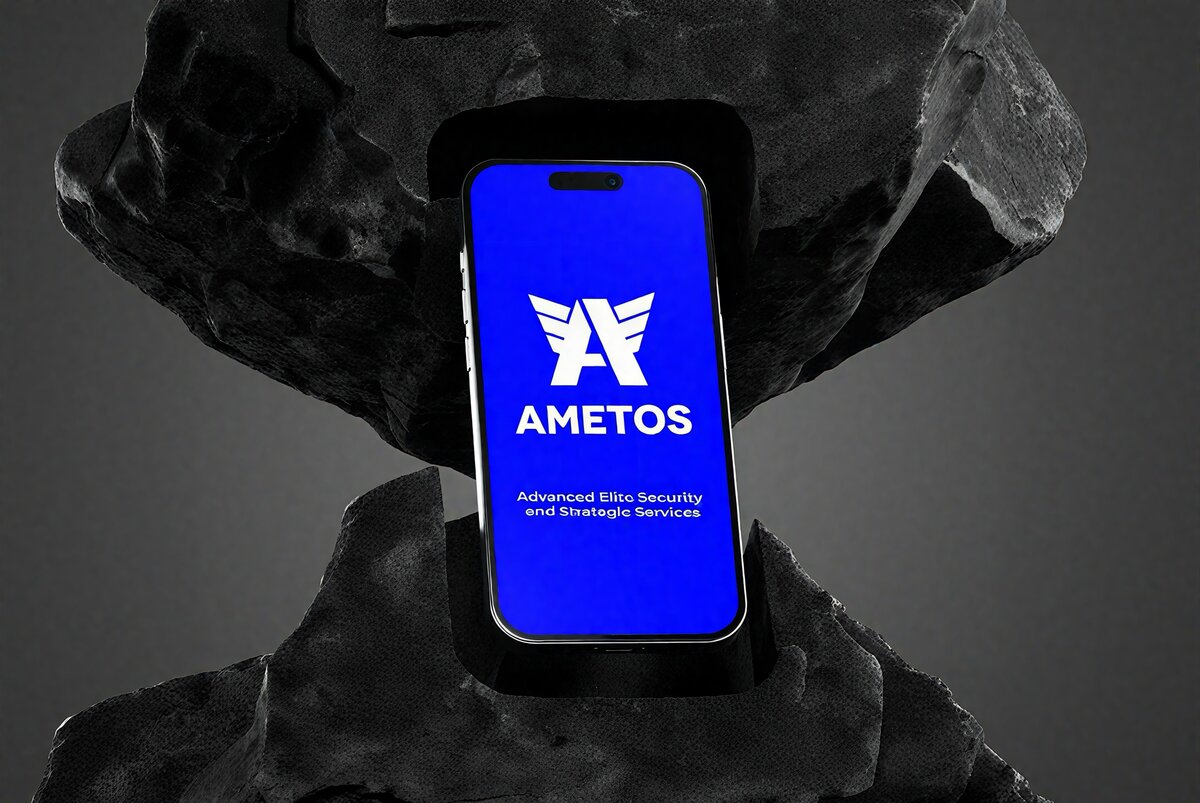
This engagement highlights several key aspects of DevsData’s methodology, equally applicable to IoT developer recruitment:
By applying these same principles to IoT-focused searches, DevsData LLC delivers talent equipped for complex, high-trust environments, ensuring secure, scalable, and future-ready development outcomes.
The Internet of Things has become an important force in digital transformation, connecting devices, infrastructure, and data into an integrated ecosystem that reshapes how organizations operate. As the technology expands, the need for skilled IoT developers grows proportionally – not only those who can build connected systems but also those who understand data security, interoperability, and cloud integration. For most companies, finding such multidisciplinary professionals internally is a challenge, which is why specialized recruitment agencies now play a crucial role in bridging the talent gap.
Collaborating with an IoT developer recruitment agency provides measurable value: faster time-to-hire, reduced costs, and higher retention through accurate technical and cultural matching. These agencies are equipped to evaluate niche competencies across embedded systems, edge computing, and AI-driven analytics – domains where general IT recruiters often lack visibility. Beyond efficiency, they help businesses secure long-term reliability, ensuring that every developer hired contributes directly to innovation and scalability within IoT-driven environments.
With nearly a decade of experience and over a hundred completed projects, DevsData LLC stands out as a partner capable of navigating these challenges with precision. Backed by a team that includes US specialists, a database of 65000 pre-qualified candidates, and a proven success-fee model, the company applies a data-driven, security-conscious approach to every engagement. Whether it’s building an IoT product team or scaling an existing infrastructure, DevsData LLC combines technical rigor with transparent collaboration, helping clients worldwide accelerate innovation without compromising quality or security.
Any questions or comments? Let me know on
Twitter/X.
Discover how IT recruitment and staffing can address your talent needs. Explore trending regions
like Poland, Portugal, Mexico, Brazil and more.
 Frequently asked questions (FAQ)
DevsData – your premium technology partner
DevsData is a boutique tech recruitment and software agency. Develop your software project with veteran engineers or scale up an in-house tech team of developers with relevant industry experience.
Free consultation with a software expert
🎧 Schedule a meeting
FEATURED IN


DevsData LLC is truly exceptional – their backend developers are some of the best I’ve ever worked with.”

Nicholas Johnson
Mentor at YC, serial entrepreneur


 Build your project with our veteran developers
Explore the benefits of technology recruitment and tailor-made software
Learn how to source skilled and experienced software developers
Build your project with our veteran developers
Explore the benefits of technology recruitment and tailor-made software
Learn how to source skilled and experienced software developers

Rebecca Botvin

Commercial Director

Tom Potanski
Manager




Categories: Big data, data analytics | Software and technology | IT recruitment blog | IT in Poland | Content hub (blog)
Email copied
And many other regional partners across Latin and North America, as well as Central and Eastern Europe. Let's talk.
















careers@devsdata.com









general@devsdata.com

"I interviewed about a dozen different firms. DevsData LLC is truly exceptional – their backend developers are some of the best I've ever worked with. I've worked with a lot of very well-qualified developers, locally in San Francisco, and remotely, so that is not a compliment I offer lightly. I appreciate their depth of knowledge and their ability to get things done quickly."

Nicholas Johnson
CEO of Orange Charger LLC,
Ex-Tesla Engineer,
Mentor at YCombinator
"DevsData reached out to us, as we've been looking to grow our engineering team in Europe and Poland. Communicating efficiently and professionally, DevsData made a strong impression with their understanding of the recruitment challenges we were facing. They designed a tailored recruitment process for our needs. I was impressed with the technical depth of their approach."

Karim Butt
Co-Founder & CTO at GlossGenius, Inc.
"Out of all the vendors we work with, DevsData clearly stands out. The quality of developers they deliver is beyond what we've received from any other vendor, and they've been able to send profile recommendations very quickly. I'm happy to be their reference for other companies from Israel and talk about their recruitment abilities and what they delivered for us."

Ran Eyal
Senior Manager at
ZIM Integrated
Shipping Services Ltd.
"DevsData demonstrated a strong degree of proactivity, taking time to thoroughly understand the problem and business perspective, and continuously suggesting performance and usability enhancements. Their app exceeded my expectations. I've worked with DevsData on numerous projects over the last 3 years and I'm very happy. Being both responsive and honest in communication."

Jonas Lee
Partner & Executive VP of Verus,
Financial LLC, Investor,
& Serial Entrepreneur
Acknowledgments