
Thanks for subscribing.
Your gift is on the way.



Financial institutions now deliver most customer services through software, from account opening to payment settlement. Each of those systems has to process funds accurately while operating within applicable regulation. FinTech software development is the discipline behind those systems, and demand for it keeps climbing as banks and startups compete on speed and digital experience.
FinTech describes technology that improves and automates the delivery of financial services, covering everything from mobile banking to digital payments and blockchain applications. The market behind it has grown into one of the largest software categories in the world. The global FinTech market reached $394.88 billion in 2025 and points toward $460.76 billion in 2026. Fortune Business Insights extends that outlook to $1760.18 billion by 2034. Capital on that scale moves into payment rails and the customer platforms that depend on engineers fluent in both code and finance.
Poland sits at the center of where much of that engineering work now happens in Europe. The country offers a deep talent pool, salary levels well below Western Europe and the US, and a regulatory environment aligned with EU standards, which together draw global companies looking to build financial products without paying Silicon Valley rates.
At DevsData LLC, we have built FinTech products and recruited the engineers behind them for clients across the US and Europe, with Warsaw as one of our two headquarters. This article draws on that work. It sets out what FinTech software development involves, what it covers in practice, the numbers behind the global and Polish markets, the skills that matter, the obstacles that surface most often, and how we approach the work.
FinTech software development is the building and maintenance of digital products that handle financial activity for customers and the teams that serve them.
The systems behind a payment, a loan application, or a trading screen have to stay accurate and secure, since a small mistake influences a real financial outcome.
Three qualities separate this work from general software engineering. The first is correctness under pressure. A balance update or a settlement function has to hold even when the network drops or a service fails halfway through, so engineers design for partial failure rather than the happy path alone. The second is regulatory weight. Code that touches customer money or personal financial data ships under frameworks such as PSD2, GDPR, and the rules of whichever country the product operates in, which means compliance shapes the design from the first decision rather than arriving as later rework. The third is security as a baseline. A logging routine that captures card data or a function with a race condition exposes the business to losses that dwarf any feature it was meant to deliver.
What this adds up to is a discipline where business intent has to translate cleanly into a precise technical profile. A company building a payments platform needs different skills than one developing a lending engine or a digital banking core, so the work starts by mapping the product against the systems an Engineer will touch, from languages and frameworks to the cloud environment and data pipelines behind them. Current sector trends feed into that map.
Artificial intelligence now drives fraud detection and credit scoring, which adds model explainability to the engineering brief. Blockchain projects run on a separate stack, with Solidity for Ethereum smart contracts and Rust for platforms like Solana. Neobanks such as Revolut operate without physical branches and compete on mobile-first onboarding, while embedded finance carries payments and lending into platforms outside the financial sector.
Do you have software development needs?
FinTech engineering spans a wide set of product areas, each with its own technical demands. The areas below show up most often in the work we deliver.
Engineers design the logic behind deposits, withdrawals, settlements, and reconciliation, keeping every change in balance consistent even during network delays or partial failures. Idempotency in transaction handling sits at the core of this work, since a retried request must never charge a customer twice. Integration with card schemes and open banking rails adds a second layer, where each external network brings separate message formats and settlement timing.
FinTech products require Know Your Customer checks before users gain access, covering document verification and database screening against sanctions lists. Developers integrate these flows to reduce friction during sign-up while holding to regulatory obligations, and they store verification results in a form Auditors review later.
Engineers translate regulatory rules into technical steps, building activity monitoring, threshold checks, audit logs, and data retention controls. Many of these controls feed reporting obligations under anti-money laundering rules. Fraud-detection models sit on top, flagging unusual behavior in real time so Analysts review suspicious activity before funds leave the account.
Loan origination and servicing platforms call for accurate calculation engines covering interest accrual and repayment schedules. Credit scoring relies more and more on machine-learning models, and each decision those models produce needs an explanation a regulator accepts.
Open banking APIs connect user accounts to third-party services for secure data sharing and fund transfers. Core banking systems sit underneath, handling the ledgers that record every balance and posting, and Engineers working on them put consistency ahead of feature speed.
Support and risk teams depend on internal dashboards built on consistent, trustworthy data. These tools often render large volumes of transactions for live inspection, so Engineers balance query performance against data accuracy.
Most providers ship native iOS and Android apps alongside browser-based platforms, giving users access to accounts and transactions at any hour. Engineers keep behavior consistent across platforms and protect sessions with secure authentication, including biometric login on mobile devices.

Understanding where FinTech software development is heading starts with the size of the market funding it. The figures below come from market researchers and industry bodies tracking the sector through 2025 and 2026.
Two forces drive this growth. User expectations have shifted toward faster onboarding and mobile-first experiences set by companies such as Revolut, Stripe, and Coinbase, which reach tens of millions of customers worldwide. New capabilities sit underneath that shift, from real-time payment rails to automated compliance workflows and scalable cloud infrastructure. The combined effect raises demand for engineers who understand both the technology and the financial domain it serves.
Do you have software development needs?
Poland has matured into one of Europe’s strongest bases for software engineering, and FinTech work has become a notable part of that picture. The wider IT services market passed $10 billion in revenue in 2025 and is projected to reach roughly $13 billion by 2029 at an annual rate near 6%, with IT outsourcing alone close to $3.8 billion of that total. Growth at that pace rests on several factors, and talent comes first among them.
Poland hosts the largest technology workforce in Central and Eastern Europe, with more than 600000 IT professionals, according to DevsData LLC’s market analysis. The workforce skews young and well-educated, with a large share of professionals in the 25 to 34 age band and STEM degrees common across the field. Polish engineers rank consistently among Europe’s strongest on competitive programming benchmarks, and English proficiency runs high, which removes much of the friction in cross-border collaboration.
Salaries for Polish engineers run roughly two to two and a half times below comparable US levels while holding to high standards of expertise. A senior developer in Poland costs two to two and a half times less than a Bay Area equivalent, which is why companies open to distributed teams source heavily from the country. The cost gap reflects local market conditions rather than any drop in capability, and rising demand has pushed wages upward in niche specializations such as AI and security.
Talent clusters across several genuine hubs rather than one capital. Warsaw leads for financial services, payments, and RegTech, holding the deepest senior pool and most corporate headquarters. Kraków and Wrocław follow as major centers, with the Tri-City area, Katowice, Poznań, and Łódź offering additional depth and somewhat lower salary bands. This distribution lets companies match a role to a city that fits both the skill requirement and the budget.
Poland operates inside the EU framework, which gives companies regulatory stability and a familiar compliance baseline. The Polish Financial Supervision Authority (KNF) regulates FinTech directly, supporting innovation through consultation channels and controlled testing sandboxes. Open banking runs on the Polish API standard adapted to PSD2, one of the first instant-transfer implementations in the EU. The Digital Operational Resilience Act (DORA) came into full force in 2025, setting uniform standards for incident reporting and ICT risk management that Polish financial institutions have prepared for closely.
Central European Time gives clients in Western Europe and North America a workable overlap for live collaboration.
Government incentives add to the appeal, most concretely a 200% tax deduction for research and development spending.
The wider IT services market reflects this momentum, having passed $10 billion in revenue in 2025 and projected to reach roughly $13 billion by 2029 at an annual rate near 6%, while IT outsourcing alone accounts for close to $3.8 billion of that total.
Poland’s FinTech sector has shifted from early experimentation to an export-ready industry. The figures below come from the Polish FinTech Map 2025 compiled by the FinTech Poland Foundation and the US government’s market intelligence on Poland.
Internet penetration sits near 88.1%, which points to widespread digital adoption among Polish consumers. The market mixes prominent domestic players such as BLIK, PayU, Przelewy24, and mBank with international competitors including Revolut, N26, and Klarna.

The stack below reflects what we screen for in FinTech engineers and what financial products in the Polish market typically run on.
On the backend, Python and Java carry most financial processing for their mature ecosystems and reliability. Python doubles as the language behind much AI-driven work such as fraud detection and credit scoring, supported by libraries including TensorFlow and scikit-learn. For latency-sensitive systems such as high-frequency trading, C++ and Go come into play, while blockchain projects lean on Solidity for Ethereum smart contracts and Rust for platforms like Solana.
Frontend work runs on JavaScript and TypeScript, with React dominating FinTech interfaces. React holds roughly a 44.7% usage share across websites and powers real-time screens at platforms such as Coinbase and Robinhood through efficient rendering and WebSocket updates. D3.js remains a common choice for the dense financial visualizations these dashboards demand.
Framework and infrastructure choices follow the same logic. Spring Boot and Node.js support secure API and microservice architectures. Docker and Kubernetes handle containerization and orchestration, while cloud platforms such as AWS, GCP, and Azure underpin delivery, with CI/CD pipelines keeping deployments compliant. On data, capable developers work fluently across PostgreSQL, MongoDB, and Redis, with a firm grasp of ACID compliance, replication, and encryption at rest and in transit.
Domain and compliance knowledge separates a strong FinTech hire from a strong generalist. The best engineers account for PCI DSS and GDPR from the first decision, and they treat Know Your Customer (KYC) checks and anti-money laundering (AML) obligations as design inputs rather than later rework. Soft skills round out the profile, since these engineers sit in close contact with compliance, legal, and operations teams who do not share their vocabulary. An engineer who can explain a risk in plain terms speeds up decisions, and one who stays calm during a payment incident helps restore service faster.
Building FinTech software runs into obstacles that reach well past writing clean code. Three surface most often in our work, and AI now runs through each of them, from models that score credit to agentic workflows in which software agents complete multi-step tasks such as alert triage with limited human input. Each obstacle shapes how we vet and deliver.
The rules governing financial software have multiplied faster than the talent pool’s familiarity with them. The European Banking Authority found in its November 2025 report that most AI use cases at supervised institutions, including credit scoring and fraud detection, fall into the high-risk category under the EU AI Act, which carries strict obligations around risk management, human oversight, and auditability. An engineer who builds a credit-scoring model but cannot account for the documentation and explainability the regulation demands ships a system that fails its first audit.
Our response is to assess regulatory fluency directly. We ask candidates to reason through how a design decision interacts with frameworks such as the AI Act, DORA, PSD2, and GDPR. The question carries extra weight for AI systems, since an agent that acts on a credit decision needs clear points of human oversight and a record of every step for Auditors. Someone who treats compliance as another team’s problem raises an immediate flag in our process.
In FinTech, a mistake surfaces as a breach rather than a missed sprint. An engineer who writes a logging routine that leaks card data or a settlement function with a race condition exposes the business to losses and penalties far larger than the cost of the role. AI now shapes the work itself, with coding assistants handling boilerplate and test scaffolding, which moves the value of an engineer toward reviewing machine-generated code for the security and compliance gaps an automated tool will miss.
We build candidate networks before a role opens, which shortens the search rather than starting from zero. AI-supported sourcing widens that reach, and the narrow supply of Engineers with production experience in machine learning or agentic systems for regulated settings makes early pipeline work worth the effort. We handle contract structuring and compliance so an external Engineer operates under the same rules as an internal team without exposing the client to administrative risk.
Demand for engineers who combine financial domain knowledge with production-grade software skill outstrips supply, and rising wages in Poland’s larger hubs add pressure. The contracting framework brings its own complication, since long-running business-to-business arrangements carry reclassification risk under Polish labor rules.
Our model answers both problems. Clients who start with a ready pipeline avoid bidding against every other employer for the same small pool once a role goes live. On the contract side, each engagement is set up so the Engineer works inside the client’s day-to-day processes while the legal and administrative obligations sit with us, keeping reclassification exposure away from the client.
Company size: ~60 employees
Founding year: 2016
Website: www.devsdata.com
Headquarters: Brooklyn, NY, and Warsaw, Poland
DevsData LLC operates across two service lines, custom software development and IT recruitment, which lets us either build a FinTech product directly or assemble the engineering team behind it. A short profile sits below.
On the development side, our team has delivered complex backend systems, web platforms, and custom enterprise tools across sectors including finance, healthcare, and eCommerce, working with clients that range from multinational corporations to fast-growing startups. On the recruitment side, we draw on a proprietary database of 95000+ vetted professionals, AI-supported sourcing, a 90-minute technical problem-solving interview, and a rigorous soft-skill assessment, which together produce an acceptance rate under 6% of all applicants.
Our vetting is tuned specifically for FinTech. We evaluate system design under transactional load and secure data handling, and we test regulatory awareness by asking a candidate to walk through the audit trail a PSD2 or DORA obligation would demand. A government-approved Polish recruitment license, a success-fee model, and a guarantee period give clients confidence, since payment follows a successful hire and a placement that does not work out gets replaced.
That track record carries through to more than 100 technical engagements, backed by 5.0 ratings on both Clutch and GoodFirms. Our FinTech work reaches hedge funds and digital banks alongside payment providers, and for Paysera it meant scaling a regulated engineering team across FinTech roles over three years, work that also touched clients such as ExodusPoint Capital Management and Xapo Bank.
Do you have software development needs?
The engagements below show how we approach FinTech software and engineering work in practice.
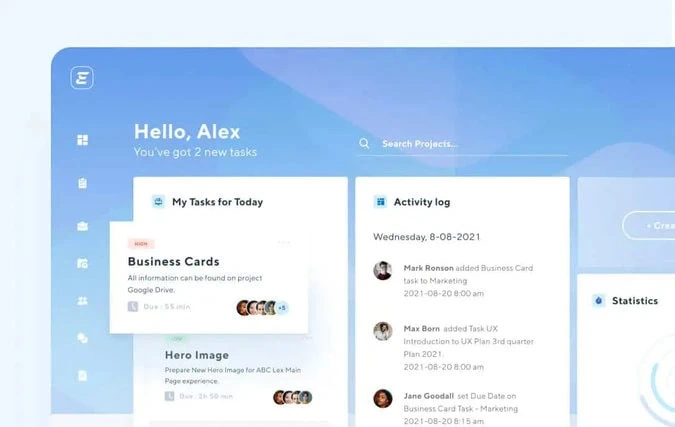
A prominent financial services firm engaged DevsData LLC to develop a custom ERP and project management system built around its specific requirements. The project carried the demands typical of financial software, from strong security to careful handling of sensitive data, packaged inside an interface the client’s teams could use without friction. Our team coordinated closely and met tight deadlines, holding the security and sensitive-data handling the project demanded. The delivered solution replaced an existing tool across two departments and improved task management and data handling, which cut the overhead the client had carried on the old system.

Paysera, a Lithuanian digital financial services provider, partnered with us to scale its engineering team across regulated FinTech roles. The work opened with senior backend and frontend Engineers, then widened into mobile, QA, DevOps, AI specialists, and PHP as the scope grew. We focused sourcing on Poland and Bulgaria, reaching into Ukraine and Georgia for the harder roles, and built compliance checks aligned to GDPR and PCI DSS into the coding evaluation rather than treating them as a separate step. Over three years, hiring quality rose while time-to-fill dropped, and product delivery accelerated as Paysera entered new markets. The lesson that held across the engagement was that sustained FinTech staffing depends on matching each technical assessment to the regulatory frame the engineer will actually work under.

Papaya Gaming, the company behind mobile titles such as Bubble Cash and 21 Cash, partnered with DevsData LLC to build a full engineering hub in Warsaw. The roles spanned backend, QA, Unity, design, and data engineering inside a regulated environment where payment-processing accuracy carried real financial weight. We targeted passive candidates across Poland and applied role-specific screening that weighed domain expertise and architectural thinking together. The work made one point plain: recruiting for platforms that move real money calls for a different vetting lens than standard application hiring, so we added a payment-reliability check that asked candidates to reason through transaction reconciliation and the PCI DSS handling of card data.
Do you have software development needs?
FinTech software development sits at the meeting point of three demands that rarely arrive together: engineering depth, financial domain knowledge, and a tightening regulatory environment. The products built here move money, hold sensitive data, and ship under scrutiny from the first line of code, which raises the cost of a weak system far above a missed deadline.
Poland answers much of that demand for companies building in Europe, on the strengths laid out above. The work still rewards precision over volume, since the engineer who can architect a settlement system or pass an audit rarely turns up through a job board alone.
At DevsData LLC, the dual model of building software and recruiting the people behind it lets us meet that need from either direction. Whether the goal is a custom financial platform or a compliant engineering team in Warsaw, our focus stays on production readiness, security awareness, and long-term system stability. Discover how IT recruitment and staffing can address your talent needs. Explore trending regions
like Poland, Portugal, Mexico, Brazil and more.
 Frequently asked questions (FAQ)
DevsData – your premium technology partner
DevsData is a boutique tech recruitment and software agency. Develop your software project with veteran engineers or scale up an in-house tech team of developers with relevant industry experience.
Free consultation with a software expert
🎧 Schedule a meeting
FEATURED IN


DevsData LLC is truly exceptional – their backend developers are some of the best I’ve ever worked with.”

Nicholas Johnson
Mentor at YC, serial entrepreneur


 Build your project with our veteran developers.
Explore the benefits of technology recruitment and tailor-made software.
Learn how to source skilled and experienced software developers.

Rebecca Botvin

Commercial Director

Tom Potanski
Manager




Categories: Big data, data analytics | Software and technology | IT recruitment blog | IT in Poland | Content hub (blog)
















careers@devsdata.com





general@devsdata.com

"I interviewed about a dozen different firms. DevsData LLC is truly exceptional – their backend developers are some of the best I've ever worked with. I've worked with a lot of very well-qualified developers, locally in San Francisco, and remotely, so that is not a compliment I offer lightly. I appreciate their depth of knowledge and their ability to get things done quickly."

Nicholas Johnson
CEO of Orange Charger LLC,
Ex-Tesla Engineer,
Mentor at YCombinator
"DevsData reached out to us, as we've been looking to grow our engineering team in Europe and Poland. Communicating efficiently and professionally, DevsData made a strong impression with their understanding of the recruitment challenges we were facing. They designed a tailored recruitment process for our needs. I was impressed with the technical depth of their approach."

Karim Butt
Co-Founder & CTO at GlossGenius, Inc.
"Out of all the vendors we work with, DevsData clearly stands out. The quality of developers they deliver is beyond what we've received from any other vendor, and they've been able to send profile recommendations very quickly. I'm happy to be their reference for other companies from Israel and talk about their recruitment abilities and what they delivered for us."

Ran Eyal
Senior Manager at
ZIM Integrated
Shipping Services Ltd.
"DevsData demonstrated a strong degree of proactivity, taking time to thoroughly understand the problem and business perspective, and continuously suggesting performance and usability enhancements. Their app exceeded my expectations. I've worked with DevsData on numerous projects over the last 3 years and I'm very happy. Being both responsive and honest in communication."

Jonas Lee
Partner & Executive VP of Verus,
Financial LLC, Investor,
& Serial Entrepreneur
Acknowledgments


