
Thanks for subscribing.
Your gift is on the way.



C++ remains one of the most demanding programming languages in commercial use today. TIOBE ranked it third in October 2026 at 8.87%, a position it held unchanged through the year, and its continued adoption is driven by clear technical advantages: precise memory control paired with predictable performance, along with direct hardware-level interaction that managed runtimes cannot replicate. These characteristics make C++ essential for embedded software, firmware, real-time systems, game engines, financial infrastructure, and defense-grade platforms where efficiency and determinism are non-negotiable. The AI wave added a seventh category rather than displacing any of them, since inference runtimes, GPU kernels, and on-device model execution are all written at this level.
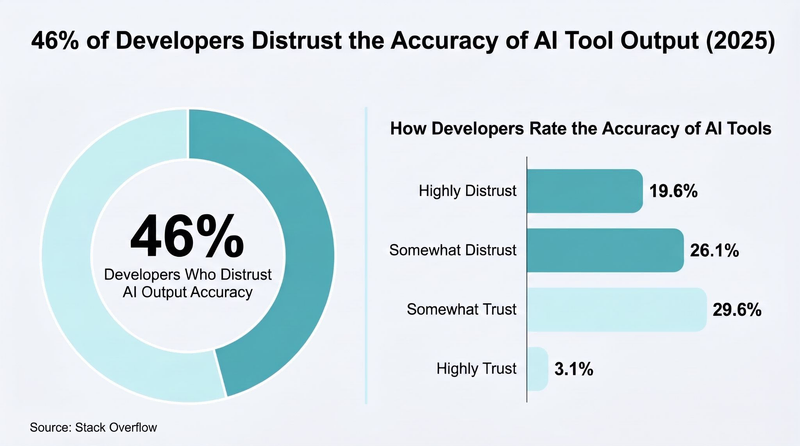
Hiring capable C++ engineers has become harder over the same period, and not because of volume. Depth is the constraint. AI assistants have absorbed much of the routine coding that once gave engineers their first few years of C++ exposure, while 46% of developers now report distrusting the accuracy of AI-generated output. Businesses are not looking for Developers who know C++. They are looking for engineers who can judge whether a plausible-looking implementation is actually correct under the constraints the system runs in.
This is where collaboration with a specialized C++ recruitment agency becomes a strategic decision rather than a staffing shortcut. Agencies with hands-on experience in performance-critical domains, rigorous technical screening, and pre-validated talent pools can significantly reduce hiring risk while accelerating delivery timelines.
In this article, we draw on our direct experience recruiting C++ Developers across demanding technical domains. We examine when businesses truly need C++ expertise, outline current market realities, discuss the challenges of C++ hiring, and detail why DevsData LLC has become a reliable partner for companies seeking proven C++ engineers.
Not every software project requires C++ expertise. In most business applications – internal dashboards, CRUD-heavy web platforms, or content-driven products – higher-level languages offer faster development cycles with fewer engineering constraints. C++ becomes a necessity only when technical requirements exceed what managed runtimes and abstracted frameworks can reliably deliver.
Organizations turn to C++ Developers when software must operate under hard technical constraints: direct interaction with hardware, strict latency budgets, deterministic execution, or sustained performance under heavy load. For example, in high-frequency trading systems, C++ is used to process market data and execute trades within microsecond-level latency budgets, where garbage collection or non-deterministic scheduling would introduce unacceptable risk.
The question has a usable test behind it. Ask what happens when your software is slow. If the answer is that a page loads in 800 milliseconds instead of 400 and some users notice, you do not need C++. If the answer is that a trade misses its window, a control loop drops a cycle, a device fails certification, or a frame stutters in a product people paid for the responsiveness of, then performance is a correctness requirement rather than a quality target, and that is the line where C++ becomes the answer.
A second test covers the cases the first misses. Does your software have to run where you cannot choose the hardware? Firmware on a microcontroller, code on an embedded GPU, or a plugin loading into someone else’s native application all remove the option of adding capacity, which forces the work down to a language that can operate inside the constraint. The sections below set out what C++ delivers once either test comes back positive.
In real-time and low-latency environments, performance predictability is as important as raw speed. C++ enables fine-grained control over memory allocation, threading, and execution flow, helping businesses meet hard latency thresholds. This determinism is critical in domains where delays lead to financial loss, safety risks, or regulatory issues, such as trading platforms, industrial control systems, and defense-related software.
For consumer-facing products like games, hardware peripherals, or performance-sensitive applications, C++ directly affects user experience. Optimized native code improves frame rates, input latency, power consumption, and responsiveness, all of which influence customer satisfaction, product reviews, and long-term retention. In competitive markets, these technical advantages translate into tangible commercial differentiation.
C++ also supports long-lived architectures with fewer dependencies on rapidly changing frameworks. Explicit memory management and stable compilation targets make well-designed C++ systems more resilient to ecosystem volatility. For instance, core components of game engines or telecom switching systems written in C++ often remain in production for a decade or more, requiring incremental optimization and hardware upgrades rather than full rewrites when surrounding tooling or platforms evolve. Given that a big portion of workforce skills are expected to be disrupted within five years, this architectural stability helps businesses reduce long-term maintenance costs and avoid frequent, expensive rewrites.
C++ usually enters the picture when shortcuts stop working and systems need to behave predictably under real constraints.
Do you have software development needs?
The C++ program development market continues to show steady, structurally driven growth. In 2024, the global C++ program development market was estimated at USD 1.2 billion, with forecasts indicating a compound annual growth rate (CAGR) of 6.5% between 2026 and 2033. By 2033, the market is expected to reach approximately USD 2.12 billion. This growth reflects sustained demand for performance-critical software across embedded systems, real-time platforms, gaming, industrial automation, and defense-oriented applications – domains where C++ remains a core technology rather than a legacy choice.

Rather than being driven by a single technology shift, this expansion reflects interconnected market forces that influence where C++ is applied and how companies recruit C++ engineers. The subsections below examine these forces individually, from automation and AI adoption to embedded computing investment, while treating each as a distinct expression of the same underlying trend: sustained demand for low-level, performance-constrained software.
The useful number in 2026 is not how many organizations use AI but how many have moved past experimenting with it. McKinsey’s survey found 44% reporting that AI is scaling across the enterprise, up from 38% a year earlier, with 37% attributing at least some EBIT impact to it. Adoption is close to universal at nearly ten in ten organizations. Scaling is where the difficulty sits.
That gap is where C++ enters. A pilot runs on a managed endpoint and nobody counts the milliseconds. Production changes the arithmetic, because inference cost scales with usage, latency becomes a product characteristic, and workloads start moving onto owned hardware or onto devices. Each of those transitions pushes work toward engineers who can optimize native code and reason about memory behavior, and companies that staffed only for the pilot phase find themselves hiring for the second one under time pressure.
According to workforce projections discussed earlier, 44% of workers’ skills are expected to change within five years. This level of disruption disproportionately affects complex engineering roles. C++ expertise is not only language-specific but also tied to domain knowledge such as concurrency, memory management, and hardware interaction – skills that are slow to develop and hard to replace.
Internal upskilling often fails to meet immediate project demands, pushing companies toward external hiring. Specialized recruitment becomes critical for identifying candidates with both C++ proficiency and relevant domain experience.
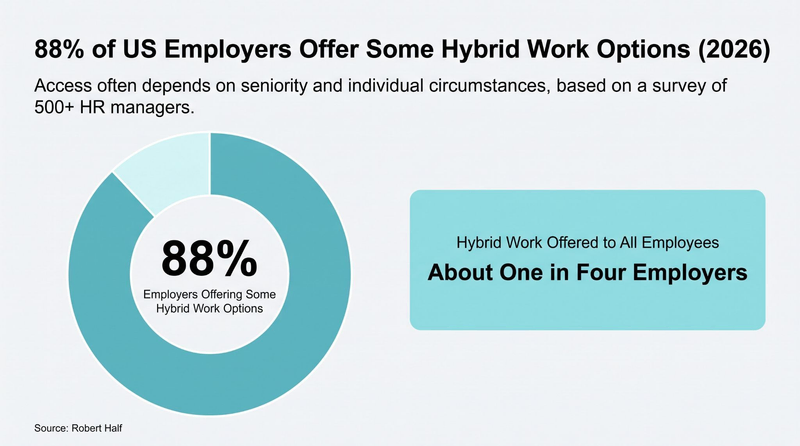
In 2026, 88% of employers in the US provide at least some sort of hybrid work options, fundamentally changing how specialized engineers are hired. This shift has expanded access to niche talent pools but also increased competition for experienced C++ Developers globally.
Companies benefit from recruitment partners capable of operating across geographies, managing distributed hiring pipelines, and assessing candidates consistently in remote-first environments.
The expansion of the gig economy (now encompassing 36% of the US workforce) has increased acceptance of contract and project-based engagements, particularly for specialized engineering roles.
Many C++ engagements are project-driven or time-bound. Agencies that support flexible hiring models enable businesses to access senior C++ expertise without long-term hiring commitments.
Recruiting C++ Developers presents a distinct set of challenges that differ substantially from hiring for higher-level or more abstracted technology stacks. These challenges are shaped by broader workforce trends – skill disruption, remote work normalization, and the rise of contingent talent – but manifest in particularly acute ways for performance-critical engineering roles. The following section outlines these challenges alongside the targeted recruitment and evaluation approaches DevsData LLC applies to address them in practice.
C++ proficiency is hard to validate through resumes or standard interviews. Many candidates list C++ experience, yet lack hands-on exposure to memory management, concurrency, or production-grade systems. As skill disruption accelerates across the workforce, surface-level familiarity increasingly replaces deep, systems-level competence.
DevsData LLC applies multi-stage technical screening focused on practical problem-solving rather than theoretical knowledge. Candidates are evaluated on real C++ use cases aligned with production constraints, allowing us to distinguish between academic exposure and applied engineering capability.
Experienced C++ Developers are relatively scarce and geographically dispersed. With remote and hybrid work now normalized across most technical roles, competition for senior C++ talent has intensified, making local hiring pipelines insufficient for many businesses.
With a database of over 95000 pre-vetted candidates, we operate with a globally distributed talent network and remote-first hiring processes. This allows us to source C++ engineers across regions while maintaining consistent technical evaluation standards, expanding access to niche profiles without compromising quality.
C++ roles are highly domain-specific. Experience in embedded systems, gaming engines, or real-time platforms is not easily interchangeable. Recruitment efforts often fail when candidates are evaluated generically rather than against the project’s operational context.
DevsData LLC aligns candidate selection with domain requirements early in the process. We assess prior project environments, constraints, and tooling to ensure that shortlisted engineers match the business’s actual use case, not just the language requirement.
C++ hiring cycles tend to be longer due to limited supply, complex assessments, and repeated interview rounds. This delays delivery timelines and increases internal recruitment costs, particularly when teams need immediate expertise.
By maintaining a pre-vetted pool of C++ Developers and using targeted outreach, we reduce time-to-hire without lowering technical standards. This enables faster onboarding for both permanent and project-based engagements.
As contingent and project-based work becomes more common, companies increasingly seek C++ Developers for defined scopes rather than long-term roles. Traditional recruitment models often lack the flexibility to support this shift.
DevsData LLC supports flexible hiring structures, including contract and project-based placements. This allows businesses to access senior C++ expertise when needed, without long-term overhead, while still ensuring technical rigor and delivery reliability.
Read together, these problems have one root. C++ competence is invisible from the outside. A resume cannot show whether an engineer has debugged a race condition under load, a standard interview cannot show whether they understand why a particular optimization was safe, and a candidate’s own account of their experience is usually sincere and still unreliable, because the gap between using C++ and understanding it is not obvious from inside.
Everything above follows from that. Scarcity is partly real and partly an artifact of poor filtering. Long hiring cycles come from repeated rounds that fail to resolve the question. Domain mismatches happen because language proficiency is measurable and domain fit is not, so hiring processes optimize for the thing they can see.
Solving the visibility problem solves most of the rest, which is why the next section is built around how to evaluate the evaluator. An agency that cannot assess C++ itself will pass the problem back to you with a longer shortlist attached.
Do you have software development needs?
Selecting a C++ recruitment partner requires a more rigorous approach than hiring for mainstream software roles. Because C++ is typically used in performance-critical, domain-specific systems, recruitment decisions directly affect delivery risk, system stability, and long-term maintenance costs. The steps below outline how businesses can evaluate whether an agency is equipped to handle C++ hiring effectively.
Keyword matching is the obvious failure, but a well-run coding interview can fail just as completely if it only establishes that a candidate writes compiling code. The questions that separate C++ Developers concern what the language permits the compiler to assume. Ask the agency whether its assessment covers object lifetime and dangling references, whether candidates are asked to reason about why a particular optimization is legal, and whether sanitizer output ever appears in the process. A Developer who has run AddressSanitizer against their own code under load has a different relationship with the language than one who has not.
C++ is several languages sharing a compiler. An engineer maintaining a codebase written in C++98 idioms and an engineer writing C++20 with ranges and concepts have little overlapping day-to-day practice, and the gap widened again in March 2026 when C++26 completed with reflection, contracts, and a hardened standard library that adds bounds checking to common container operations. Ask which standard the candidate’s production code targets and whether they have carried a codebase across a standard boundary, since migration experience reveals more than familiarity with new syntax.
Embedded work frequently bans exceptions, run-time type information, and dynamic allocation after startup, so an engineer from that world may have never used half the standard library. Low-latency finance adds cache-line awareness and lock-free structures. Game engines bring custom allocators and data-oriented layouts that would look wrong in any other context. An agency that treats these as interchangeable C++ experience is not evaluating the thing that matters, and the right question is which constraints a candidate has worked under rather than which domains appear on their resume.
Years are a weak proxy in C++, because a Developer can accumulate a decade inside one well-isolated module. Ask the agency what signals it uses instead. Useful ones include whether a candidate has owned a build and toolchain across platforms, debugged a problem that only appeared under optimization or under load, or made an ABI decision they had to live with afterward.
Specialized C++ talent is distributed globally, so an agency needs consistent assessment standards across regions. Engagement structure matters alongside it, since much C++ work arrives as bounded scope: a firmware release, a performance phase before a launch, or a migration off an unsupported toolchain. An agency should support both the permanent hire and the engagement that ends when the work does.
To apply the steps above in practice, businesses should structure the evaluation process around concrete, verifiable questions. The table below summarizes the key checkpoints to review when assessing a C++ recruitment agency, helping ensure that technical rigor, domain alignment, and delivery readiness are validated early.
| Evaluation step | Questions to ask |
|---|---|
| Technical screening | ● How do you test practical C++ skills beyond interviews? ● Do you assess memory management, concurrency, and performance optimization in real-world scenarios? ● Are code reviews or live debugging sessions part of the process? |
| Domain matching | ● How do you ensure candidates have experience in our specific domain? ● How do you differentiate between general C++ experience and domain-specific system knowledge? ● Can you validate prior work on comparable systems or products? |
| Seniority coverage | ● Can you provide examples of senior or highly specialized C++ profiles? ● How do you assess architectural decision-making and trade-off reasoning? ● What signals do you use to distinguish senior engineers from long-tenured ones? |
| Hiring model | ● Do you support remote, cross-border, or contract engagements? ● How do you handle compliance and payroll for non-local hires? ● Can the engagement model change as project needs evolve |
| Delivery readiness | ● How quickly can you present vetted, ready-to-interview candidates? ● What criteria define “ready-to-interview” in your pipeline? ● How do you prevent late-stage drop-offs or misalignment? |
Together, these questions provide a practical framework for filtering out generalist recruiters and identifying agencies equipped to handle performance-critical C++ roles. Clear answers at each step reduce hiring risk, shorten evaluation cycles, and increase the likelihood that shortlisted candidates can contribute effectively from the start.
With C++, the hardest part isn’t finding someone who’s used the language, but someone who’s actually dealt with its consequences in production.
Screening processes and domain expertise claims are difficult to evaluate in the abstract. Presenting actual candidate profiles allows potential clients to assess the technical depth of our pipeline directly. The profiles below are drawn from our internal database to demonstrate the caliber of C++ talent we deliver in practice.
Profile 1: C++ Graphics / Simulation Engineer (Mid–Senior)
Profile 2: Software Engineering Manager with C++ Background (Senior)
Profile 3: Senior C++ Systems Engineer (Expert)
Profile 4: Embedded C++ Engineer (Mid–Senior)
What these profiles have in common is narrower than the domains suggest. Each engineer has worked where an error carries a consequence beyond a failed request, whether that means a dropped frame in a shipped product, a vehicle head unit that has to boot every time, or a simulation pipeline processing scenes large enough that inefficiency becomes a schedule problem. None of them could move directly into another’s role without a ramp-up period, which is the point. C++ seniority is specific, and a pipeline that presents four genuinely different profiles is describing coverage rather than interchangeability.
Read against a live requirement, these serve as calibration. A client with an automotive firmware opening should recognize the fourth profile as close and the first as distant, and an agency that cannot make that distinction on your behalf will leave the work with you.
Company size: ~60 employees
Founding year: 2016
Website: www.devsdata.com
Headquarters: Brooklyn, NY, and Warsaw, Poland
DevsData LLC operates at the intersection of IT recruitment and C++ software development, enabling clients to source talent through a partner that understands both hiring mechanics and delivery realities. For over ten years, the company has supported organizations building performance-critical systems by combining technical recruitment with hands-on engineering expertise in C++-based environments.
The team includes US-based specialists, which supports close collaboration with clients operating in or targeting the US market. At the same time, DevsData LLC has worked with global enterprises and high-growth startups across multiple regions, including the United States and Israel, adapting both recruitment and development workflows to different regulatory, organizational, and technical contexts.
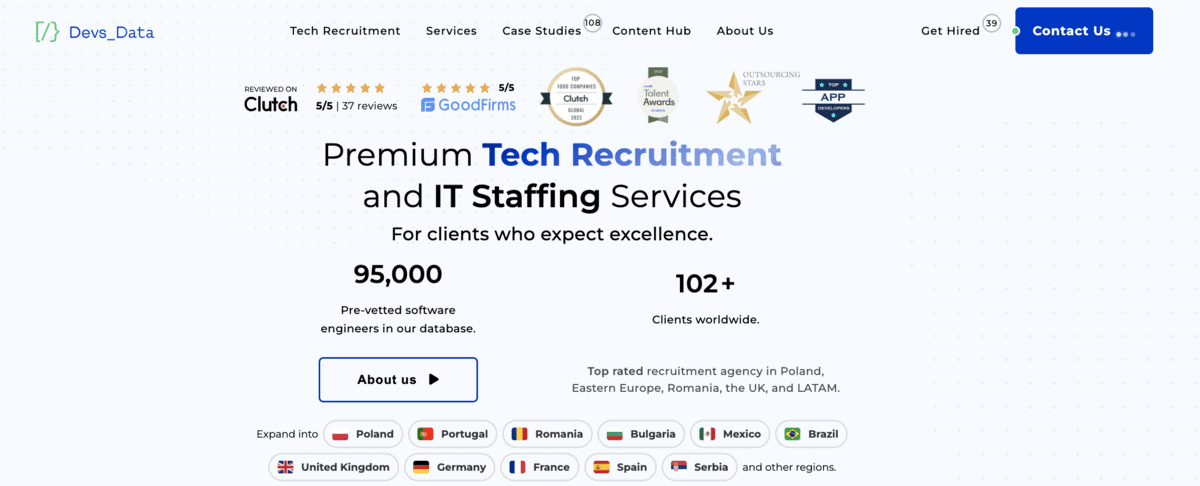
From an operational standpoint, DevsData LLC maintains a database of over 95000 vetted candidates, enabling targeted sourcing rather than reactive searches. To date, the company has completed 140+ projects for more than 100 clients, covering both long-term hires and project-based engagements. All recruitment activities are supported by an official, government-approved license, ensuring compliance and transparency throughout the hiring process.
Reliability in C++ recruitment reduces to one question: can the agency tell whether a candidate is good? DevsData LLC can answer it because the same firm delivers C++ systems in production, including firmware for a consumer hardware company shipping to millions of users and an embedded computer vision system running on NVIDIA Jetson hardware. The engineers who built those projects set the standard our candidates are assessed against.
That capability shapes the process. Every candidate completes a 90-minute problem-solving challenge drawn from real constraints rather than from an interview question bank, with assessment covering how a candidate reasons through a trade-off alongside whether their solution works. Communication is evaluated in the same session, because distributed C++ work depends on engineers who can justify a decision to colleagues who will maintain the result.
The commercial structure follows the same logic. We operate on a success-fee basis with a guarantee period on every placement, meaning a mis-hire costs us a replacement search rather than costing the client a second fee.
Beyond recruitment, DevsData LLC maintains an in-house engineering capability that informs how both hiring and delivery are executed. The company works with engineers operating at a Google-level technical standard, with developers who have 10+ years of hands-on experience in building and maintaining complex software systems. This internal expertise allows DevsData LLC to validate technical requirements realistically, design meaningful technical interviews, and assess whether candidates can operate effectively in production environments.
On the delivery side, DevsData LLC specializes in Big Data and Machine Learning, areas that frequently intersect with performance-critical C++ components such as data processing pipelines, low-latency systems, and infrastructure-level optimizations. This background ensures that C++ recruitment is grounded in real architectural needs, particularly for companies building data-intensive or computation-heavy platforms where efficiency, scalability, and correctness are tightly coupled.
Client feedback reflects this approach: DevsData LLC holds a 5/5 rating on both Clutch and GoodFirms, based on verified reviews. Together, these factors position DevsData LLC as a dependable recruitment and C++ development partner for companies seeking proven C++ talent rather than generalist developers.
Do you have software development needs?
DevsData LLC’s experience with C++ spans performance-critical systems where software must operate reliably under hardware, latency, and operational constraints. The projects below illustrate how C++ engineering is applied in real-world contexts – from embedded defense systems to global consumer hardware platforms. Each case highlights different facets of C++ development, including low-level optimization, firmware reliability, and long-term maintainability in production environments.
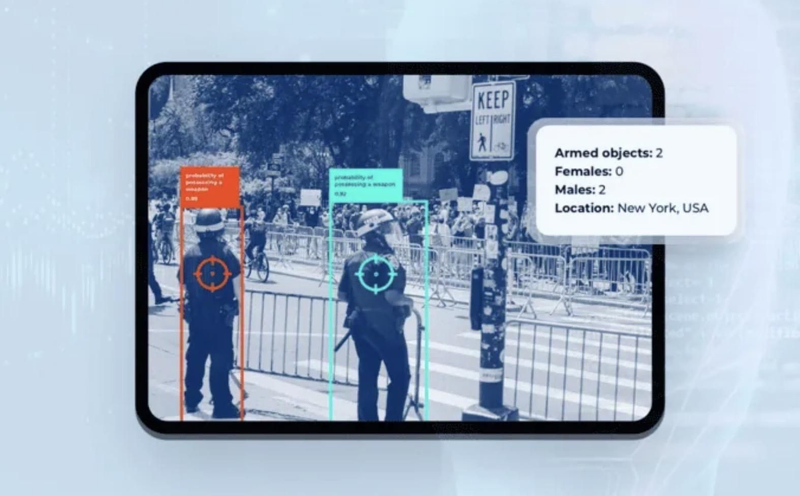
DevsData LLC partnered with AiTech Systems Ltd., an Israeli defense technology company, to develop a real-time human detection and posture analysis system designed for deployment on NVIDIA Jetson embedded hardware. The project required a C++-centric approach capable of delivering low latency, deterministic performance, and operational reliability under strict hardware constraints.
AiTech needed a solution that could detect human contours, posture, and center of mass from live video streams while running on resource-limited embedded GPUs. Standard deep learning pipelines proved impractical due to latency, power consumption, and hardware cost considerations. The system had to remain accurate in challenging environments, variable lighting, motion blur, and noisy backgrounds, while operating continuously in defense-grade conditions.
DevsData LLC designed a custom C++ and Python hybrid architecture, with performance-critical components implemented in C++ using OpenCV, supported by CUDA acceleration for parallel computation on Jetson GPUs. Rather than relying on neural networks, the team developed lightweight, mathematically driven algorithms optimized for real-time execution. Python was used selectively for orchestration and configurability, while C++ handled core image processing, contour tracking, and center-of-mass estimation.
A compact team delivered a functional prototype in approximately six weeks, validating that real-time human detection was achievable without deep learning models. The final system met AiTech’s latency and accuracy requirements while reducing hardware overhead and long-term maintenance complexity. Its modular C++ foundation now supports ongoing extensions, including gesture recognition and body-part segmentation, making it a scalable base for future defense applications.

Over a three-year collaboration, DevsData LLC supported Glorious Gaming, a US-based gaming hardware company, with firmware and software development underpinning its global device ecosystem. The engagement centered on C++-driven firmware, device communication, and cross-platform reliability for mice, keyboards, and headsets used by millions of gamers worldwide.
Glorious Gaming’s releases were tied to immovable production and logistics deadlines. Firmware updates, device communication, and desktop software had to remain synchronized across Windows and macOS, multiple hardware vendors, and diverse user environments. Firmware update flows, particularly DFU and recovery paths, were highly device-specific and error-prone, requiring careful handling to prevent device failures in real-world conditions.
DevsData LLC contributed senior engineers with deep experience in C++ firmware development and low-level device communication. Core firmware logic was implemented in C++, with strong emphasis on defensive programming, update safety, and predictable behavior across hardware revisions. The team worked closely with desktop application developers to ensure seamless integration between firmware, HID communication layers, and user-facing software.
Development proceeded in tightly coordinated cycles across regions in the US, Europe, and Asia. DevsData LLC delivered stable firmware update mechanisms, supported new hardware introductions end-to-end, and refactored critical components to keep the codebase maintainable over time. As a result, Glorious Gaming consistently met global launch deadlines, reduced post-release issues, and maintained reliable device behavior across platforms, strengthening both product quality and operational scalability.
If you’re looking to hire C++ Developers for performance-critical systems or need support with C++ software development, DevsData LLC can help assess requirements and propose a suitable engagement model. Contact us at general@devsdata.com or visit our website at www.devsdata.com.
C++ remains a foundational technology for systems where performance, reliability, and long-term control are essential. Throughout this article, we examined when businesses truly need C++ Developers, the market forces shaping demand, and the structural challenges that make C++ recruitment distinct from hiring for higher-level stacks. In performance-critical environments, such as embedded systems, real-time platforms, defense applications, and hardware-integrated products, C++ is not a convenience choice but a strategic one. Hiring missteps in these contexts can lead to technical debt, delivery delays, or operational risk, making recruitment quality a decisive factor.
We also explored why C++ hiring requires a different evaluation framework. Assessing real-world expertise goes beyond resumes and interviews, demanding practical problem-solving, domain alignment, and an understanding of how C++ behaves under production constraints. The guide sections outlined how businesses can identify reliable recruitment partners by examining technical screening methods, access to senior talent, remote hiring capabilities, and flexible engagement models. The example profiles and portfolio cases demonstrated how these criteria translate into real engineers and real systems, highlighting the difference between surface-level language knowledge and production-ready capability.
DevsData LLC operates at the intersection of C++ recruitment and software development, enabling a grounded, delivery-informed approach to hiring. By combining ten years of market experience with hands-on C++ engineering expertise, the company supports clients not only in sourcing developers, but in validating whether candidates can perform in demanding environments. With a large vetted talent pool, a rigorous technical interview process, risk-mitigated engagement models, and proven experience across defense, embedded, and hardware-driven systems, DevsData LLC offers a practical alternative to generalist recruitment. For businesses seeking C++ Developers who can contribute effectively from day one, this integrated model provides both confidence and continuity.
Any questions or comments? Let me know on
Twitter/X.
Discover how IT recruitment and staffing can address your talent needs. Explore trending regions
like Poland, Portugal, Mexico, Brazil and more.
 Frequently asked questions (FAQ)
DevsData – your premium technology partner
DevsData is a boutique tech recruitment and software agency. Develop your software project with veteran engineers or scale up an in-house tech team of developers with relevant industry experience.
Free consultation with a software expert
🎧 Schedule a meeting
FEATURED IN


DevsData LLC is truly exceptional – their backend developers are some of the best I’ve ever worked with.”

Nicholas Johnson
Mentor at YC, serial entrepreneur


 Build your project with our veteran developers.
Explore the benefits of technology recruitment and tailor-made software.
Learn how to source skilled and experienced software developers.

Rebecca Botvin

Commercial Director

Tom Potanski
Manager




Categories: Big data, data analytics | Software and technology | IT recruitment blog | IT in Poland | Content hub (blog)
















careers@devsdata.com





general@devsdata.com

"I interviewed about a dozen different firms. DevsData LLC is truly exceptional – their backend developers are some of the best I've ever worked with. I've worked with a lot of very well-qualified developers, locally in San Francisco, and remotely, so that is not a compliment I offer lightly. I appreciate their depth of knowledge and their ability to get things done quickly."

Nicholas Johnson
CEO of Orange Charger LLC,
Ex-Tesla Engineer,
Mentor at YCombinator
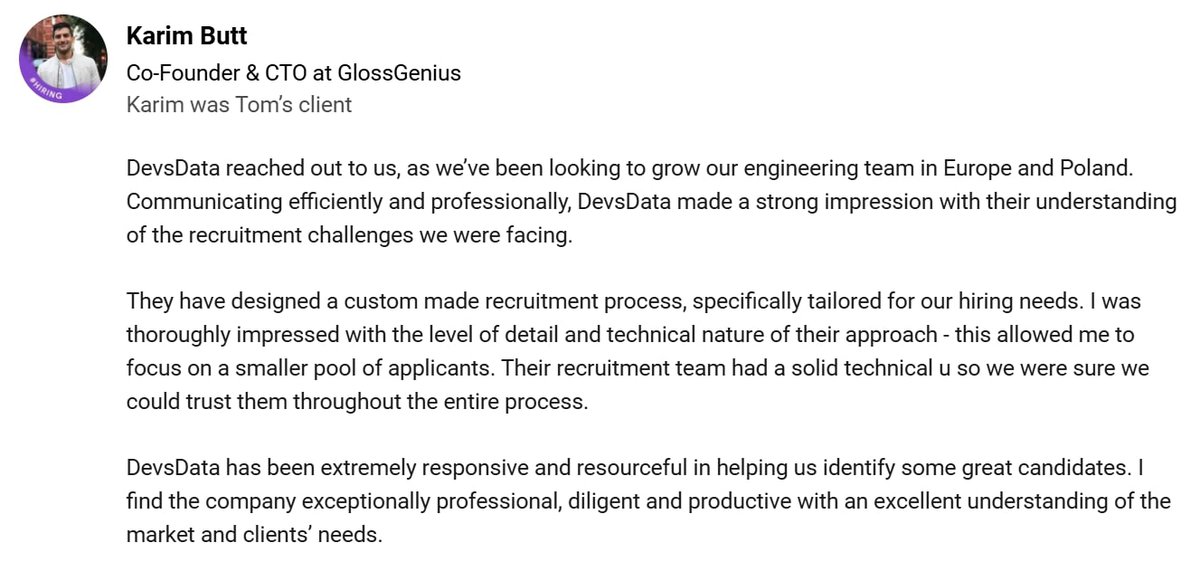
"DevsData reached out to us, as we've been looking to grow our engineering team in Europe and Poland. Communicating efficiently and professionally, DevsData made a strong impression with their understanding of the recruitment challenges we were facing. They designed a tailored recruitment process for our needs. I was impressed with the technical depth of their approach."

Karim Butt
Co-Founder & CTO at GlossGenius, Inc.
"Out of all the vendors we work with, DevsData clearly stands out. The quality of developers they deliver is beyond what we've received from any other vendor, and they've been able to send profile recommendations very quickly. I'm happy to be their reference for other companies from Israel and talk about their recruitment abilities and what they delivered for us."

Ran Eyal
Senior Manager at
ZIM Integrated
Shipping Services Ltd.
"DevsData demonstrated a strong degree of proactivity, taking time to thoroughly understand the problem and business perspective, and continuously suggesting performance and usability enhancements. Their app exceeded my expectations. I've worked with DevsData on numerous projects over the last 3 years and I'm very happy. Being both responsive and honest in communication."

Jonas Lee
Partner & Executive VP of Verus,
Financial LLC, Investor,
& Serial Entrepreneur
Acknowledgments


