Thanks for subscribing.
Your gift is on the way.



Social media has become the primary channel where brands build visibility and shape public perception. The platforms that once served as simple communication tools now function as environments where consumer behavior and talent acquisition intersect. Companies that understand this shift invest heavily in maintaining their presence across multiple networks, which explains why experts project global advertising spending on social media will reach $345.76 billion by 2029.
This growth creates immediate pressure on organizations to secure professionals who can translate platform features into measurable business outcomes. Social media specialists design campaigns that reach specific audiences and analyze engagement data that informs strategic decisions. These responsibilities require both creative skill and analytical discipline, making it more complex to find qualified candidates than to fill traditional marketing roles.
The chart comparing audience size shows how major platforms dominate online attention. Each one attracts different communities and uses its own content formats. Hence, hiring specialists who understand these dynamics helps companies reach the right audience and plan campaigns that fit each network.
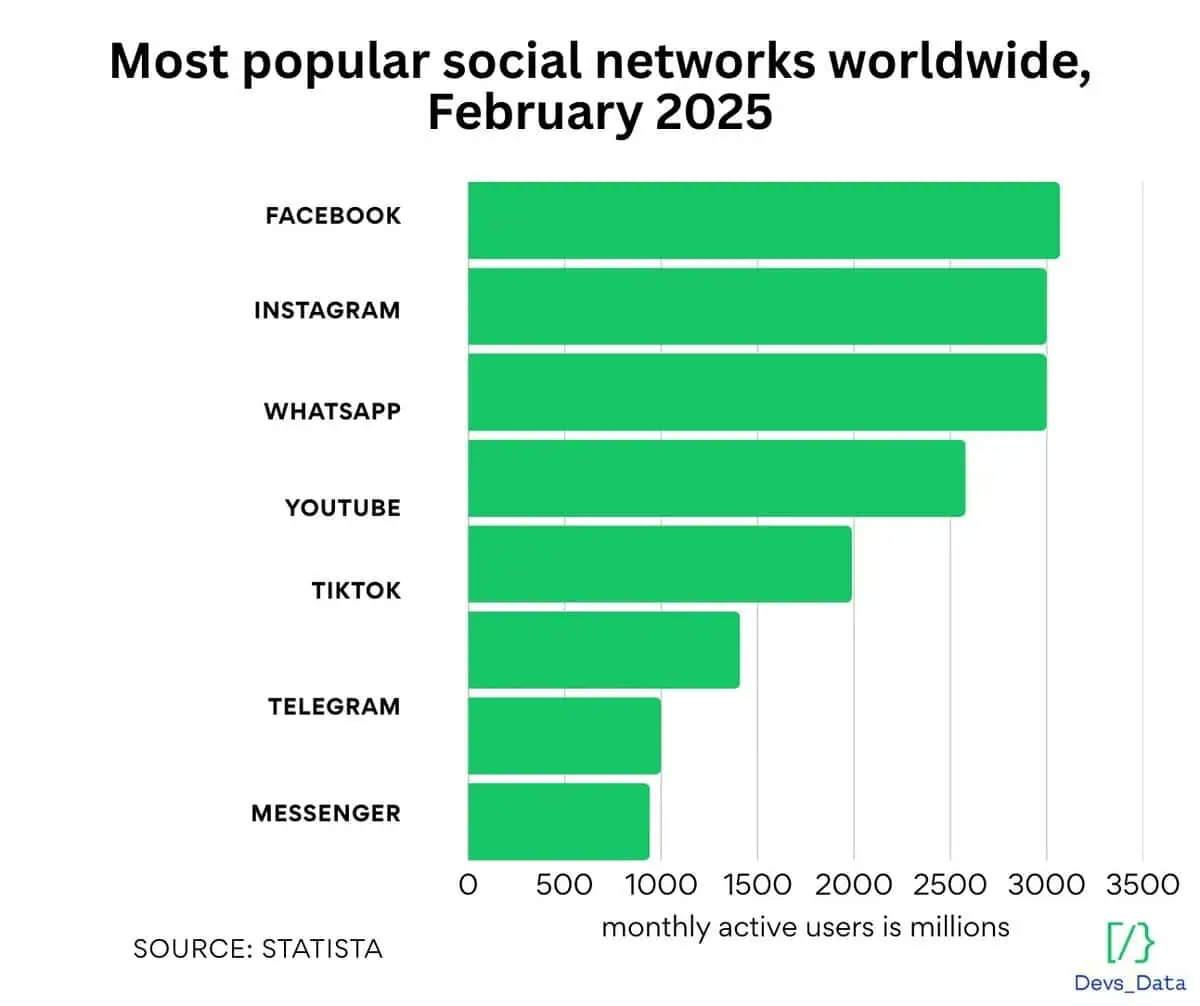
Understanding these distributions is crucial for determining where to allocate recruitment efforts. Platforms such as Facebook and YouTube capture enormous traffic, while smaller networks provide niche access. That contrast makes data about platform scale indispensable when planning campaigns.
“The global social media management market is forecast at $32.48 billion in 2025 and projected to reach $124.63 billion by 2032, with a CAGR of 21.2%.”
As the management market expands, the challenge is no longer whether social media matters, but how to use it efficiently for recruitment. Addressing this requires a clear view of which platforms dominate and how professional roles translate those spaces into measurable outcomes. This article examines networks, professional roles, hiring models, and the contribution of agencies in guiding social recruitment.
Do you have recruitment needs?
Each network type offers distinct functions that shape how people interact and how recruiters approach them. LinkedIn, for instance, is central to professional networking, where job seekers display experience, and employers present opportunities. Because its environment is career-focused, recruitment campaigns gain a precision that more entertainment-driven platforms cannot match.
“According to LinkedIn, 49% of candidates follow companies they’re interested in on social channels.”
Social networks remain the broadest category. Facebook and Instagram provide targeted advertising and community features that reveal user interests. Recruiters study posts and group activity to refine outreach and messaging. Those insights guide decisions about where to focus sourcing efforts.
Video hosting platforms distribute storytelling at scale. YouTube functions as a search engine in its own right, where social search SEO determines which employer content surfaces when candidates look for career-related material. Workplace videos and influencer collaborations perform best when metadata and tagging decisions are treated as part of the employer branding strategy rather than an afterthought. That discoverability shapes candidate perception before a recruiter makes contact.

Discussion forums reward detailed answers and topic expertise. Reddit and Quora host sector-specific conversations that respond well to community engineering, where brands build standing by contributing genuine value to recurring discussions rather than broadcasting. That presence produces qualitative signals that passive sourcing methods rarely replicate, and it converts into leads for specialist roles at a higher rate than outbound campaigns.
Image-sharing networks foreground visual storytelling. Flickr and Photobucket emphasise galleries and archives that suit portfolio-driven hiring. A well-crafted photo campaign raises awareness among candidates whose work depends on visual presentation. That visibility supports employer branding for creative roles.
Bookmarking networks prioritise content discovery and curation. Pinterest and Pocket collect articles, tutorials, and resources that users save for later reference. Publishing shareable guides on these sites drives steady traffic back to career pages and demonstrates subject-matter authority. That constant attention complements short-form outreach.
Consumer review sites present unvarnished customer feedback. TripAdvisor and Yelp display recurring praise or issues that reflect on service quality. Responding to reviews openly signals organizational standards to customers and potential hires. Those patterns often reveal cultural strengths or operational gaps that should inform hiring priorities.
Social shopping environments blend commerce with discovery. Poshmark and Etsy enable independent sellers to reach engaged buyers. Some networks add shop features directly into feeds, which heightens brand visibility for consumer-facing employers. That visibility often signals whether a brand appears modern and relevant to prospective hires.
Understanding these network types clarifies where role-specific skills are essential and which channels require specific hiring approaches. The next section examines the responsibilities of a social media professional.
A social media specialist is expected to design and execute campaigns that align with business priorities. The role covers both planning and practical delivery, requiring familiarity with multiple platforms and the ability to adjust tactics when audience behavior changes. Specialists move between strategy sessions and operational tasks, ensuring that activity online connects to measurable outcomes.
Daily responsibilities extend beyond scheduling posts. Professionals define specific goals, such as registrations or sign-ups, then use data attribution modeling to assess which channel activity drove those outcomes before committing further resources. Content development follows from that analysis, shaped to fit the brand’s voice and posted at intervals calibrated to each platform’s ranking logic. Active conversations with followers run in parallel, sustaining the audience relationships that give the brand a consistent presence over time.
Results must be reviewed regularly. Specialists pull performance data through tools such as Google Analytics and centralise cross-channel reporting in platforms like Looker Studio, tracking shifts in engagement and assessing which initiatives meet defined targets. Those findings lead to adjustments calibrated to what the data show rather than to assumptions. Sustained over time, this review cycle strengthens brand visibility alongside recruitment campaign performance.
In many companies, paid promotion is also part of the role. Tools such as Facebook Ads Manager or the advertising interfaces on LinkedIn and Quora enable specialists to run sponsored campaigns targeting specific audiences. Managing those budgets and optimising ad performance adds another dimension of accountability, making the position one that blends creativity with data-driven execution.
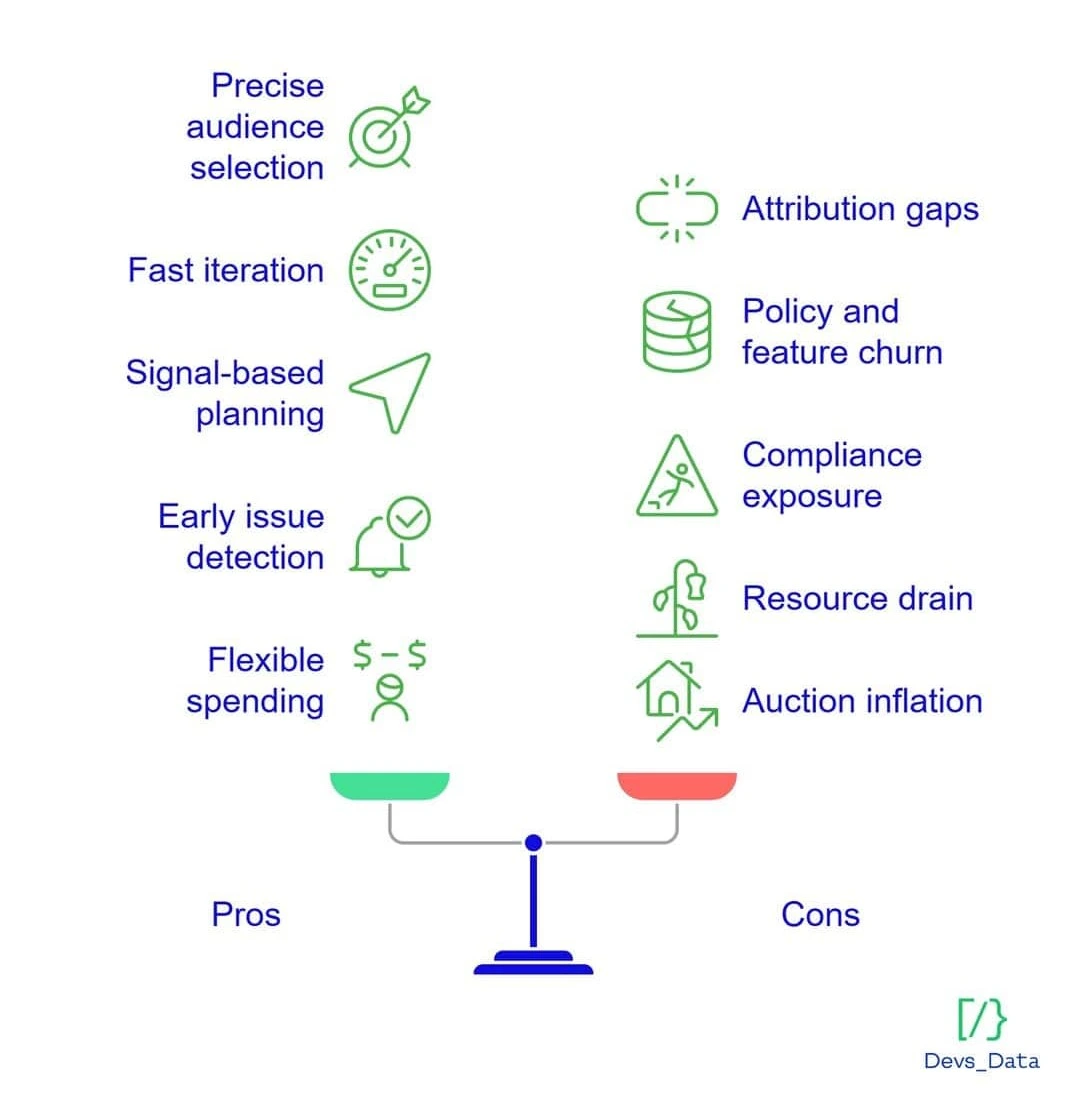
Social platforms no longer serve only as communication tools. They are now environments where brand image, recruitment signals, and consumer habits converge. Understanding both the strengths and the drawbacks helps organisations decide how much weight to give social activity in their broader growth plans.
The advantages of social media come from its scale, speed, and ability to generate data that would be difficult to capture elsewhere. These points show how brands translate platform features into measurable progress.
The same characteristics that create opportunities introduce challenges that can offset gains. The following points outline the most common risks brands face when relying on social media.
Social media remains an essential environment for reaching audiences, but results hinge on measured use. Brands that monitor data carefully and adjust to shifting rules can turn these platforms into reliable growth drivers. Those without the bandwidth to manage complexity often turn to agencies for structure and accountability.
Do you have recruitment needs?
Freelancers and full-time staff contribute differently to a team. Freelancers bring flexibility and reduce fixed costs because they work on defined projects only. Full-time employees add stability through constant presence. They also integrate more deeply into company operations, building familiarity over time. The decision depends on workload scale, the need for consistency, and how closely social media work connects to other business functions.
“28% of skilled knowledge workers currently operate as freelancers or independent professionals.”
Early in the process, tasks are usually light. A team might need a brief campaign and a handful of captions. For these limited needs, a freelancer is often the best fit. The arrangement delivers expertise without a permanent commitment.
As demand grows, social media becomes part of daily activity. Teams begin to require:
At that point, rotating freelancers introduce onboarding friction: each new contractor requires time to absorb brand standards before output reaches the expected level. Style choices shift between engagements, and deadlines tend to stretch as that alignment process repeats across the team.
When social media management becomes continuous, a full-time specialist brings continuity. An embedded professional develops familiarity with brand expectations and adapts quickly to new goals. Collaboration with internal staff is smoother, and campaigns remain aligned. Response times also shorten, creating a reliable base for scaling marketing and recruitment activity.
Many firms advertise social media services but lack the depth to manage recruitment with precision. Others overpromise results without demonstrating the structures needed to deliver them. To evaluate a partner effectively, use the checks below.
Agencies that meet these standards lower the odds of a hiring mismatch and reduce pipeline churn. Internal teams focus on content and campaign outcomes, while the partner manages candidate flow and reporting cadence.
Website: www.devsdata.com
Team size: ~60 employees
Founded: 2016
Headquarters: Brooklyn, NY, and Warsaw, Poland
DevsData LLC specializes in social media recruitment and staffing. The agency employs over 60 professionals and has operated for more than ten years, with a proprietary database exceeding 95000 CVs. Its delivery spans worldwide regions, including the US and Israel, as frequent destinations. Work with premium clients includes BCG, hedge funds, and high-growth VC-backed startups. A proven record across industries is reinforced by 5/5 client-satisfaction ratings on Clutch and GoodFirms.
Focus stays on outcomes that matter to hiring teams. Dedicated English-speaking recruiters manage sourcing, screening, scheduling of interviews, and job offers. The recruitment process is multi-stage and rigorous, with a 90-minute problem-solving challenge that, for social media roles, may take the form of a real-time crisis-management scenario or a campaign-budget allocation exercise, as applicable. References and background checks support final decisions. Candidates presented by the team are consistently strong communicators with technical ability and a disciplined work ethic.
DevsData LLC’s reach in social media recruitment comes from direct sourcing across platforms where specialists maintain their presence. Recruiters track professionals on LinkedIn, analyze engagement data on Instagram and TikTok to identify those driving brand visibility, and review creative portfolios on Behance or Dribbble when content quality is critical.
Recruitment tools centralize hiring activities across channels and help identify talent with proven performance and platform expertise, ensuring that new hires can contribute directly to brand growth.
Commercial terms remain transparent and straightforward. Partnering with a dedicated recruiter proves more effective than using job boards, particularly for senior positions that require tailored attention. Clients work on a success-fee model only, with payment made after a hire is completed and satisfaction confirmed. The international scope extends reach into top talent pools worldwide, and US specialists within the team provide direct support for North American projects promptly.
Drawing on these capabilities, DevsData LLC has delivered recruitment solutions across a wide range of industries and organisational models. Its record demonstrates how processes are adapted to meet sector-specific requirements while maintaining consistency in quality and transparency. Case studies provide clear evidence of the company’s ability to tailor methods and achieve measurable outcomes.
DevsData LLC provides full-cycle support for organisations building social media teams, using LinkedIn, Instagram, TikTok, and Behance to source and assess talent. Recruitment software tracks performance patterns across these channels, helping identify skilled professionals whose creative results and engagement metrics translate into measurable brand growth.
Do you have recruitment needs?
Looking to secure skilled social media specialists through a proven recruitment process? Connect with DevsData LLC at general@devsdata.com or visit www.devsdata.com to start building a team aligned with your brand’s goals.
Social media recruitment plays a key role in how companies secure talent that can build brand presence at scale. Effective recruitment depends on combining platform insights with structured evaluation to screen candidates before costly missteps occur. The provider chosen directly impacts how quickly teams can access qualified specialists and sustain momentum in their campaigns.
DevsData LLC brings over ten years of experience in the market, supported by a database of 95000 candidates. Searches are led by US specialists and an international team, with projects delivered worldwide, including the US and Israel. The agency has worked with global enterprises and high-growth startups, maintaining an official government-approved license for recruitment services. Its methods are multi-stage and transparent, ensuring hiring teams receive clarity at each step and a consistent flow of social media specialists ready to deliver measurable results.
Building a social media team that drives measurable results starts with accessing specialists who understand platform algorithms and audience behavior.
Contact general@devsdata.com or visit www.devsdata.com to connect with recruiters who source talent directly from LinkedIn and creative portfolios where performance data validates expertise.
Any questions or comments? Let me know on Twitter/X.
Discover how IT recruitment and staffing can address your talent needs. Explore trending regions like Poland, Portugal, Mexico, Brazil and more.
 Frequently asked questions (FAQ)
DevsData – your premium technology partner
DevsData is a boutique tech recruitment and software agency. Develop your software project with veteran engineers or scale up an in-house tech team of developers with relevant industry experience.
Free consultation with a software expert
🎧 Schedule a meeting
FEATURED IN

DevsData LLC is truly exceptional – their backend developers are some of the best I’ve ever worked with.”

Nicholas Johnson
Mentor at YC, serial entrepreneur


 Build your project with our veteran developers.
Explore the benefits of technology recruitment and tailor-made software.
Learn how to source skilled and experienced software developers.
Build your project with our veteran developers.
Explore the benefits of technology recruitment and tailor-made software.
Learn how to source skilled and experienced software developers.

Rebecca Botvin

Commercial Director

Tom Potanski
Manager




Categories: Big data, data analytics | Software and technology | IT recruitment blog | IT in Poland | Content hub (blog)














careers@devsdata.com









general@devsdata.com

"I interviewed about a dozen different firms. DevsData LLC is truly exceptional – their backend developers are some of the best I've ever worked with. I've worked with a lot of very well-qualified developers, locally in San Francisco, and remotely, so that is not a compliment I offer lightly. I appreciate their depth of knowledge and their ability to get things done quickly."

Nicholas Johnson
CEO of Orange Charger LLC,
Ex-Tesla Engineer,
Mentor at YCombinator
"DevsData reached out to us, as we've been looking to grow our engineering team in Europe and Poland. Communicating efficiently and professionally, DevsData made a strong impression with their understanding of the recruitment challenges we were facing. They designed a tailored recruitment process for our needs. I was impressed with the technical depth of their approach."

Karim Butt
Co-Founder & CTO at GlossGenius, Inc.
"Out of all the vendors we work with, DevsData clearly stands out. The quality of developers they deliver is beyond what we've received from any other vendor, and they've been able to send profile recommendations very quickly. I'm happy to be their reference for other companies from Israel and talk about their recruitment abilities and what they delivered for us."

Ran Eyal
Senior Manager at
ZIM Integrated
Shipping Services Ltd.
"DevsData demonstrated a strong degree of proactivity, taking time to thoroughly understand the problem and business perspective, and continuously suggesting performance and usability enhancements. Their app exceeded my expectations. I've worked with DevsData on numerous projects over the last 3 years and I'm very happy. Being both responsive and honest in communication."

Jonas Lee
Partner & Executive VP of Verus,
Financial LLC, Investor,
& Serial Entrepreneur
Acknowledgments