Thanks for subscribing.
Your gift is on the way.



Administrative and support services employ approximately 1.5 million people in the UK as of Q3 2025, according to the latest available ONS figures, reflecting the weight of this sector in national employment. Human resources plays a clear role in this sector by handling compliance and leading recruitment, while shaping how companies manage employee relations. In London, demand for effective HR support is amplified by the city’s scale and regulatory environment, making professional services a practical option for organizations that need efficiency and accuracy in daily operations.
London has the highest concentration of HR professionals in the country, with 36796 specialists recorded recently, a 2% increase compared with the previous year’s figure of 35900.
This situation creates both opportunity and pressure, as firms must choose between outsourcing and relying on consulting and technology-based options. This article examines London’s tech ecosystem, explores HR service models, outlines pros and cons, and presents DevsData LLC’s practical experience in this field.
London remains the country’s primary technology hub, but its HR services sector extends far beyond startups. Global enterprises, financial institutions, and public agencies rely on local HR providers to handle compliance, payroll, and workforce planning in a city known for strict regulations. This established base also supports the startup ecosystem, where academic talent from the UK’s Golden Triangle has fueled the rise of research-driven ventures. Despite the costs of operating in one of Europe’s most expensive markets, the capital remains attractive to ambitious founders and large-scale investors. Unicorns, privately held startups valued at more than $1 billion, have become a benchmark for sector maturity.
The UK tech sector boasts 171 unicorns and a market valuation of $1.1 trillion, establishing it as the leading tech ecosystem in Europe.
London hosts about one third of UK tech startups and nearly three quarters of the country’s unicorns (privately held, venture-backed startups valued at over $1 billion), giving the capital outsized weight in the national digital economy. This concentration is reflected not only in the number of firms but also in the diversity of sectors represented. AI-focused ventures such as Robin AI and PhysicsX are expanding quickly, while infrastructure projects like Segro’s $1.27 billion data center in Park Royal underline the demand created by cloud adoption and enterprise-scale AI applications.
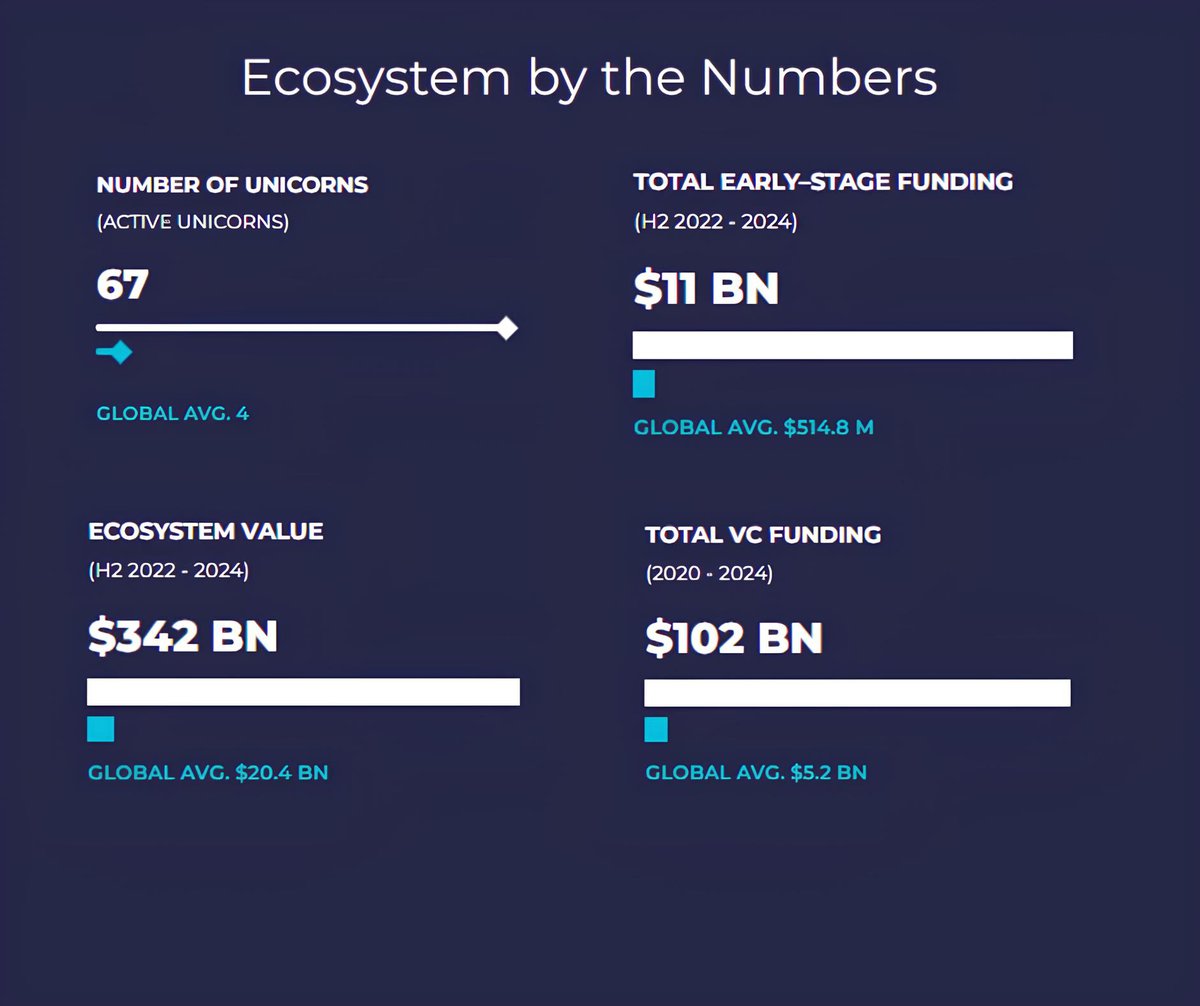
London’s tech ecosystem is measured by four defining metrics. The city now counts 67 active unicorns, far above the global average of 4. Early-stage funding between 2022 and 2024 reached USD 11 billion, and total venture investment rose past USD 102 billion in the same period. Together, these flows contributed to an ecosystem valued at more than USD 342 billion.
For HR services providers, this concentration of high-growth companies translates into sustained demand for recruitment support, regulatory guidance, and workforce management at scale. Global averages in the chart are calculated from country-level data collected across leading technology hubs, offering a reliable point of comparison.
Source: Startup Genome
Human resources covers a range of operational responsibilities, from recruitment and employee onboarding to payroll processing, benefits administration, and regulatory compliance. In London, where employment law changes frequently and HMRC reporting requirements are strict, these functions demand both precision and up-to-date knowledge. External providers address this gap by delivering specialized services, allowing companies to manage essential processes effectively without adding permanent staff.
In the UK, HR support often extends beyond administration into compliance with laws overseen by HMRC and the Information Commissioner’s Office.
Providers manage payroll under PAYE rules, administer auto-enrollment pensions, and advise on GDPR compliance when handling personal employee data.
This localized expertise is especially valuable for smaller businesses that cannot dedicate staff to keeping up with frequent regulatory updates.
London firms typically rely on a defined set of HR functions. Talent acquisition covers the full sourcing-to-placement pipeline. Onboarding and offboarding manage documentation and right-to-work checks at both ends of the employment cycle. Payroll processing ensures accurate PAYE, NI, and pension contributions on schedule.
Benefits administration organizes healthcare, leave policies, and well-being programs. Regulatory compliance addresses evolving UK employment law and data protection rules. Performance management systems formalize appraisals and goal tracking. Learning and development programs maintain workforce competency through targeted training. Together, these services address every stage of the employment cycle while ensuring alignment with UK regulatory requirements. For London businesses, they provide a practical way to manage workforce needs in one of Europe’s most demanding labor markets.
HR support spans multiple areas of workforce management. Some of the most common services include:
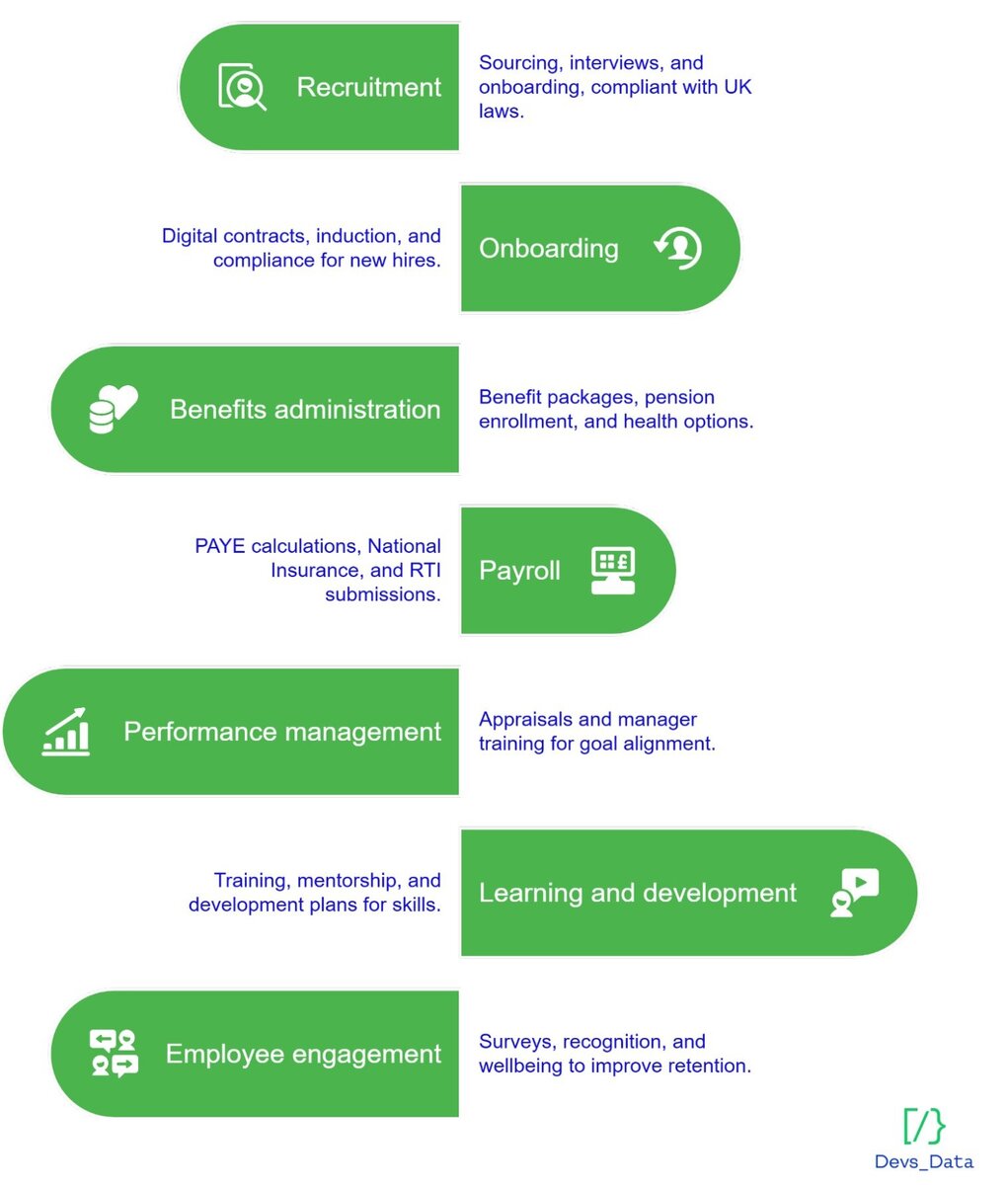
Together, these services address every stage of the employment cycle while ensuring alignment with UK regulatory requirements. For London businesses, they provide a practical way to manage workforce needs in one of Europe’s most demanding labor markets.
Do you have IT recruitment needs?
Businesses in London often adopt external support to reduce administrative strain or to meet compliance needs, but outcomes vary depending on the provider and the firm’s size. Evaluating these HR services requires looking at both advantages and potential drawbacks.
Some organizations find outsourced support highly efficient, while others struggle with issues of cost or alignment with internal culture. Understanding the balance of strengths and limitations helps companies decide whether external HR services fit their operational goals.
This comparison shows how each model performs in key areas, highlighting where companies gain or lose efficiency.
| Category | In-house HR | Outsourced HR |
|---|---|---|
| Cost impact | Higher fixed expenses for staff, systems, and training that grow with company size. | Lower and more flexible costs, as providers spread infrastructure and expertise across multiple clients. |
| Expertise | Deep knowledge of internal culture but limited exposure to evolving UK regulations. | Broader compliance knowledge and access to specialists who stay current with labour and data rules. |
| Scalability | Expansion requires new hires and longer onboarding cycles. | Capacity adjusts quickly through established provider resources. |
| Technology | Requires separate software purchases and maintenance. | Uses integrated systems already managed by the provider. |
| Control and alignment | Full control over policies and processes, but a higher administrative burden. | Less direct oversight but improved efficiency in routine tasks and reporting. |
This overview shows that external HR support delivers measurable advantages but also presents limitations that cannot be ignored. For many organizations, the challenge lies in deciding whether to invest in building an internal team or to rely on external providers for essential coverage. As the next section illustrates, this decision often comes down to why firms choose outsourced HR in the first place and how those choices address pressing business needs.
Running HR internally involves several fixed expenses that rise as teams expand. Salaries for specialists, recurring software subscriptions, and compliance training make up a large share of these costs. Even when hiring slows, the department continues to require the same level of funding, which limits flexibility.
Outsourced HR changes that pattern. Providers already operate established payroll and benefits systems, so companies pay only for the level of support they use. This arrangement replaces long-term overhead with predictable monthly fees, reducing pressure on internal budgets. For smaller firms, it often means access to expert HR capabilities without maintaining a full internal team, allowing resources to shift toward growth and product work.
Cost is only one factor in this decision. Compliance knowledge, scalability during hiring peaks, access to current HR technology, and the ability to maintain workforce satisfaction all influence whether external support delivers a better outcome than building capacity in-house. The table above captures these dimensions in detail.

Not every company has the internal resources to manage the wide range of HR responsibilities. From recruitment to payroll oversight, these functions require time, specialized knowledge, and the ability to keep pace with frequent regulatory changes. For many organizations in London, especially those operating in competitive sectors, outsourcing offers a way to maintain high standards without carrying the cost of a large in-house team.
The global Human Resource Outsourcing market grew from $18.65 billion in 2023 to $19.97 billion in 2024 and is forecast to reach $31.14 billion by 2030, expanding at 7.59% annually.
External support generally takes two main forms:
independent HR consultants provide targeted advice and services that strengthen specific workforce strategies, while professional employer organizations (PEOs) act as comprehensive partners managing entire HR operations. A third option, specialized recruitment agencies such as DevsData LLC, focuses on sourcing and placing qualified professionals through structured vetting and industry-specific screening.
The choice depends on the company’s scale and priorities. A young startup may work with a PEO to quickly establish structured HR systems, a mid-size firm may bring in a consultant to refine compliance practices, and companies with pressing hiring needs often engage recruitment agencies that deliver pre-qualified candidates on shorter timelines.
The appeal of these arrangements is efficiency. External providers take over payroll, benefits, and compliance, freeing internal staff to focus on larger strategic goals. Instead of losing time to routine administration, leadership can place more energy into hiring and retention while still driving long-term.
Selecting an HR services partner is a strategic decision that directly affects both compliance and workforce satisfaction. London adds specific layers of complexity: right-to-work verification procedures, Apprenticeship Levy obligations for larger employers, mandatory pension auto-enrollment, and GDPR requirements enforced by the ICO.
The choice of provider must go beyond price. Firms should weigh the partner’s knowledge of these UK requirements, ability to protect sensitive employee data, and capacity to scale alongside the business. A clear evaluation process helps ensure that external support adds value in London’s regulated hiring environment.
Key points to consider when evaluating potential partners include:
A provider with proven sector experience will recognize the demands that appear in areas such as finance, healthcare, education, or logistics. They can demonstrate this through tailored case studies, references from similar clients, or measurable outcomes that show how their work addressed industry-specific challenges.
London firms often grow quickly or experience peaks in demand. A strong partner adjusts services to match shifting headcount or new operational needs.
Modern HR systems reduce errors and improve efficiency, but data security is paramount. Confirm that the provider applies encryption, role-based access, and recovery protocols.
Employment law in the UK evolves regularly, from right-to-work checks to GDPR requirements. Providers should demonstrate ongoing training and a strong record of managing audits or disputes.
Dedicated contacts and clear reporting lines make collaboration smoother. Responsiveness during the selection phase often signals how they will perform later.
Fee structures should be clear, with no hidden add-ons. A detailed breakdown allows you to compare providers fairly and judge value against service levels.
Feedback from clients operating in the capital is particularly useful. Ask for local references to see how providers handle the city’s demanding environment.
When reviewed together, these criteria help businesses select partners who can deliver consistent results across London’s demanding regulatory and labor market conditions. A careful choice not only avoids risk but also strengthens the foundation for long-term workforce stability.
Website: www.devsdata.com
Team size: ~60 employees
Founded: 2016
Headquarters: London, UK, and Warsaw, Poland
DevsData LLC operates from a London office, combining local presence with international reach to deliver HR services that meet the city’s complex demands. With more than ten years in the market and a team of over 60 specialists, the firm maintains a candidate database exceeding 95000 profiles. Its government-approved license confirms compliance with UK recruitment standards, while its success fee model and guarantee period provide assurance of measurable results. The company has consistently earned 100% client satisfaction, reflected in 5/5 ratings on Clutch and GoodFirms.

The firm’s service portfolio covers every stage of the employee lifecycle. Recruitment is handled through structured sourcing, interviews, and onboarding aligned with UK equality legislation and right-to-work checks. Induction processes aligned with UK right-to-work verification requirements make onboarding efficient.
On the benefits side, DevsData LLC handles pension auto-enrollment and employee well-being programs. Its payroll team processes PAYE calculations, National Insurance contributions, RTI submissions, and variable pay components. The firm’s performance management services include structured appraisal cycles and management training, linking individual performance to company targets.
Beyond these standard functions, DevsData LLC invests heavily in development and engagement programs. Training courses, mentorship initiatives, and professional growth plans keep employee skills relevant. Surveys and recognition strategies support retention and workplace wellbeing. The company also offers HR advisory, legal and tax guidance, and BPO solutions. Extreme transparency is applied across all services, including software development projects, where clarity in process and communication is treated as a standard.
A defining feature of DevsData LLC is its rigorous recruitment methodology. The multi-stage process, refined over five years, includes a 90-minute problem-solving challenge and evaluations of communication ability. This approach ensures clients meet candidates who are not only technically capable but also effective collaborators. With experience serving global corporate clients and high-growth startups worldwide, including BCG, hedge funds, and VC-backed firms in the US and Israel, DevsData LLC delivers HR support that balances London-specific compliance with international standards.
Contact london@devsdata.com or visit www.devsdata.com to access reliable HR support in London.
Do you have IT recruitment needs?
Address:
DevsData London Tech Recruiters
35 Ormiston Grove,
London W12 0JR, UK
london@devsdata.com
DevsData LLC brings practical results in HR services across a broad set of client projects. Some assignments required payroll transitions under strict HMRC deadlines, while others focused on recruiting specialized roles with advanced vetting. In each case, structured processes kept legal accuracy aligned with operational efficiency. The firm adapts its approach to fit different industries and company sizes. This adaptability has built a portfolio that shows consistent delivery in complex HR scenarios, including:

Xapo Bank, a Gibraltar-based digital bank integrating traditional finance with cryptocurrency services, needed to scale European teams after internal hiring stalled. Strict vetting for cryptography and API security tasks disqualified most applicants, while cross-border coordination slowed the process further.
Open vacancies spanned Backend Engineers, Frontend Developers, Mobile Specialists, DevOps Experts, QA Staff, Product Managers, and Designers. DevsData LLC sourced from Central and Eastern European hubs, screening 625 professionals against Xapo’s compliance-heavy requirements.
The firm delivered the first shortlist in six business days. Coding assignments in Node.js, React, Swift, and Python were paired with scenario tasks covering cryptography and API security. Over six months, DevsData LLC secured 17 specialists at an average cycle time of 32.4 days, restoring delivery capacity across distributed teams.
The table below summarizes the engagement details.
| Category | Detail |
|---|---|
| Client | Xapo Bank, a London-based digital banking company with European operations |
| Role hired | Backend Engineers, Frontend Developers, Mobile Specialists, DevOps Experts, QA Staff, Product Managers, Designers (17 total) |
| Recruitment timeline | 6 months |
| Key criteria | AWS, Kubernetes, Node.js, React, Swift, Python proficiency, cryptography and API security knowledge, remote-readiness |
| Result | 17 hires from 625 sourced profiles, first shortlist in 6 business days, restored sprint cadence and expanded European time zone coverage |

Txodds Ltd., a London-based technology company with over 150 employees, delivers real-time odds aggregation and betting market data to clients worldwide. The firm needed a Senior Infrastructure & DevOps Engineer to modernize legacy systems, manage large-scale AWS cloud operations, and support 24/7 platform uptime in a regulated industry. Internal sourcing had not produced qualified candidates, partly because Txodds required UK-based, on-site professionals and did not offer visa sponsorship.
DevsData LLC ran focused sessions with the Head of Infrastructure to map the technical scope, then concentrated sourcing on Senior DevOps Professionals in London and other UK tech hubs with backgrounds in regulated domains. Candidates went through scenario-based evaluations covering AWS, Kubernetes, Puppet, and CI/CD tooling. DevsData LLC placed an engineer on a three-month engagement, and the hire reduced the average incident response time by 35%.
The table below summarizes the engagement details.
| Category | Detail |
|---|---|
| Client | Txodds Ltd., a London-based sports betting data provider |
| Role hired | Senior Infrastructure & DevOps Engineer |
| Recruitment timeline | 3 months |
| Key criteria | AWS, Kubernetes, Puppet, CI/CD expertise, UK-based on-site availability, experience in regulated environments |
| Result | 35% decrease in incident response time, accelerated containerization migration, strengthened 24/7 support coverage |

Elsewhen Ltd., a London-based digital consultancy serving global brands such as Google, MasterCard, and Spotify, partnered with DevsData LLC to build a distributed backend engineering team across Poland and Eastern Europe. The company needed Senior Python Developers with experience in cloud infrastructure on Google Cloud Platform, automation tooling, and proactive system monitoring. Previous recruitment efforts had produced candidates who lacked technical depth or required excessive oversight.
DevsData LLC structured the engagement into hiring waves over a two-year period, screening for proficiency in Python, SQL, BigQuery, and Bash scripting through live coding tasks and scenario-based assessments. Remote-readiness checks included asynchronous communication simulations to match Elsewhen’s distributed operating model. DevsData LLC placed 9 backend engineers, with a candidate-to-interview ratio exceeding 70% and a 78% offer acceptance rate. Eight of the nine hires remained with the company for more than 12 months.
The table below summarizes the engagement details.
| Category | Detail |
|---|---|
| Client | Elsewhen Ltd., a London-based digital consultancy |
| Role hired | Senior Backend Engineers / Python Developers (9 positions) |
| Recruitment timeline | 2 years (wave-based) |
| Key criteria | Python (Flask), Google Cloud Platform, BigQuery, SQL, Bash scripting, remote-readiness, autonomous working style |
| Result | 9 hires with 70%+ interview-to-hire ratio, 78% offer acceptance rate, 35% reduction in bug resolution times, 8 of 9 hires retained beyond 12 months |
Up to this point, the article has covered London’s tech ecosystem, the scope of HR services, reasons firms use external providers, and criteria for selecting a partner. It also outlined what distinguishes DevsData LLC in the capital. The sections below cover salary data, contractor payment practices, and university talent pipelines in London. Each of these factors feeds into HR service delivery: salary benchmarks guide compensation planning, contractor structures determine payroll compliance requirements, and university outputs shape the candidate market that HR teams draw from.
London’s higher education institutions play a crucial role in supporting the country’s technology sector. By offering advanced programs in computing, engineering, and business, they produce graduates who enter the workforce with skills that meet industry expectations. Close ties with employers create opportunities for students to gain experience through placements and collaborative research, giving businesses early access to professionals who are prepared to contribute from the outset.
University College London (UCL)
UCL contributes heavily to London’s technology growth by pairing academic research with commercial partnerships. Its computer science department, one of the largest in the UK, is involved in advanced AI and data-driven projects that frequently link to industry. Many startups in London trace their origins back to UCL research groups, showing how the institution helps convert innovation into tangible businesses that support the city’s economy.
Imperial College London
Imperial is recognized for translating scientific and engineering excellence into scalable ventures. The White City campus has become a focal point for deep tech, housing research labs alongside incubators that attract venture investment. This direct connection between research and market application ensures that London continues to benefit from a stream of highly trained engineers and entrepreneurs able to tackle challenges in energy and health technology.
King’s College London
King’s College strengthens London’s tech profile through research that connects computing with healthcare and public policy. Its work on AI safety and digital transformation provides graduates with a balanced mix of technical ability and ethical awareness. By engaging in projects that address both technical performance and societal outcomes, King’s produces specialists who add resilience and adaptability to London’s fast-changing technology ecosystem.
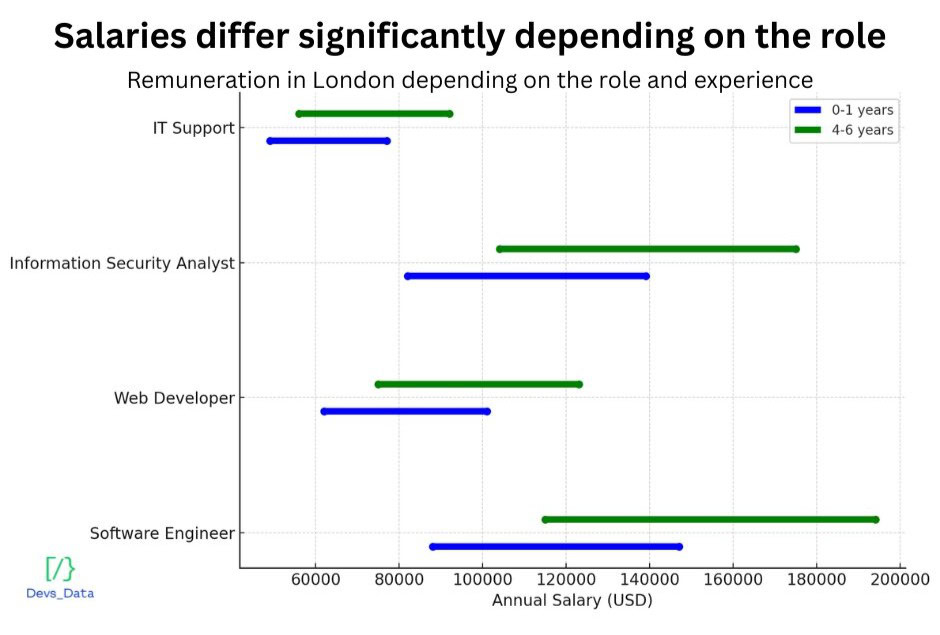
For HR services providers and internal teams alike, accurate salary data drives two of the most consequential decisions in workforce management: setting competitive offers and forecasting labor costs. Pay levels in London shift with seniority, role scope, and skill scarcity as hiring cycles change. Using current benchmarks reduces renegotiations late in the recruitment process and keeps compensation aligned with real market conditions. Total pay often mixes base salary with bonuses or stock, so headline numbers need context. The figures below provide a practical reference for common roles, with up-to-date data available on Glassdoor.
Companies engaging technology contractors in London often simplify payroll and compliance through employer of record (EoR) services. Providers such as DevsData LLC, Deel, Remote, and Plane assume core employer responsibilities, allowing businesses to hire locally without creating a UK legal entity. This reduces administrative overhead while keeping operations aligned with national employment and tax regulations.
As an EoR, DevsData LLC administers payroll and onboarding while keeping operations aligned with HMRC rules. Their experience in staffing roles connected to software engineering, data analytics, and digital infrastructure helps firms scale without interrupting project timelines. With this model, employers can focus on delivery while DevsData LLC ensures all legal and financial obligations are met.
For cross-border contractor payments, solutions like Wise and Payoneer are frequently chosen. They reduce transfer costs and handle compliance within the same payment flow. This helps London-based firms maintain efficient financial operations while working with international professionals.
Do you have IT recruitment needs?
Navigating through the time zone difference is essential since it guarantees effective collaboration and professional communication among the team. Below, we have explored the time zone difference between London and some major cities of the world.
| Destination | Time zone difference |
|---|---|
| New York | 5 hours behind London |
| Austin | 6 hours behind London |
| San Francisco | 8 hours behind London |
| Berlin | 1 hour ahead of London |
| Tel Aviv | 2 hours ahead of London |
| Sydney | 9 hours ahead of London |
| Beijing | 7 hours ahead of London |
Understanding these nuances will ensure real-time collaborations with employees and effective meeting scheduling.

To make a call to London from overseas, follow these steps:
The complete format is 011 + 44 + area code + phone number.
Human resources services and support are essential to the functioning of London’s technology and business sectors. Companies depend on reliable HR coverage to manage payroll, benefits administration, onboarding, compliance, and workforce planning while staying aligned with strict UK regulations. Without these functions running effectively, businesses risk compliance issues, lower productivity, and higher turnover.
As London continues to attract global talent and foster innovation, the demand for structured HR solutions grows. The right service provider not only covers routine administration but also creates the conditions for sustainable growth by ensuring that workforce practices are legally sound and operationally efficient. This connection among compliance, talent, and business continuity makes selecting an experienced HR partner a critical decision.
DevsData LLC has built a reputation for delivering this balance. With more than nine years of experience, a candidate database of more than 95000 candidates, and an official government-approved license, the firm combines structured processes with international reach. Its team includes US specialists and professionals who have supported both high-growth startups and corporate clients worldwide, including those in the US and Israel. This combination of compliance expertise, scale, and global perspective positions DevsData LLC as a reliable choice for HR support in London.
For more details about DevsData LLC’s services, reach out at general@devsdata.com or visit www.devsdata.com to explore available options.
Any questions or comments? Let me know on
Twitter/X.
Discover how IT recruitment and staffing can address your talent needs. Explore trending regions
like Poland, Portugal, Mexico, Brazil and more.
 Frequently asked questions (FAQ)
DevsData – your premium technology partner
DevsData is a boutique tech recruitment and software agency. Develop your software project with veteran engineers or scale up an in-house tech team of developers with relevant industry experience.
Free consultation with a software expert
🎧 Schedule a meeting
FEATURED IN


DevsData LLC is truly exceptional – their backend developers are some of the best I’ve ever worked with.”

Nicholas Johnson
Mentor at YC, serial entrepreneur


 Build your project with our veteran developers.
Explore the benefits of technology recruitment and tailor-made software.
Learn how to source skilled and experienced software developers.
Build your project with our veteran developers.
Explore the benefits of technology recruitment and tailor-made software.
Learn how to source skilled and experienced software developers.

Rebecca Botvin

Commercial Director

Tom Potanski
Manager




Categories: Big data, data analytics | Software and technology | IT recruitment blog | IT in Poland | Content hub (blog)
















careers@devsdata.com









general@devsdata.com

"I interviewed about a dozen different firms. DevsData LLC is truly exceptional – their backend developers are some of the best I've ever worked with. I've worked with a lot of very well-qualified developers, locally in San Francisco, and remotely, so that is not a compliment I offer lightly. I appreciate their depth of knowledge and their ability to get things done quickly."

Nicholas Johnson
CEO of Orange Charger LLC,
Ex-Tesla Engineer,
Mentor at YCombinator
"DevsData reached out to us, as we've been looking to grow our engineering team in Europe and Poland. Communicating efficiently and professionally, DevsData made a strong impression with their understanding of the recruitment challenges we were facing. They designed a tailored recruitment process for our needs. I was impressed with the technical depth of their approach."

Karim Butt
Co-Founder & CTO at GlossGenius, Inc.
"Out of all the vendors we work with, DevsData clearly stands out. The quality of developers they deliver is beyond what we've received from any other vendor, and they've been able to send profile recommendations very quickly. I'm happy to be their reference for other companies from Israel and talk about their recruitment abilities and what they delivered for us."

Ran Eyal
Senior Manager at
ZIM Integrated
Shipping Services Ltd.
"DevsData demonstrated a strong degree of proactivity, taking time to thoroughly understand the problem and business perspective, and continuously suggesting performance and usability enhancements. Their app exceeded my expectations. I've worked with DevsData on numerous projects over the last 3 years and I'm very happy. Being both responsive and honest in communication."

Jonas Lee
Partner & Executive VP of Verus,
Financial LLC, Investor,
& Serial Entrepreneur
Acknowledgments