Thanks for subscribing.
Your gift is on the way.


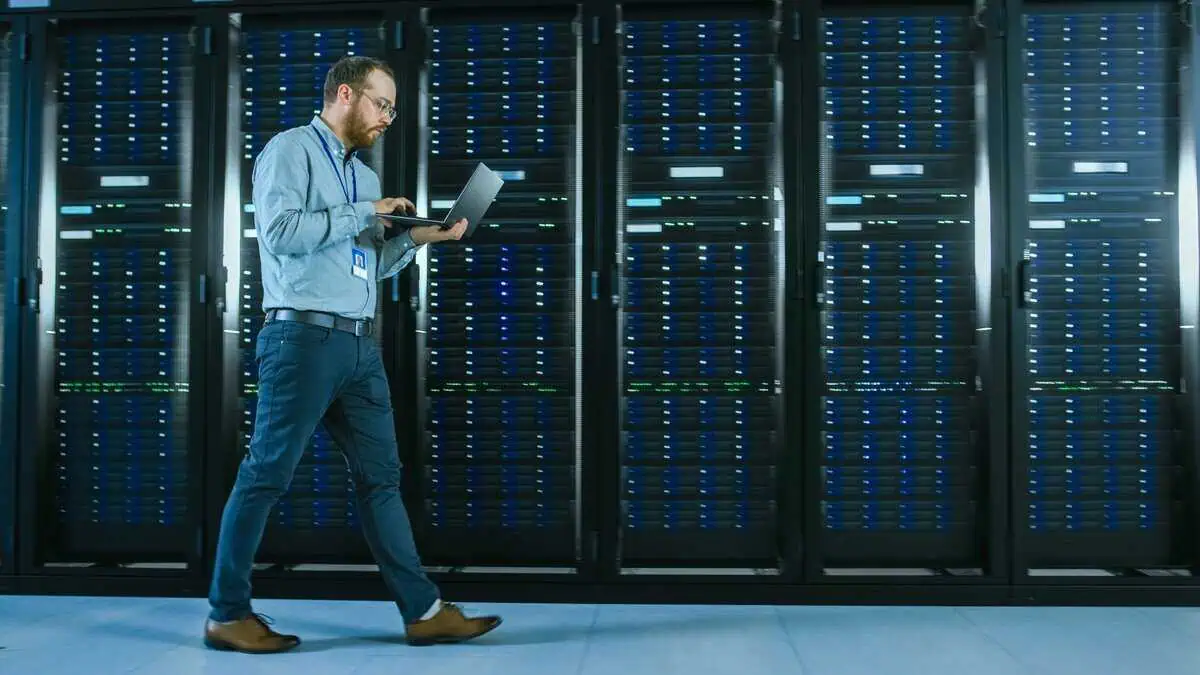
When a popular eCommerce site crashes during a flash sale or a financial platform lags by just a few seconds, millions in revenue can vanish instantly. Behind every seamless digital experience, from real-time payments to AI-powered analytics, stand distributed systems that quietly keep the world running.
These architectures make it possible for companies to scale globally, process vast datasets, and deliver uninterrupted services even when individual servers fail. Without them, modern digital operations would crumble under their own demand.
But designing and maintaining such systems is no simple feat. It requires engineers who think beyond code, specialists who can architect resilience, anticipate failure, and strike a balance between consistency and speed. Based on DevsData LLC’s experience, hiring these experts demands clear role definitions, precise evaluation frameworks, and rigorous technical assessments that separate true system thinkers from ordinary developers.
According to MarketsandMarkets, the global distributed cloud market is projected to reach $11.2 billion by 2027, reflecting the massive shift toward decentralized infrastructure. This trend is driving an accelerating demand for Distributed Systems Engineers – professionals who design, implement, and optimize these architectures for scalability, reliability, and resilience. In this guide, we’ll explore what distributed systems engineering is, why it matters, what skills define top engineers, and how to hire the best talent in 2025.
Booking a flight, streaming a movie, or sending an instant bank transfer all depend on distributed systems. These systems rely on networks of interconnected machines that work together in real time to process information and maintain uptime.
Distributed systems engineering is the discipline behind this coordination. It involves designing, building, and maintaining software that operates across clusters of servers, ensuring consistency, fault tolerance, scalability, and reliable performance – especially under high or unpredictable load.
These systems are designed to manage the processing of millions of requests per second and maintain continuous performance even during partial network or hardware failures.
From global databases and real-time analytics engines to streaming platforms and AI inference networks, distributed architectures underpin nearly every digital service. Below are the key characteristics that define distributed systems engineering:
Distributed systems operate across diverse environments, different operating systems, programming languages, and hardware types, yet must interact seamlessly. This diversity demands interoperability and careful architectural planning.
Nodes share computing power, storage, and data. This enables cost-efficient scaling and allows multiple machines to access and manipulate the same datasets or services simultaneously.
An open distributed system supports extensibility and standardization. Published APIs, standardized communication protocols, and plug-and-play components make evolution and integration easier.
In distributed systems, transparency is the architectural principle that hides the system’s underlying complexity from users and developers. A transparent system makes distributed components appear as a single, unified environment, concealing details such as data location, resource distribution, communication paths, or failure recovery. This abstraction allows users to interact with the system seamlessly without needing to know how or where operations are executed.
Systems must handle growth without redesign. Horizontal scalability, adding nodes to accommodate more traffic, is a defining advantage over traditional monolithic architectures.
In distributed systems, concurrency means executing multiple operations simultaneously across multiple nodes. By processing requests in parallel, systems can serve large user bases efficiently and minimize latency. Effective concurrency also requires coordination to prevent conflicts and maintain data consistency as tasks run simultaneously.
Failures are inevitable. Well-designed distributed systems detect, isolate, and recover from faults automatically, ensuring high availability and minimal downtime.
Designing distributed architectures means tackling unpredictable realities – nodes that fail mid-operation, networks that delay or drop messages, and data that must stay consistent across continents. Engineers must anticipate these conditions, balancing consistency, speed, and scalability while keeping the entire system running as if it were one cohesive machine.
The table below summarizes the most common challenges and their implications:
| Challenge | Description | Impact on systems |
|---|---|---|
| Network latency and partitions | Synchronizing data across geographically distributed nodes introduces delay and risk of inconsistent states during network disruptions. | Can cause delayed responses, temporary unavailability, or data divergence between nodes. |
| Consistency trade-offs (CAP theorem) | Engineers must balance Consistency, Availability, and Partition Tolerance – only two can be fully achieved simultaneously. | Forces critical architectural decisions about how systems behave during failures. |
| Debugging and observability | Distributed failures are difficult to reproduce and diagnose due to the number of moving parts and asynchronous processes. | Increases maintenance complexity and demands advanced logging, tracing, and monitoring tools. |
| Security and compliance | Data traveling across multiple regions must remain encrypted and access-controlled, complying with local and global regulations. | Violations or weak controls can lead to data breaches and non-compliance penalties. |
| Cost and operational complexity | Scaling out adds expenses in infrastructure, orchestration, and monitoring – all of which require skilled oversight. | Higher operating costs and resource requirements if not managed strategically. |
Top Distributed Systems Engineers employ a combination of technical design principles and operational best practices to address these issues effectively.
They use redundancy and replication to minimize the impact of node failures, load balancing and caching to reduce latency, and observability stacks (Prometheus, Grafana, OpenTelemetry) to ensure visibility across systems.
Security is strengthened through end-to-end encryption, zero-trust architecture, and role-based access controls. To manage complexity and cost, teams adopt automation, container orchestration (Kubernetes), and chaos engineering to test resilience under real-world failure scenarios continuously.
Together, these practices form the backbone of reliable, scalable, and secure distributed systems capable of sustaining global operations.
Do you have IT recruitment needs?
Distributed systems are built for continuity. By replicating data and services across multiple nodes, they remove single points of failure and recover instantly from disruptions. This design ensures uninterrupted availability, allowing businesses to deliver reliable user experiences even when hardware or regional outages occur. Reliability stems from redundancy and proactive fault detection – keeping operations stable no matter what happens behind the scenes.
Instead of overhauling infrastructure with every growth milestone, organizations can scale horizontally – adding new machines or nodes as needed. This elasticity enables meeting demand spikes or achieving global expansion goals without downtime or costly redesigns. By intelligently distributing requests, systems avoid bottlenecks and maintain top performance at any scale.
Processing data closer to where it’s generated minimizes latency and improves responsiveness. Whether it’s real-time analytics, financial transactions, or streaming content, parallel processing across nodes delivers instant feedback and keeps end users engaged.
A modular, service-oriented architecture makes updates and improvements more straightforward. Teams can modify or replace components independently, which is essential for agile development and rapid experimentation. This flexibility shortens development cycles and helps businesses adapt quickly to market or technology changes.
Replication across multiple nodes not only safeguards against failures but also enhances data protection. Combined with encryption, zero-trust frameworks, and role-based controls,
distributed architectures reduce exposure to breaches. Multi-region data distribution also supports compliance with strict standards such as GDPR, HIPAA, or ISO 27001.
A Distributed Systems Engineer designs, implements, and maintains distributed infrastructures – those vast ecosystems of interconnected servers and services. They bridge the gap between theory and execution, ensuring systems remain scalable, efficient, and resilient under unpredictable conditions.
Distributed Systems Engineers work across various sectors, including FinTech, cybersecurity, logistics, and AI/ML, and are essential for companies operating at a global scale. Their expertise enables organizations to deliver consistent, high-performance digital experiences across continents.
“Hiring Distributed Systems Engineers goes far beyond coding skills. We look for people who can think critically about failure, latency, and how systems behave under real pressure.” – Nenad Hrisofovic, IT Recruitment Team Lead at DevsData LLC
A Distributed Systems Engineer focuses on building the architecture that keeps multi-node networks synchronized and operational. Their work touches nearly every part of the modern software ecosystem.
They create architectures capable of handling massive workloads, ensuring that each node contributes efficiently without overloading any single component.
Engineers optimize the communication protocols and configurations that allow different parts of the system to exchange data securely and quickly.
They design distributed databases and caching systems that ensure data integrity, consistency, and quick retrieval even under concurrent access.
They implement algorithms such as Raft, Paxos, or Byzantine Fault Tolerance to achieve agreement across nodes when network failures occur.
They integrate authentication, authorization, and encryption while ensuring real-time monitoring and distributed tracing to detect anomalies early.
In practice, Distributed Systems Engineers design and maintain the infrastructure that keeps digital services available and responsive around the clock
Becoming a Distributed Systems Engineer requires a blend of theoretical knowledge, hands-on technical skills, and a strong passion for solving complex, large-scale problems. These professionals bridge software design and infrastructure, ensuring systems remain fast, fault-tolerant, and scalable. As technology evolves, their expertise will remain central to shaping the next generation of resilient digital ecosystems. Below, we outline the core skills needed to succeed as a Distributed Systems Engineer.
Proficiency in languages such as Go, Java, Python, or C++ is fundamental for building performant distributed systems. Engineers must understand concurrency, parallelism, and memory management deeply.
Modern systems rely on cloud platforms like AWS, Azure, and Google Cloud. Knowledge of distributed cloud principles, availability zones, auto-scaling, and service orchestration is essential.
Tools such as Docker and Kubernetes simplify the deployment, scaling, and management of distributed applications.
A deep understanding of CAP theorem, eventual consistency, and microservices architecture differentiates experts from generalists.
Communication and collaboration are vital. Distributed Systems Engineers often coordinate with product, DevOps, and infrastructure teams across time zones.
The demand for Distributed Systems Engineers has surged. According to Glassdoor, the median total pay (base salary plus bonus/stock) for engineers titled “Distributed Systems Engineer” in the United States sits around US $172982 – across all levels of experience.
Professionals can progress through stages such as:
Junior Engineer → Distributed Systems Engineer → Senior Engineer → Architect or SRE → Head of Infrastructure / CTO
Industries investing heavily include FinTech, eCommerce, AI/ML, telecommunications, and defense technology. With the rise of multi-cloud, serverless computing, and edge processing, opportunities continue to multiply worldwide.
Hiring a Distributed Systems Engineer requires precision. These professionals combine rare skills across system architecture, low-latency programming, and large-scale operations. Getting it right means defining the role clearly, crafting a compelling job listing, and executing a rigorous candidate evaluation process.
Start by defining what the system must achieve: fault tolerance across regions, ultra-high-throughput data pipelines, global user scale, multi-cloud resilience, or real-time analytics. For example, does the engineer need to design systems that survive a full region failure? Can they maintain sub-100ms latency for a million concurrent users?
Then specify the technologies and paradigms candidates should know: for instance, Kafka or Pulsar for streaming, Kubernetes and service mesh for orchestration, gRPC for inter-service communication, distributed consensus (Raft/Paxos), geo-distributed databases (Cassandra, CockroachDB), and cloud-native infra (AWS/GCP/Azure). These detailed role definitions help separate generalists from advanced distributed-systems specialists.
Your job description should go beyond skills; it must sell the challenge and impact. Emphasize the performance expectations, such as “maintain sub-50ms latency at peak loads,” the growth opportunities (e.g., you’ll build the team or own the platform), and the team culture (e.g., “you’ll collaborate with product, SRE, and DevOps teams in a remote-first global environment”). Resources show that the more specific and ambitious your description, the stronger the candidate pool.
Because distributed systems engineering is a niche domain, general job boards may yield many resumes but few truly qualified candidates. Leveraging a partner agency or recruitment firm that specializes in distributed systems and cloud architecture can drastically improve hire quality and speed.
For the best results:
Industry guides highlight that leveraging niche-domain partners is a key differentiator in hiring top-tier distributed engineers.
When evaluating candidates, go beyond typical coding tests – assess system-thinking, failure modes, architecture trade-offs, and operational ownership. Use:
Because the talent pool is thin, you’ll need to be clear about compensation, benefits, and growth. Research (e.g., ZipRecruiter) shows senior Distributed Systems Engineers can command high salaries, equity, and perks.
Also, communicate career progression: from Engineer → Senior → Platform Architect → Director of Infrastructure, so your candidate sees long-term growth.
In summary, hiring the best Distributed Systems Engineer is a strategic investment. It requires clarity in role definition, a strong value proposition, specialised sourcing, rigorous assessment, and ongoing support and development. Getting this right positions your organization to build resilient, scalable, and high-performance infrastructure that supports global growth.
Do you have IT recruitment needs?

Website: www.devsdata.com
Team size: ~60 employees
Founded: 2016
Headquarters: Brooklyn, NY, and Warsaw, Poland
DevsData LLC is a premium IT recruitment and software-development consultancy specializing in distributed systems, backend architecture, and cloud engineering. Established in 2016, the company operates globally, helping clients build scalable technical teams and deliver complex software projects. With offices in New York and Warsaw, DevsData LLC supports clients across time zones and talent markets, combining US-based project management with European engineering expertise.
The firm maintains a network of over 65000 pre-vetted software engineers, rigorously screened through a multi-stage recruitment process that includes a 90-minute technical interview and an advanced algorithmic challenge. This approach ensures only the top 6% of candidates advance, resulting in exceptional technical quality and strong cultural alignment.
Beyond recruitment, DevsData LLC also provides custom software-development services, building distributed infrastructures, cloud-native applications, and full-cycle technical solutions for international clients. The company operates on a success-fee model, offering clients a replacement guarantee to minimize hiring risk.
With 5/5 ratings on Clutch and GoodFirms, DevsData LLC has completed over 100 projects for 80+ clients, including Fortune 500 corporations, venture-backed startups, and emerging tech leaders across the US, Europe, and Israel.

DevsData LLC has supported both scaling startups and global enterprises in building distributed and backend engineering teams. For example, when Kroll Inc., a leading global risk and financial advisory firm, needed engineers for highly sensitive backend and big data projects, DevsData LLC provided Senior Developers experienced in distributed processing and real-time analytics.
Similarly, for Regrello Inc., a San Francisco-based AI platform automating supply-chain operations, the company hired DevOps and Senior Backend Engineers from Latin America to design and maintain a multi-region, fault-tolerant cloud infrastructure. These collaborations enabled clients to accelerate development, ensure system reliability, and deliver scalable solutions powering mission-critical operations worldwide.
Ready to scale your engineering team? Partner with DevsData LLC, where top-tier talent meets world-class technical expertise. Contact DevsData LLC for distributed systems hiring or engineering support via general@devsdata.com or visit their website www.devsdata.com.
The future of distributed systems is moving toward greater intelligence, autonomy, and efficiency. In the coming years, AI-driven workloads will dominate, with distributed training and inference executed across nodes to accelerate large-scale model deployment. Edge computing will bring computation closer to users, enabling ultra-low latency and real-time responsiveness for applications like autonomous vehicles and IoT.
At the same time, the rise of serverless and multi-cloud architectures will offer organizations unprecedented elasticity and resilience without the burden of managing underlying infrastructure. Sustainability is also becoming a key design goal, with energy-aware scheduling and carbon-efficient computation shaping how systems are built and operated. Finally, autonomous operations, self-healing, and self-scaling systems powered by predictive analytics will define the next stage of reliability engineering. As these advancements converge, Distributed Systems Engineers who master them will play a central role in shaping the future of global digital infrastructure.
Distributed systems have quietly become the backbone of the modern digital world – powering everything from financial platforms and AI infrastructure to global eCommerce and real-time analytics. They enable organizations to scale seamlessly, recover instantly, and deliver flawless user experiences worldwide. But behind every resilient architecture are engineers who understand how to design for complexity, anticipate failure, and build for longevity.
As companies expand across multi-cloud and global environments, the real challenge is no longer just technology – it’s finding the right talent. Partnering with a specialist like DevsData LLC gives organizations access to a network of rigorously vetted Distributed Systems Engineers who combine deep technical expertise with proven reliability. With offices in New York and Warsaw and a track record of over 100 successful projects, DevsData LLC helps clients build scalable teams, strengthen infrastructure, and accelerate digital growth.
To learn more or discuss your hiring needs, visit www.devsdata.com or reach out directly at general@devsdata.com.
Discover how IT recruitment and staffing can address your talent needs. Explore trending regions like Poland, Portugal, Mexico, Brazil and more.
 Frequently asked questions (FAQ)
DevsData – your premium technology partner
DevsData is a boutique tech recruitment and software agency. Develop your software project with veteran engineers or scale up an in-house tech team of developers with relevant industry experience.
Free consultation with a software expert
🎧 Schedule a meeting
FEATURED IN


DevsData LLC is truly exceptional – their backend developers are some of the best I’ve ever worked with.”

Nicholas Johnson
Mentor at YC, serial entrepreneur


 Build your project with our veteran developers.
Explore the benefits of technology recruitment and tailor-made software.
Learn how to source skilled and experienced software developers.
Build your project with our veteran developers.
Explore the benefits of technology recruitment and tailor-made software.
Learn how to source skilled and experienced software developers.

Rebecca Botvin

Commercial Director

Tom Potanski
Manager




Categories: Big data, data analytics | Software and technology | IT recruitment blog | IT in Poland | Content hub (blog)
















careers@devsdata.com









general@devsdata.com

"I interviewed about a dozen different firms. DevsData LLC is truly exceptional – their backend developers are some of the best I've ever worked with. I've worked with a lot of very well-qualified developers, locally in San Francisco, and remotely, so that is not a compliment I offer lightly. I appreciate their depth of knowledge and their ability to get things done quickly."

Nicholas Johnson
CEO of Orange Charger LLC,
Ex-Tesla Engineer,
Mentor at YCombinator
"DevsData reached out to us, as we've been looking to grow our engineering team in Europe and Poland. Communicating efficiently and professionally, DevsData made a strong impression with their understanding of the recruitment challenges we were facing. They designed a tailored recruitment process for our needs. I was impressed with the technical depth of their approach."

Karim Butt
Co-Founder & CTO at GlossGenius, Inc.
"Out of all the vendors we work with, DevsData clearly stands out. The quality of developers they deliver is beyond what we've received from any other vendor, and they've been able to send profile recommendations very quickly. I'm happy to be their reference for other companies from Israel and talk about their recruitment abilities and what they delivered for us."

Ran Eyal
Senior Manager at
ZIM Integrated
Shipping Services Ltd.
"DevsData demonstrated a strong degree of proactivity, taking time to thoroughly understand the problem and business perspective, and continuously suggesting performance and usability enhancements. Their app exceeded my expectations. I've worked with DevsData on numerous projects over the last 3 years and I'm very happy. Being both responsive and honest in communication."

Jonas Lee
Partner & Executive VP of Verus,
Financial LLC, Investor,
& Serial Entrepreneur
Acknowledgments