Thanks for subscribing.
Your gift is on the way.



Recruitment strategies are under pressure as organizations attempt to fill roles that demand both speed and precision. A 2023 Gartner survey of over 800 HR leaders across 60 countries found that 46% ranked recruiting as a top priority; yet, 36% admitted their sourcing methods were not effective enough to secure personnel with the required skills. External recruitment brings in candidates from outside the company and addresses this challenge by adding specialized expertise and fresh perspectives that internal teams lack.
While this approach can enhance competitiveness, it also introduces trade-offs in terms of cost and time.
Data from SHRM Talent Access Benchmarks shows companies typically spend $4683 to hire a new employee, and the process lasts about 54 days.
For firms balancing efficiency with innovation, understanding both the advantages and disadvantages of external recruitment is essential. To set the stage, this article covers what external recruitment is, its common methods, its connections to social media, its advantages and disadvantages, and the role of recruitment agencies.
External recruitment focuses on bringing in talent from outside the current workforce, giving access to skills or perspectives that internal promotions or lateral moves do not provide. Employers often rely on this approach when existing employees lack the necessary capabilities or experience for a specific position. While internal applicants may still apply for roles posted externally, the main objective is to reach a broader labor market and introduce new perspectives that can strengthen future performance.
At the same time, companies benefit from balancing external searches with strong internal development. Building clear career paths and maintaining transparent communication about advancement opportunities helps reduce the limitations of both approaches while protecting long-term employee engagement.
Filling positions internally is typically faster and less expensive, with the added advantage of candidates already familiar with established culture and processes.
Hiring externally, on the other hand, demands more resources but opens access to skills and backgrounds that may not exist inside the company. This broader reach brings in perspectives that challenge routine practices and strengthen organizational adaptability.
Here are the key differences between internal and external recruitment:
| Aspect | Internal Recruitment | External Recruitment |
|---|---|---|
| Source | Inside the organization | Wider labor market |
| Speed | Usually faster | Typically slower |
| Cost | Lower overall spend | Higher spending on ads, tools, and fees |
| Ramp-up | Short learning curve | Longer integration period |
| Skill Coverage | Limited to existing capabilities | Access to new or specialized skills |
| Culture Fit Risk | Lower risk | Higher until proven |
| Best Use Cases | Backfills and progression | New functions and hard-to-find skills |
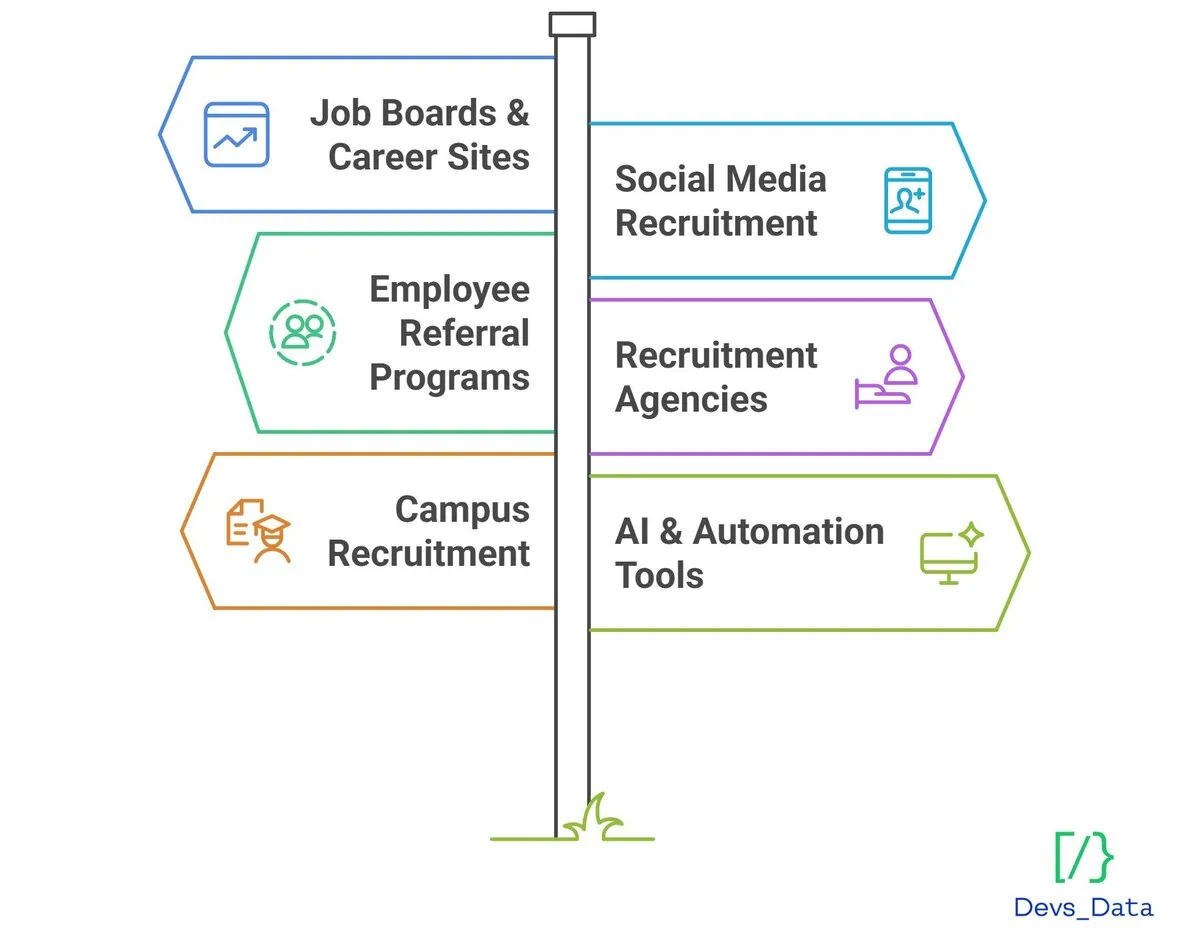
Organizations apply a range of techniques to attract candidates from outside their workforce. These practices vary in reach, cost, and suitability depending on the type of role being filled, but all aim to connect employers with talent that would not otherwise be accessible. Resources for recruitment include:
Social platforms let recruiters target niche talent pools and run direct outreach campaigns to candidates who respond faster than through traditional channels. They now shape how employers present themselves, how candidates assess opportunities, and how quickly both sides connect. The immediacy and reach of these channels allow hiring teams to interact with potential applicants in ways that traditional methods cannot match.
57% of job seekers use social media in their job search.
The impact also extends to network effects. When employees share postings, updates spread beyond traditional job seekers and reach professionals who are not actively applying but remain open to new roles. This secondary exposure underscores how social media has become a recruitment multiplier, expanding access to talent that companies might otherwise overlook.
Do you have IT recruitment needs?
Hiring from outside the organization offers both opportunities and challenges that influence business performance. Employers gain access to skills, diversity, and ideas that may not be present internally, yet this path often comes with higher investment and operational trade-offs. Weighing the strengths against the risks helps determine when external recruitment is the right choice.
External searches broaden the pool of applicants, enabling companies to attract individuals with backgrounds and competencies that are not available in-house. This broader reach makes it easier to align hiring with evolving market requirements.
Candidates arriving from different industries often provide knowledge that disrupts routine practices. Their insights can lead to process improvements or entirely new approaches that strengthen performance.
External hires may already hold certifications, technical knowledge, or advanced training that would otherwise require significant investment to develop internally. This helps close urgent capability gaps more effectively.
External recruitment makes it easier to include candidates from underrepresented groups, and McKinsey’s research shows that companies with diverse teams outperform less diverse peers by 39%. This diversity contributes to more informed decision-making and enhanced business outcomes.
Expanding into new markets or meeting growth targets often requires more people than an internal pipeline can provide. External recruitment supplies the additional capacity needed to adapt quickly.
Advertising roles, using agencies, and conducting extended assessments raise overall costs compared to promoting internally, increasing financial pressure on HR budgets.
New hires must learn processes, reporting lines, and tools, which slows the pace at which they can contribute fully to organizational goals.
When internal applicants are passed over, motivation may decline, and teams can experience friction as they adapt to a colleague hired from outside.
Predicting how an external candidate will adapt to established norms is difficult. A poor fit can affect collaboration and hinder integration.
Evaluating a large number of external applicants extends recruitment cycles, leaving key positions unfilled longer than the business might prefer.

Recruitment agencies often serve as extensions of internal HR teams, especially when roles require quick placement or highly specialized expertise. They maintain access to established candidate pools, which include both active job seekers and professionals who may not be actively searching. By drawing from these networks, agencies can present employers with relevant candidates more quickly than traditional in-house processes.
Beyond access to talent, agencies streamline the hiring process by handling early-stage work that can slow down internal teams. They handle early screenings and interview coordination, reducing administrative work while letting employers focus on candidate evaluation. Their structured processes and dedicated resources often shorten the time needed to move from vacancy to hire.
For senior or sensitive roles, agencies also provide confidentiality and targeted search capabilities. They discreetly approach potential candidates and manage sensitive negotiations while keeping company plans confidential. This makes them valuable partners in securing hires that demand precision and discretion.
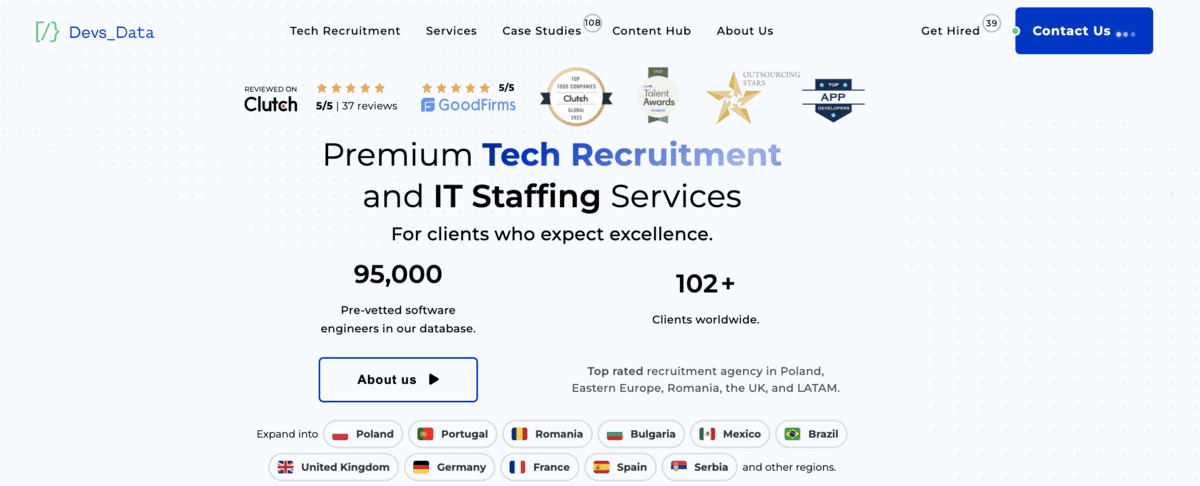
Website: www.devsdata.com
Team size: ~60 employees
Founded: 2016
Headquarters: Brooklyn, NY, and Warsaw, Poland
Engaging the right partner is often decisive in addressing the challenges of external recruitment. DevsData LLC is a well-established agency with over nine years in the market, more than 40 specialists on staff, and a database of 65000 candidates. Operating worldwide, including markets such as the US and Israel, the firm has supported both global enterprises and high-growth startups. Its consistent 5/5 satisfaction ratings on Clutch and GoodFirms underline a track record of precision and reliability.
The company’s recruitment model is built around transparency and accountability. Clients gain full access to notes and evaluations from every stage of the recruitment process, ensuring that each decision is auditable and clear. This openness sets DevsData LLC apart from many agencies that provide only limited visibility. The approach fosters trust while enabling clients to make informed, confident hiring decisions.
DevsData LLC also invests heavily in assessment rigor. Every candidate completes a 90-minute problem-solving challenge and structured interviews designed to test communication skills, adaptability, and technical expertise. This multi-stage process has been refined over five years to identify talent capable of excelling in demanding roles. US specialists within the team guide this process, aligning expectations with both technical requirements and organizational context.
Beyond recruitment, DevsData LLC extends its expertise to HR and business operations. The firm provides advisory services in legal and tax matters, employment law guidance, and business process outsourcing services. Its employer of record (EoR) solutions give companies a way to hire internationally without establishing local entities. These added offerings allow businesses to focus on their priorities while ensuring compliance and operational efficiency remain secure.
A practical example of this approach is DevsData LLC’s collaboration with Prime Insights, a US-based surveying company. Faced with mounting backend demands, Prime Insights needed three senior PHP developers able to contribute immediately without lengthy onboarding.
DevsData LLC applied its refined multi-stage process, including targeted sourcing and rigorous technical evaluation, to identify candidates proficient in Symfony, PostgreSQL, and containerized systems. Within three weeks, all roles were filled, enabling Prime Insights to sustain platform development and maintain delivery schedules. You can review the complete Prime Insights case study for detailed results and insights into the recruitment process.
Do you have IT recruitment needs?
Ready to strengthen your external recruitment strategy and secure talent with precision? Contact DevsData LLC at general@devsdata.com or visit www.devsdata.com to begin today.
External recruitment remains one of the most effective ways for companies to strengthen their workforce, but it is also one of the most complex. Bringing in outside talent expands access to skills not available internally, but often requires greater investment and careful cultural alignment. Organizations must weigh these trade-offs carefully, as the wrong approach can slow projects and strain teams financially or operationally. A structured strategy helps minimize risks while maximizing the value external hires can bring. When handled properly, external recruitment becomes not only a way to fill vacancies but a driver of long-term competitiveness.
DevsData LLC has more than nine years of experience and a database of 65000 candidates. Its recruitment practice combines the input of US-based specialists with global reach, serving both large corporations and startups in markets worldwide. With a track record of transparent delivery, the firm supports organizations in managing external recruitment with efficiency and precision.
For details about DevsData LLC’s recruitment and advisory services, reach out to general@devsdata.com or visit www.devsdata.com.
Any questions or comments? Let me know on
Twitter/X.
Discover how IT recruitment and staffing can address your talent needs. Explore trending regions
like Poland, Portugal, Mexico, Brazil and more.
 Frequently asked questions (FAQ)
DevsData – your premium technology partner
DevsData is a boutique tech recruitment and software agency. Develop your software project with veteran engineers or scale up an in-house tech team of developers with relevant industry experience.
Free consultation with a software expert
🎧 Schedule a meeting
FEATURED IN

DevsData LLC is truly exceptional – their backend developers are some of the best I’ve ever worked with.”

Nicholas Johnson
Mentor at YC, serial entrepreneur


 Build your project with our veteran developers.
Explore the benefits of technology recruitment and tailor-made software.
Learn how to source skilled and experienced software developers.
Build your project with our veteran developers.
Explore the benefits of technology recruitment and tailor-made software.
Learn how to source skilled and experienced software developers.

Rebecca Botvin

Commercial Director

Tom Potanski
Manager




Categories: Big data, data analytics | Software and technology | IT recruitment blog | IT in Poland | Content hub (blog)















careers@devsdata.com









general@devsdata.com

"I interviewed about a dozen different firms. DevsData LLC is truly exceptional – their backend developers are some of the best I've ever worked with. I've worked with a lot of very well-qualified developers, locally in San Francisco, and remotely, so that is not a compliment I offer lightly. I appreciate their depth of knowledge and their ability to get things done quickly."

Nicholas Johnson
CEO of Orange Charger LLC,
Ex-Tesla Engineer,
Mentor at YCombinator
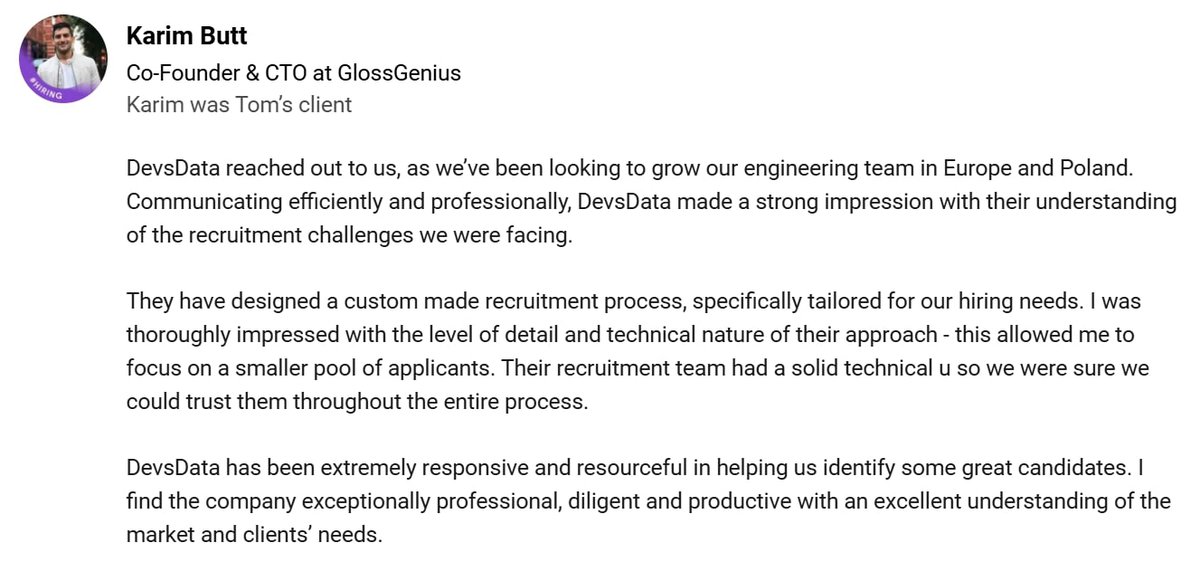
"DevsData reached out to us, as we've been looking to grow our engineering team in Europe and Poland. Communicating efficiently and professionally, DevsData made a strong impression with their understanding of the recruitment challenges we were facing. They designed a tailored recruitment process for our needs. I was impressed with the technical depth of their approach."

Karim Butt
Co-Founder & CTO at GlossGenius, Inc.
"Out of all the vendors we work with, DevsData clearly stands out. The quality of developers they deliver is beyond what we've received from any other vendor, and they've been able to send profile recommendations very quickly. I'm happy to be their reference for other companies from Israel and talk about their recruitment abilities and what they delivered for us."

Ran Eyal
Senior Manager at
ZIM Integrated
Shipping Services Ltd.
"DevsData demonstrated a strong degree of proactivity, taking time to thoroughly understand the problem and business perspective, and continuously suggesting performance and usability enhancements. Their app exceeded my expectations. I've worked with DevsData on numerous projects over the last 3 years and I'm very happy. Being both responsive and honest in communication."

Jonas Lee
Partner & Executive VP of Verus,
Financial LLC, Investor,
& Serial Entrepreneur
Acknowledgments