Thanks for subscribing.
Your gift is on the way.



Cybersecurity failures rarely start with a dramatic system breach. They start with small, ordinary decisions: granting temporary access to a vendor, extending a contract without revalidation, assuming a control still works because it worked last year. Ethical Hackers exist to expose exactly these gaps before attackers do. Hiring them introduces its own layer of risk: they require access to the same systems an attacker would target, which means vetting, scope, and authorization must be handled with the same rigor applied to the engagement itself.
That exposure is no longer theoretical. According to Verizon’s 2025 Data Breach Investigations Report, 30% of reported breaches involved third-party access or dependencies, double the rate seen just a year earlier. For organizations operating under regulatory scrutiny, this changes the nature of security risk entirely. A single poorly scoped engagement, loosely vetted contractor, or over-trusted specialist can introduce legal, financial, and reputational consequences that extend far beyond the security team.
This growing complexity is colliding with a hard hiring reality. Defensive tools have improved, but adversaries adapt faster than policies, and protecting modern systems requires specialists who understand attack behavior, not just controls on paper. Ethical Hackers sit at the sharper end of that requirement: they are trained to replicate attacker logic, not just respond to its outcomes. Yet those specialists are increasingly scarce. The World Economic Forum estimates that roughly 4 million cybersecurity professionals are needed globally to close the current talent gap. ISC2’s 2024 workforce analysis shows the scale of the problem: an active security workforce of 5.5 million versus 10.2 million required, leaving a global shortfall of 4.7 million professionals.
As a result, hiring cybersecurity talent, particularly ethical hackers who are granted deliberate access to sensitive systems, has become as much a risk management challenge as a technical one.
At DevsData LLC, we focus on bridging these critical gaps through expert-led cybersecurity recruitment, with screening designed to reduce operational and compliance risk, not just fill a seat. In this article, we’ll share what strong ethical hacker hiring looks like in practice, where companies misjudge the role, and how to structure evaluation so the person you bring in actually improves your security posture instead of quietly expanding your attack surface.
Ethical hacking is the practice of deliberately attempting to break into systems, with permission, to uncover security weaknesses before real attackers do. Engagements are typically scoped across defined domains such as application security (web and mobile applications, APIs), network security (internal and perimeter networks), cloud security (AWS, Azure, or GCP configurations), infrastructure and endpoint security, identity and access management (IAM), and, in some cases, controlled social engineering exercises.
Ethical hackers use the same techniques, tools, and attack paths as malicious hackers. The difference is intent and authorization. Their goal is not disruption, theft, or exposure, but controlled testing that reveals how defenses fail under real-world conditions and which weaknesses matter most from a practical risk perspective.
Companies hire ethical hackers to simulate cyberattacks against their own infrastructure, applications, and employees. These controlled attacks reveal how an actual breach might happen, how far an attacker could move inside the network, and which data or systems would be at risk if the attack were real.
The findings are then used to close vulnerabilities, strengthen detection mechanisms, and reduce the likelihood and cost of an actual incident.
In other words, ethical hacking shows not just that your systems are vulnerable, but how and why.
Cybersecurity Specialists and Ethical Hackers both work to protect organizations, but their responsibilities sit on opposite sides of the security function.
A Cybersecurity Specialist operates defensively. The role centers on configuring firewalls, monitoring network traffic for anomalies, enforcing access policies, and responding to incidents once they occur. Their day-to-day work involves maintaining the systems designed to prevent unauthorized access and detecting threats in real time.
An Ethical Hacker operates offensively. The role requires simulating the tactics of real attackers: probing applications for injection vulnerabilities, attempting privilege escalation, testing whether social engineering techniques can bypass human controls. “Ethical Hacker” is a recognized title used in job descriptions, though organizations also post for Penetration Tester, Red Team Specialist, or Offensive Security Engineer, depending on scope. Their output is a documented account of how defenses fail under realistic attack conditions and which weaknesses carry the highest business impact.
The skill sets differ accordingly. Cybersecurity Specialists tend to hold backgrounds in network administration, security information and event management (SIEM) platforms, and compliance frameworks. Ethical Hackers develop expertise in exploit development, reverse engineering, and adversarial simulation.
When deciding which role to hire, the nature of the risk matters more than general security headcount. Organizations that have strong monitoring and incident response capabilities but lack visibility into how their systems would withstand a targeted attack benefit from an Ethical Hacker. Organizations that need to build or maintain ongoing detection and defense infrastructure need a Cybersecurity Specialist. In practice, many mature security programs staff both functions and coordinate them through red and blue team exercises.
Do you have IT recruitment needs?
The terms ethical hacking and penetration testing are often used interchangeably, but in practice, they describe different scopes of work.
Penetration testing is one defined activity within ethical hacking. Its purpose is to actively exploit vulnerabilities and demonstrate how a system, application, or network can be breached under controlled conditions. The outcome is concrete proof: this path works, this control fails, this asset is reachable.
Ethical hacking is broader by design. Beyond penetration tests, ethical hackers may perform vulnerability assessments (identifying and prioritizing weaknesses without exploitation), malware analysis, social engineering simulations, or operate as part of red team exercises (offensive simulations designed to mimic real adversaries). In more mature security programs, this work is often paired with blue team validation (the internal defenders responsible for detecting and responding to attacks) or purple team engagements (structured collaboration between offensive testers and defenders), where offensive testing is directly linked to detection, response, and remediation.
A useful way to frame the difference is by the questions each approach answers:
That distinction becomes critical when hiring. Not every ethical hacker focuses on the same assessment types, and not every security challenge requires a full-scale penetration test. A Cybersecurity Specialist maintains and monitors defenses on an ongoing basis, while an Ethical Hacker is brought in to actively test whether those defenses hold. Choosing the wrong profile can lead to impressive technical reports that still fail to improve your actual security posture.
Ethical hackers operate under strict legal and professional boundaries.
They work only with explicit authorization, within a defined scope, and for a fixed period of time. They do not damage systems, disrupt operations, or extract sensitive data beyond what is required to prove risk. All findings remain confidential and are shared only with the client.
Many ethical hackers follow formal codes of conduct published by certification bodies such as EC-Council, but in practice, ethics are enforced through contracts, scope definitions, and accountability, not just certificates.
This is also why ethical hacker hiring is considered high-risk: the wrong hire doesn’t just deliver poor results, but can create legal and reputational exposure.
Do you have IT recruitment needs?
Hackers are often categorized by intent, but in practice, the differences go far beyond motivation. They determine legality, accountability, and the level of organizational risk associated with each type of engagement.
Black-hat hackers operate illegally. Their goal is financial theft, disruption, espionage, or ideological impact. They exploit vulnerabilities without consent, evade detection, and aim to extract value or cause damage before defenses react.
Gray-hat hackers sit in a more ambiguous space. They may uncover real vulnerabilities, but sometimes do so without authorization or by publicly disclosing flaws before they are fixed. While their intentions can be defensive, their actions can still expose organizations to legal risk, reputational damage, or copycat attacks by malicious actors.
White-hat hackers, commonly referred to as ethical hackers, operate with explicit permission, within a defined scope, and under contractual and legal controls. Their work is documented, time-bounded, and designed to minimize operational disruption. Most importantly, their findings remain confidential and are used to strengthen defenses rather than test how much damage can be done.
Ethical hackers are engaged in two distinct ways. Many organizations bring them in on a project basis, scoped to a specific assessment, application, or infrastructure segment, with a defined start and end date. Others hire them full-time, typically when the security program requires continuous offensive testing, internal red team capability, or ongoing validation of defense infrastructure. The choice between models depends on the maturity of the security program and how frequently new systems or changes need to be tested.
For companies, this distinction isn’t theoretical. Hiring an ethical hacker means granting deliberate, controlled access to systems, data paths, and security controls, often starting in test or staging environments, but in many cases extending to production to reflect real-world risk. When classification, scope, or vetting is insufficient, even a well-intended security exercise can quickly turn into a compliance incident or legal liability.
That’s why effective ethical hacker hiring depends on more than technical skill. Clear authorization, scoped engagement, background verification, and process discipline matter just as much as exploit expertise. When those controls are weak, even well-intentioned testing can introduce risk instead of reducing it.
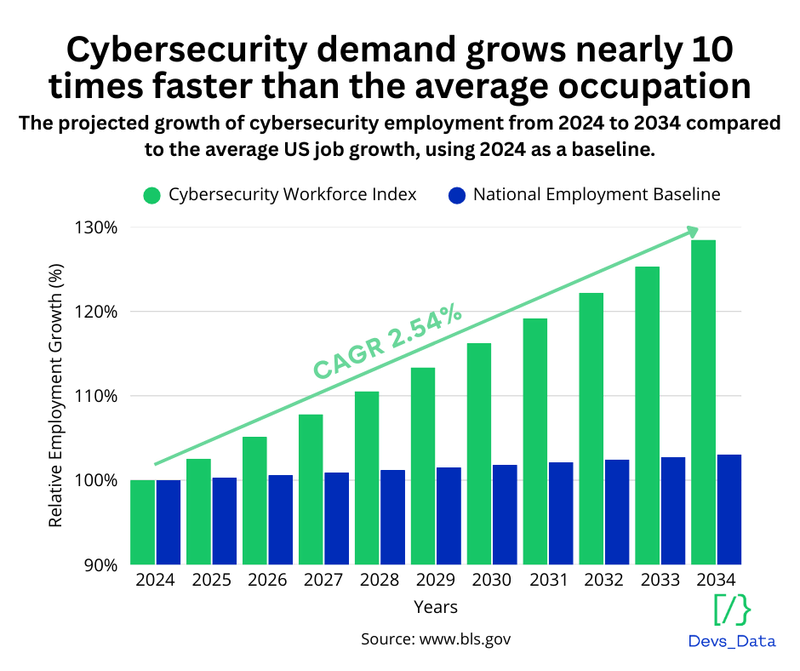
As cybersecurity threats grow more complex, demand for offensive security skills has increased faster than the overall security labor market. Ethical hackers sit at the intersection of deep technical expertise, adversarial thinking, and legal accountability, making them significantly harder to hire than general security roles.
Several factors are accelerating this complexity. Attack surfaces have expanded as organizations adopt cloud-native architectures, distribute workloads across multiple providers, and integrate third-party APIs at scale. Each new integration point creates potential entry paths that did not exist in traditional on-premises environments. Threat actors have shifted toward multi-stage attack chains that combine phishing, credential theft, and lateral movement rather than relying on single exploits. AI is now part of that picture: adversaries use automated tools to scan for vulnerabilities at scale, generate convincing phishing content, and accelerate reconnaissance in ways that were previously labor-intensive. Supply chain compromises have added another dimension: attackers now target trusted vendors and open-source dependencies to reach organizations indirectly. Defending against this requires professionals who can replicate these attack patterns under controlled conditions, and the pool of specialists with that capability remains small relative to the growing number of organizations that need them.
According to the US Bureau of Labor Statistics, employment in cybersecurity-related roles is projected to grow by 32% through 2032, reflecting a CAGR of approximately 2.54% compared to the economy-wide average of roughly 0.30%. At the same time, industry-wide revenue in cybersecurity services is expected to exceed $300 billion by 2029, reflecting sustained investment in security testing and breach prevention.
Despite this growth, supply remains constrained. Ethical hacking requires hands-on exploit experience, strong judgment around scope and authorization, and the ability to translate findings into remediation guidance. These requirements naturally limit the number of qualified professionals, particularly those who can operate in regulated or high-impact environments.
For employers, this imbalance creates two risks: prolonged hiring cycles and compromised vetting standards. Both increase exposure, either through delayed security testing or by appointing under-qualified specialists to high-access roles.
Hiring ethical hackers is not about technical capability alone. Many candidates can exploit systems. The real challenge is finding professionals who combine offensive skill with the discipline to operate within legal boundaries, document findings clearly, and communicate risk in terms leadership can act on.
In practice, organizations turn to three main hiring paths, each with clear trade-offs.
These providers offer structured engagements, defined methodologies, and built-in legal safeguards. For organizations operating in regulated environments, this predictability matters. However, the work is often delivered through standardized scopes, and senior specialists may oversee projects while execution is handled by less experienced testers. The result can be technically sound reports that still lack business context or prioritization.
Boutiques and individual ethical hackers can offer hands-on expertise and deeper technical creativity. The downside is variability. Outcomes depend heavily on individual judgment, communication skills, and discipline around scope. Without strong internal oversight, companies risk inconsistent findings or reports that highlight flaws without translating them into remediation strategies.
This path is typically chosen when ethical hackers are hired in-house or embedded long-term. Here, the risk shifts. Technical skill alone is not sufficient. Ethical hackers in these roles must navigate internal systems, sensitive data, audits, and cross-functional teams over extended periods. Generic recruitment approaches often fail because they overvalue certifications and under-test real-world decision-making, boundary awareness, and reliability.
Across all three paths, one factor consistently determines success: clarity before engagement. Organizations that fail to define scope, access limits, escalation paths, and success criteria tend to get findings they cannot act on.
There is also a more fundamental risk that often goes unaddressed. Ethical Hackers, by definition, gain access to internal systems, sensitive credentials, and infrastructure maps that would be extremely valuable to malicious actors. A wrong hire in this role is not just a performance problem. It is a potential data breach or, in worse cases, the deliberate sale of proprietary information to external parties. This risk is amplified when companies recruit independently without structured vetting, because standard hiring processes are not designed to evaluate trustworthiness at this level of access.
Recruitment agencies that specialize in cybersecurity staffing address this gap directly. They apply pre-screening processes built around integrity verification, reference depth, and track record in sensitive environments, not just certification portfolios. For organizations that need embedded or long-term security talent, this layer of oversight is what separates a manageable risk from an uncontrolled one.
Ethical hacker recruitment is fundamentally different from hiring other technical roles. A capable recruitment partner must evaluate how candidates behave when given access to critical systems, incomplete information, and real organizational constraints. That means assessing far more than tool familiarity or certification lists.
Effective evaluation focuses on four areas, each requiring specific interview methods.
Scope discipline measures whether a candidate respects authorization boundaries. In a scenario-based interview, present a situation where the tester discovers an adjacent, out-of-scope system that appears vulnerable during an engagement. Ask the candidate to walk through how they would handle the discovery, who they would notify, and under what conditions they would or would not proceed. Candidates who default to testing first and reporting later signal a risk.
Judgment under uncertainty reveals how a candidate prioritizes under incomplete information. Pose a time-boxed scenario: the candidate has 48 hours remaining in an engagement, two confirmed vulnerabilities, and a third that requires additional reconnaissance. Ask them to explain their decision framework for allocating the remaining time. The answer should reflect structured reasoning, not instinct alone.
Communication quality determines whether findings will translate into organizational action. Ask the candidate to explain a past finding to you as if you were a non-technical executive. Evaluate whether they quantify business impact, avoid alarmist framing, and structure remediation recommendations by urgency.
Operational maturity identifies candidates who have worked in environments where testing errors carry real consequences. Ask about a time they encountered an unexpected system response during a live engagement. Probe for how they contained the situation, who they communicated with, and what they changed in their process afterward.
Process matters just as much as criteria. Ethical Hacker recruitment should include background validation, scenario-based interviews, and practical assessments grounded in realistic attack paths, not textbook exploits. At DevsData LLC, this is the standard we apply, and the section below details how that process works in practice.

Company size: ~60 employees
Founding year: 2016
Website: www.devsdata.com
Headquarters: Brooklyn, NY, and Warsaw, Poland
At DevsData LLC, we approach ethical hacker hiring as a risk-sensitive recruitment process, not a volume search.
With over ten years of experience in IT and cybersecurity recruitment, we support organizations operating in high-stakes environments, including finance, trading platforms, multinational enterprises, and high-growth startups, where security failures carry immediate operational or regulatory consequences.
Our recruitment process is designed to filter for both competence and accountability. Candidates undergo a multi-stage evaluation that includes a 90-minute technical interview, scenario-based problem solving, and verification of real-world experience in production or regulated environments. Fewer than 6% of candidates pass this process, ensuring that only professionals with demonstrable judgment and technical depth are presented.
We maintain an active network of more than 95000 pre-vetted technology professionals worldwide and operate under a government-approved recruitment license. For cybersecurity roles, that license matters: it subjects our recruitment operations to legal compliance standards that go beyond standard staffing practice, which is relevant when placing specialists into high-access positions. Our engagement model runs on a success-fee basis, meaning clients pay only when a placement is confirmed, and every hire is backed by a guarantee period that covers replacements if the fit does not hold.

In a recent engagement with Aman, a top-five Israeli IT services provider operating across banking, telecom, and the public sector, DevsData LLC placed 11 senior engineers across Poland, Romania, Serbia, and Portugal in under eight months, bringing the four-year total to more than 40 hires. Roles spanned full stack development, DevOps, and data streaming, with placements including a Kafka Specialist responsible for mission-critical pipeline architecture and a DevOps Engineer managing multi-region cloud infrastructure across AWS and Azure. Big data and infrastructure roles carried the highest technical bar, requiring candidates with hands-on experience in real-time data systems, container orchestration, and CI/CD at scale. Each candidate cleared a multi-stage evaluation that included architecture-level assessments reviewed by DevsData LLC’s in-house engineering team, ensuring technical depth rather than surface-level certification matching.
Rather than prioritizing speed alone, we focus on alignment: role scope, access boundaries, and expected outcomes are defined upfront so candidates are assessed against the realities of the position.
Our sourcing for cybersecurity roles extends beyond standard job boards and LinkedIn outreach. We identify candidates through contributions to open-source security tooling, published CVE disclosures, conference presentations at events such as DEF CON and Black Hat, and participation in recognized capture-the-flag (CTF) competitions. These signals indicate hands-on offensive capability that certifications alone do not confirm. When a client required a Penetration Tester with experience in financial infrastructure, our team sourced through specialized bug bounty leaderboards and verified the candidate’s disclosed findings against publicly documented vulnerabilities before advancing them to technical evaluation.
Do you have IT recruitment needs?
Ethical hacking has moved from a “nice-to-have” security exercise to a core component of modern risk management. As attacks increasingly rely on chained vulnerabilities, third-party access, and human error, organizations need more than theoretical assessments or automated scans. They need professionals who can think like attackers, operate within strict legal and ethical boundaries, and translate technical findings into decisions leadership can act on. Ethical hacking does not replace a broader cybersecurity function, but it fills a gap that defensive tooling alone cannot: it tests whether the controls organizations invest in actually hold when an adversary applies real pressure.
At DevsData LLC, we treat ethical hacker recruitment as a risk-controlled process built around accountability, judgment, and real-world experience. By combining deep technical assessment with structured hiring discipline, we help organizations strengthen their security posture without expanding their attack surface.
The goal isn’t to hire someone who can break in. It’s to hire someone who knows when, how, and why to test, and what to fix first when the results matter.
Discover how IT recruitment and staffing can address your talent needs. Explore trending regions
like Poland, Portugal, Mexico, Brazil and more.
 Frequently asked questions (FAQ)
DevsData – your premium technology partner
DevsData is a boutique tech recruitment and software agency. Develop your software project with veteran engineers or scale up an in-house tech team of developers with relevant industry experience.
Free consultation with a software expert
🎧 Schedule a meeting
FEATURED IN


DevsData LLC is truly exceptional – their backend developers are some of the best I’ve ever worked with.”

Nicholas Johnson
Mentor at YC, serial entrepreneur


 Build your project with our veteran developers.
Explore the benefits of technology recruitment and tailor-made software.
Learn how to source skilled and experienced software developers.

Rebecca Botvin

Commercial Director

Tom Potanski
Manager




Categories: Big data, data analytics | Software and technology | IT recruitment blog | IT in Poland | Content hub (blog)
















careers@devsdata.com





general@devsdata.com

"I interviewed about a dozen different firms. DevsData LLC is truly exceptional – their backend developers are some of the best I've ever worked with. I've worked with a lot of very well-qualified developers, locally in San Francisco, and remotely, so that is not a compliment I offer lightly. I appreciate their depth of knowledge and their ability to get things done quickly."

Nicholas Johnson
CEO of Orange Charger LLC,
Ex-Tesla Engineer,
Mentor at YCombinator
"DevsData reached out to us, as we've been looking to grow our engineering team in Europe and Poland. Communicating efficiently and professionally, DevsData made a strong impression with their understanding of the recruitment challenges we were facing. They designed a tailored recruitment process for our needs. I was impressed with the technical depth of their approach."

Karim Butt
Co-Founder & CTO at GlossGenius, Inc.
"Out of all the vendors we work with, DevsData clearly stands out. The quality of developers they deliver is beyond what we've received from any other vendor, and they've been able to send profile recommendations very quickly. I'm happy to be their reference for other companies from Israel and talk about their recruitment abilities and what they delivered for us."

Ran Eyal
Senior Manager at
ZIM Integrated
Shipping Services Ltd.
"DevsData demonstrated a strong degree of proactivity, taking time to thoroughly understand the problem and business perspective, and continuously suggesting performance and usability enhancements. Their app exceeded my expectations. I've worked with DevsData on numerous projects over the last 3 years and I'm very happy. Being both responsive and honest in communication."

Jonas Lee
Partner & Executive VP of Verus,
Financial LLC, Investor,
& Serial Entrepreneur
Acknowledgments