Thanks for subscribing.
Your gift is on the way.


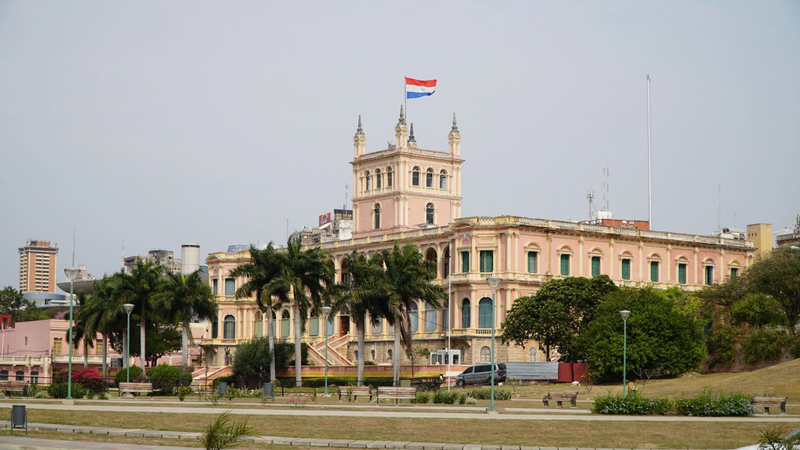
Paraguay, officially the Republic of Paraguay, is a landlocked South American nation with a population of about 7031000 people in 2025, reflecting steady growth in recent years. Bordered by Argentina, Brazil, and Bolivia, and anchored by its capital Asunción, founded in 1537 and often called the “Mother of Cities” for being one of South America’s oldest continually inhabited capitals, Paraguay’s identity is shaped by the Paraguay and Paraná rivers that sustain both commerce and daily life. Yet beyond these fundamentals lies a country full of contrasts: centuries-old traditions blend with modern change, bilingualism thrives alongside global connectivity, and even a landlocked nation maintains a river navy to patrol its inland waters.
Tourism in Paraguay surged in 2024: The country welcomed over 2.2 million total visitors (1061338 tourists and 1172404 day‑trippers), a 22% increase compared to 2023, generating more than USD 766 million in revenue. Though still one of South America’s lesser-visited destinations, Paraguay is quickly becoming a rising star in regional tourism.
The article explores the intriguing side of Paraguay, from unusual local traditions to little-known places and the surprising stories behind them. In the sections ahead, you’ll discover nine fun and surprising facts about Paraguay, from river navies and “bottle dances” to flag quirks and tereré traditions, that paint a vivid portrait of a nation that’s often overlooked, yet endlessly fascinating.
Paraguay stands out as one of the few countries in the world where two languages share equal official status: Spanish and Guarani, an indigenous language deeply rooted in the country’s history and identity. Unlike in many other Latin American nations, Guarani isn’t just a ceremonial or symbolic language – it’s spoken daily by a large portion of the population across both rural and urban areas.
According to 2024 data, 38.7% of the population aged five or older speaks both Guarani and Spanish at home, while 30% communicate mainly in Guarani and 28.5% in Spanish.
While indigenous languages elsewhere often decline, Guarani has expanded into every part of Paraguayan life. Beyond homes and communities, it’s taught in schools, spoken in the media, featured in music and literature, and used in formal government settings, a rare example of an indigenous language embedded in a country’s modern identity.
Do you have IT recruitment needs?
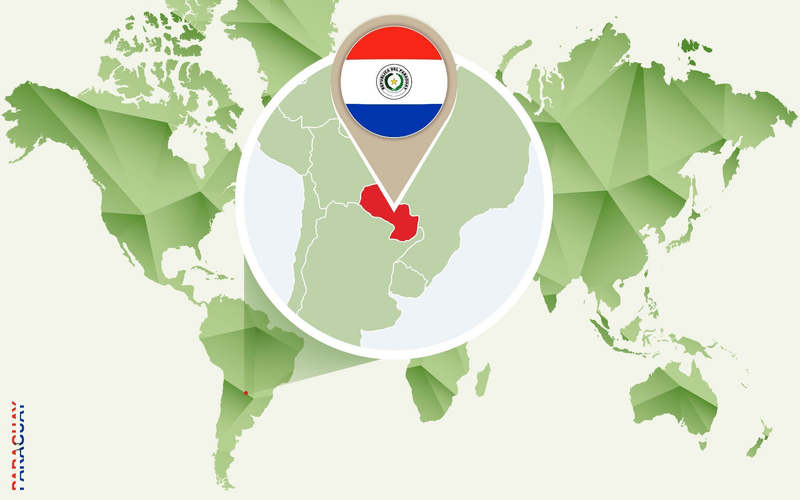
Paraguay is one of only two landlocked countries in the world that maintain a navy, the other being Bolivia. With no coastline to defend, Paraguay’s naval forces operate along its vast river network, particularly the Paraguay and Paraná rivers, which serve as the country’s primary arteries for trade and transport.
The Paraguayan Navy maintains a fleet of patrol boats, tugboats, and historic gunboats, with several vessels dating back to the 1930s still in use. Naval bases are strategically located in key river ports, including Asunción, Ciudad del Este, and Bahía Negra.
These rivers are economic lifelines: Approximately 80% of Paraguay’s imports and exports transit along them, connecting the country to the Atlantic via Argentina and Brazil. The navy’s mission includes securing commercial navigation, combating smuggling, and supporting national sovereignty on inland waters.
Paraguay shares with Brazil the colossal Itaipu Dam, one of the largest hydroelectric projects in the world. The dam generates far more electricity than Paraguay itself needs, allowing the country to cover nearly all of its domestic demand while exporting the surplus, mostly to Brazil. This makes Paraguay not just self-sufficient in clean energy, but also a significant regional power exporter, with Itaipu standing as both a symbol of engineering achievement and a pillar of the national economy.
According to Itaipu’s report, Paraguay uses approximately 25% of its share, which equates to supplying around 90% of Paraguay’s electricity consumption in 2022-2023. The remainder is exported, mostly to Brazil.
Do you have IT recruitment needs?
One of Paraguay’s most iconic cultural performances is the bottle dance, or Danza de la Botella, a mesmerizing folk tradition where women balance glass bottles on their heads while performing elegant choreography in flowing traditional dresses. If you want to see the dance firsthand, it’s regularly performed at folkloric festivals such as Festival del Lago Ypacaraí, the Nacional del Arpa y la Danza, cultural events in Asunción’s Plaza de la Democracia, and during national holidays. Many traditional restaurants and peñas in Asunción and Encarnación also feature live bottle-dance performances for visitors.
What begins with a single bottle often escalates: Skilled dancers stack as many as 10 to 15 bottles vertically, maintaining perfect balance while moving, spinning, and kneeling, all without dropping them. The bottles are typically decorated with Paraguayan motifs or brightly colored ribbons, making the display not only technically impressive but visually stunning as well.
The dance originated as an extension of the Paraguayan polka and evolved in the mid-20th century, gaining popularity through folkloric festivals and cultural competitions, especially at events like the Festival del Lago Ypacaraí, one of Paraguay’s most recognized cultural celebrations. Today, it’s part of dance school curricula, featured at national celebrations, and recognized abroad as a symbol of Paraguayan grace and cultural pride.
In 2021, Guinness World Records recognized a Paraguayan dancer, Perla Álvarez, for balancing 21 bottles on her head, setting a global record and drawing attention to this uniquely Paraguayan art form.
Paraguay’s national pastime isn’t football, it’s tereré, a chilled yerba mate infusion made with cold water and medicinal herbs known as poha nana. This refreshing ritual is deeply woven into daily life across the country.
The practices and knowledge involved in tereré, from selecting herbs to sharing rounds, were inscribed on UNESCO’s Representative List of the Intangible Cultural Heritage of Humanity in 2020, recognized for fostering social cohesion and mutual respect, while encouraging open dialogue.
Although Paraguay is the third-largest yerba mate producer worldwide, it’s tereré that defines its cultural identity. In 2022, Paraguay ranked fourth globally in tea consumption per capita, at approximately 14.2 kg per person, most of which is poured over ice rather than steeped hot, underscoring how central cold mate is to Paraguayan life.
In Paraguay, tereré is more than a beverage, it’s a daily ritual of friendship and conversation, shared at family gatherings, during work breaks, and in countless unplanned moments outdoors. Its symbolism extends far beyond hydration, it’s about community and a shared sense of identity, rooted in generations of tradition.
Paraguay’s flag is one of only a handful in the world with different designs on each side. While most national flags are identical front and back, Paraguay’s features two distinct emblems, each with its own meaning. On the front (obverse) side, you’ll find the national coat of arms, featuring a yellow five-pointed star surrounded by a palm and olive branch and the words “República del Paraguay”. On the back (reverse) side, there’s a different seal entirely: The Treasury Seal, showing a lion under a Phrygian cap (a symbol of liberty) with the motto “Paz y Justicia” (“Peace and Justice”).
This unique dual-symbol design dates back to 1842 and reflects Paraguay’s historical values, independence, peace, justice, and republicanism. It’s a subtle but striking visual quirk that distinguishes Paraguay’s flag from all others.
So next time you see a Paraguayan flag, take a closer look, what you see on the front might not be what’s on the back.
While fireworks and champagne are standard around the world, Paraguay celebrates New Year’s Eve with a unique and symbolic tradition: Burning effigies, known locally as “Año Viejo” (Old Year).
These effigies are often crafted from old clothes, paper, and sawdust, shaped like life-sized human figures, sometimes resembling politicians, celebrities, or even caricatures of bad luck and misfortune. Families and neighbors gather to set them on fire at midnight, symbolizing the purging of negativity and making room for a fresh start in the new year.
The tradition is especially popular in Asunción and smaller towns, where entire streets sometimes coordinate to build multiple effigies. Some communities even hold informal contests for the most creative or humorous “Año Viejo” figure.
This fiery farewell isn’t just for show, it’s a cathartic cultural ritual, rooted in the idea of renewal. While similar practices exist in other Latin American countries, Paraguayans have made it distinctly their own, weaving together folklore and satire with a strong sense of community into a literal clean slate.
Paraguay broke away from Spanish rule over a full five years before its larger neighbor, Argentina. On May 14, 1811, a local ruling junta was formed in Asunción, marking the beginning of de facto independence, and the formal declaration followed on May 15, 1811. This early move made Paraguay one of the first countries on the continent to sever colonial ties, setting it apart in Latin American history.
What’s more, this independence was achieved with remarkably little bloodshed, Paraguayan leaders swiftly negotiated with the Spanish governor, Bernardo de Velasco, who stood down peacefully and even accepted a provisional governing role.
This pivotal moment is still commemorated every year on May 14-15, celebrated as a two-day national holiday in Paraguay accompanied by music, local traditions, and gatherings of family and community.
Beneath Paraguay lies part of the Guaraní Aquifer, a massive underground water system shared with Brazil, Argentina, and Uruguay. Covering more than 1.2 million square kilometers, it holds enough freshwater to supply the planet for hundreds of years at current consumption rates.
For Paraguay, the aquifer is a strategic environmental asset and a vital safeguard for future generations. It supports agriculture, sustains ecosystems, and is a key part of the country’s natural heritage, though much of it remains untapped and carefully monitored to prevent overuse.
Do you have IT recruitment needs?
Paraguay is a country defined by quiet contrasts and enduring traditions, a place where a navy patrols its rivers and dueling laws remain technically valid, all while everyday conversation moves easily between two languages. Its lesser-known status on the global stage only adds to its intrigue, offering those who look closer a chance to uncover a culture both distinct and resilient.
From UNESCO-recognized tereré rituals to the gravity-defying bottle dance, Paraguay celebrates identity not through spectacle but through a strong sense of community and a deep-rooted pride in its heritage. Even its national flag tells a two-sided story, mirroring the nation itself, with layers of meaning and a character found nowhere else.
These nine fun facts only begin to hint at Paraguay’s rich character. From trip planners to armchair explorers, anyone curious about Latin America will find that some of the most fascinating stories come from the places the world often overlooks.
Discover how IT recruitment and staffing can address your talent needs. Explore trending regions
like Poland, Portugal, Mexico, Brazil and more.
 Frequently asked questions (FAQ)
DevsData – your premium technology partner
DevsData is a boutique tech recruitment and software agency. Develop your software project with veteran engineers or scale up an in-house tech team of developers with relevant industry experience.
Free consultation with a software expert
🎧 Schedule a meeting
FEATURED IN


DevsData LLC is truly exceptional – their backend developers are some of the best I’ve ever worked with.”

Nicholas Johnson
Mentor at YC, serial entrepreneur


 Build your project with our veteran developers.
Explore the benefits of technology recruitment and tailor-made software.
Learn how to source skilled and experienced software developers.
Build your project with our veteran developers.
Explore the benefits of technology recruitment and tailor-made software.
Learn how to source skilled and experienced software developers.

Rebecca Botvin

Commercial Director

Tom Potanski
Manager




Categories: Big data, data analytics | Software and technology | IT recruitment blog | IT in Poland | Content hub (blog)















careers@devsdata.com









general@devsdata.com

"I interviewed about a dozen different firms. DevsData LLC is truly exceptional – their backend developers are some of the best I've ever worked with. I've worked with a lot of very well-qualified developers, locally in San Francisco, and remotely, so that is not a compliment I offer lightly. I appreciate their depth of knowledge and their ability to get things done quickly."

Nicholas Johnson
CEO of Orange Charger LLC,
Ex-Tesla Engineer,
Mentor at YCombinator
"DevsData reached out to us, as we've been looking to grow our engineering team in Europe and Poland. Communicating efficiently and professionally, DevsData made a strong impression with their understanding of the recruitment challenges we were facing. They designed a tailored recruitment process for our needs. I was impressed with the technical depth of their approach."

Karim Butt
Co-Founder & CTO at GlossGenius, Inc.
"Out of all the vendors we work with, DevsData clearly stands out. The quality of developers they deliver is beyond what we've received from any other vendor, and they've been able to send profile recommendations very quickly. I'm happy to be their reference for other companies from Israel and talk about their recruitment abilities and what they delivered for us."

Ran Eyal
Senior Manager at
ZIM Integrated
Shipping Services Ltd.
"DevsData demonstrated a strong degree of proactivity, taking time to thoroughly understand the problem and business perspective, and continuously suggesting performance and usability enhancements. Their app exceeded my expectations. I've worked with DevsData on numerous projects over the last 3 years and I'm very happy. Being both responsive and honest in communication."

Jonas Lee
Partner & Executive VP of Verus,
Financial LLC, Investor,
& Serial Entrepreneur
Acknowledgments