Thanks for subscribing.
Your gift is on the way.



Building an AI startup means competing for engineers against companies that can outbid almost anyone. The talent the work depends on (people who can train models, ship inference pipelines, and reason about where a system breaks) sits inside a market where demand has pulled far ahead of the people available to meet it. McKinsey put the gap in plain terms, reporting that demand for tech talent is likely to run two to four times greater than supply over the coming years, with the European Union alone facing a shortfall of 1.4 million to 3.9 million people by 2027, according to its tech talent gap analysis. For a founder trying to assemble a first technical team, that ratio sets the terms of every hiring decision before the first interview.
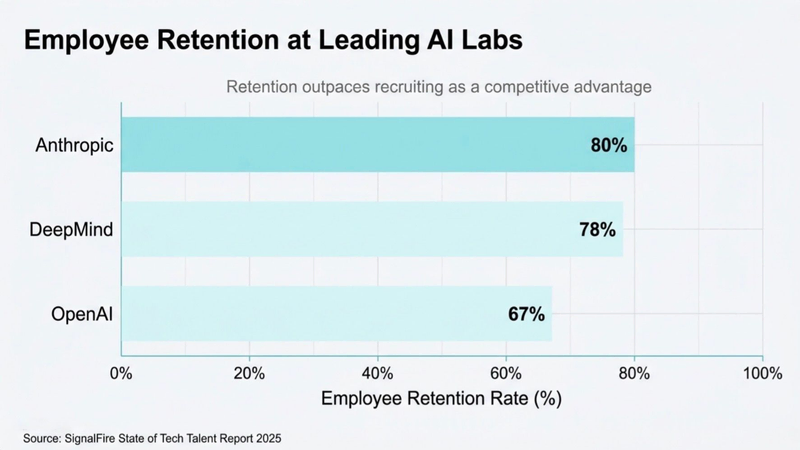
The pressure concentrates hardest at the early stage. SignalFire’s 2025 State of Tech Talent Report found that startups now fill under 6% of their roles with new graduates, with new-grad hiring down about 30% from pre-2020 levels, a sign that lean teams are paying for proven engineers rather than training juniors. The same report tracked where the best people land and stay. Among the top AI labs, Anthropic retained 80% of employees hired at least two years earlier, ahead of DeepMind at 78% and OpenAI at 67%. Those figures describe the pool a startup recruits from. Engineers with production experience are concentrated inside a handful of employers that keep most of them for years, so the candidates realistically available to a small company are the minority who do leave. Winning one of them is only half the problem, because the same pull that holds people inside a lab starts working against a five-person team the moment they join it.
A first technical hire at an AI startup carries weight that later hires do not. The wrong early engineer slows the product and shapes the habits of everyone who joins after, while the right one sets a technical bar that pulls stronger candidates toward the company. That stakes-per-hire math is what separates startup recruiting from filling a seat at an established firm.
At DevsData LLC, we have recruited engineering and technical talent for AI-focused companies and the wider technology market, sourcing machine learning engineers, backend developers, data engineers, and technical leads for teams ranging from pre-seed prototypes to funded products. Our work goes past matching a resume to a job description. We test how a candidate reasons through a model that performs in a notebook but fails in production, how they handle the trade-offs between latency, cost, and accuracy, and whether they hold up inside small teams shipping under real constraints. What follows draws on that record and sets out a practical framework for building an AI startup hiring strategy.
Hiring for an AI startup means running a search with none of the infrastructure that makes searches easy. There is no recruiter on staff, no senior engineer with spare hours to interview, and no headcount slack to absorb a hire who does not work out. The stages below assume those conditions rather than the ones a funded engineering organization operates under.
| Stage | Description |
|---|---|
| Define role and technical requirements | Write the role against the next two quarters of the roadmap rather than a target org chart, since a seed-stage team rarely knows what it needs 18 months out. Name the one problem this person owns in month one, whether that is the training loop or the path that serves it. State the stack you run today and flag the parts still held together by a prototype, because senior candidates read a fully specified stack on an early-stage brief as a sign nobody has shipped yet. |
| Decide what to build in-house versus buy | Ask what your defensibility actually rests on before writing a salary band. If it is data or a model you train, the hire is an ML specialist. If it is the product wrapped around a foundation model, the hire is a strong generalist engineer who ships quickly. Founders who blur the two pay lab rates for integration work their runway cannot absorb. |
| Choose a hiring model | Match the commitment to your runway rather than to an ideal team. A bounded build phase often suits a contract specialist, while a permanent seat earns its cost once the work stops changing shape every month. Where founder hours are the binding constraint, an external partner carries the sourcing load instead of adding to it. |
| Account for location and engagement structure | More than 65% of AI engineers sit in San Francisco and New York, so an early-stage team is usually hiring outside those hubs by necessity rather than by strategy. Settle the engagement route before the offer goes out. An employer of record can onboard in weeks and carries compliance the company has no capacity to carry itself, B2B contracting is common with senior engineers in Europe, and entity setup only earns its overhead once several people sit in the same market. |
| Source candidates | Sourcing at this stage is outbound by default, because an unknown company does not attract inbound applications from engineers who have put models into production. The people worth reaching are employed and rarely read listings. First contact has to lead with the problem and the ownership on offer, since neither the brand nor the salary will carry the message. |
| Screen for technical depth | Look for evidence that a system this person built survived contact with real traffic. Ask what degraded after launch, what they changed, and what it cost in latency or spend to fix. A publication record or a framework list tells you nothing about the failure modes they have actually seen, which is the whole of what an early team is buying. |
| Conduct technical assessments | Assume no senior engineer on your side is free to sit in, and choose an exercise that still produces a clear signal without one. A small feature against a real API, a review of code with a deliberate flaw, or a live debugging session on a failing pipeline all work. Judge the reasoning out loud as much as the output, because at a startup this person will make these calls with nobody to check them. |
| Assess communication and team fit | Test for the conditions the hire will actually work in, which means an undefined roadmap, no manager, and priorities that move mid-sprint. Ask how they operated the last time requirements changed underneath them. Where the team is distributed, written communication carries more weight than interview presence, since most decisions will be made in text across time zones. |
| Verify references and finalize offer | Ask referees about behavior in small teams specifically, since performance inside a structured organization predicts little about performance without one. Build the offer around cash and equity together, benchmarked against current regional data rather than figures from two funding cycles ago. Vesting terms deserve as much thought as the base, because they decide whether year two is settled or open. |
| Onboard with clear expectations | Have source control, deployment access, and the documentation that exists ready on day one, since a startup cannot afford a week of waiting on permissions. Set a 30/60/90-day plan tied to product milestones rather than to ramp-up activities. Getting a small change shipped in the first week matters more here than a thorough tour of a system that is still being built. |
Each stage depends on the one before it, and compressing the early ones tends to surface mismatches weeks into the engagement, when a startup has the least room to absorb them. In our recruitment work at DevsData LLC, founders who invest in thorough upfront evaluation reach productive output sooner and keep technical hires longer than those who move fast to fill a seat.
Do you have IT recruitment needs?
The order in which an AI startup hires shapes how fast it ships and how well early decisions hold up later. The roles below tend to matter most in the first phase, before a company has the headcount to specialize.
This is the hire that sets the technical bar. A founding Machine Learning Engineer owns the core model work, whether that means training and fine-tuning proprietary models or building the systems that wrap foundation-model APIs into a product. The right person here reasons about data quality, evaluation, and where a model fails under real load, not just accuracy on a benchmark. Their early architecture choices end up shaping every later hire’s work, which is why the bar on this seat cannot be lowered to fill it quickly.
Models reach users through infrastructure, and an AI product breaks in production far more often through serving, latency, and cost than through the model itself. A strong backend or infrastructure engineer builds the pipelines that move data in, run inference reliably, and keep cloud spend from outpacing revenue. At the early stage, this role often overlaps with MLOps work, so candidates comfortable across Docker, Kubernetes, and the orchestration layer carry outsized value.
Early-stage AI work rewards engineers who move across the stack rather than specialists locked into one layer. A product engineer who can take a feature from API call to shipped interface lets a small team cover ground that would otherwise need three hires. With tools like Copilot, Cursor, and the foundation-model APIs maturing, building useful AI features no longer demands deep research credentials, which widens the pool of capable generalists a startup can draw from.
AI products run on data, and the quality of that data sets the ceiling on what any model can do. A data engineer builds the ingestion, cleaning, and labeling pipelines that feed training and evaluation, work that is easy to defer and expensive to fix later. Startups that treat data infrastructure as an afterthought tend to discover the cost once their models stall on problems no amount of tuning resolves.
The founding Machine Learning Engineer owns the model layer. This role owns everything around it, including the parts that have nothing to do with machine learning. Some AI startups launch without a technical founder, and the first senior engineering hire then carries the build-versus-buy calls, the security posture, the vendor choices, and the decision about who gets hired next. Where the founding ML Engineer answers whether the model works, this person answers whether a defensible product can be built around it.
Hiring for an AI startup runs into obstacles that have little to do with interview scheduling or routine salary talk. The market pits small companies against firms able to outspend them many times over, pulls hires away soon after they sign, inflates pay faster than a young company can budget for, and fills the candidate pool with people whose claimed AI fluency outruns what they can deliver in production. Each challenge below reflects how we handle it at DevsData LLC.
The biggest names in AI have turned recruiting into a bidding war a startup cannot win on cash alone. Through 2025, Meta pursued researchers from OpenAI, Google, and Anthropic with signing bonuses reported as high as $100 million and multiyear packages reaching $300 million, according to reporting from eMarketer. Against offers like that, a seed-stage company that tries to lead with salary loses every time, which forces founders to compete on the parts of the job those firms cannot replicate.
The DevsData LLC solution
We position the role around what draws strong AI engineers beyond pay, including ownership of the core technical work and faster career progression than a large lab offers. Equity carries most of that argument, since meaningful ownership in a company an engineer helps build is the one component a well-funded lab cannot match at any salary. We screen for candidates who weigh it seriously rather than chasing the highest cash number.
Winning a candidate is not the same as keeping one, and in AI, the attempts to lure them away start almost immediately. Helen Toner, a former OpenAI board member, told Bloomberg that companies would try to poach Meta’s new hires starting on day one, a dynamic that hits every employer of scarce AI talent, not only the largest. For a startup, a hire who leaves after three months resets the technical roadmap and burns the cost of recruiting all over again.
The DevsData LLC solution
We screen for stability signals in a candidate’s history, such as consistent tenure and a clear reason behind each move, and for genuine interest in the problem the company is solving. Equity does the rest of the work here. An engineer partway through a vesting schedule weighs a competing offer against what leaving would cost them, which is exactly the friction a startup needs and cannot buy with salary.
Compensation benchmarks in AI move so quickly that a budget set six months ago is often already behind the market. Software engineers at venture-backed startups now earn a median base salary of $200000, up 25% from 2022, with one recent graduate offered $400000 for a single engineering role, according to Levels.fyi data reported by Entrepreneur. Established labs push the ceiling higher still, with OpenAI reportedly handing out retention bonuses as high as $1.5 million to hold onto staff, as The Wall Street Journal reported. A startup that wins a hire on pay alone in this climate often loses that person to the next firm willing to outbid.
The DevsData LLC solution
We benchmark compensation against current regional data rather than stale figures, and we structure the conversation around the full package, including equity upside and the engagement model, instead of base salary alone. That gives a startup a realistic offer it can sustain rather than one that breaks its budget within a year.
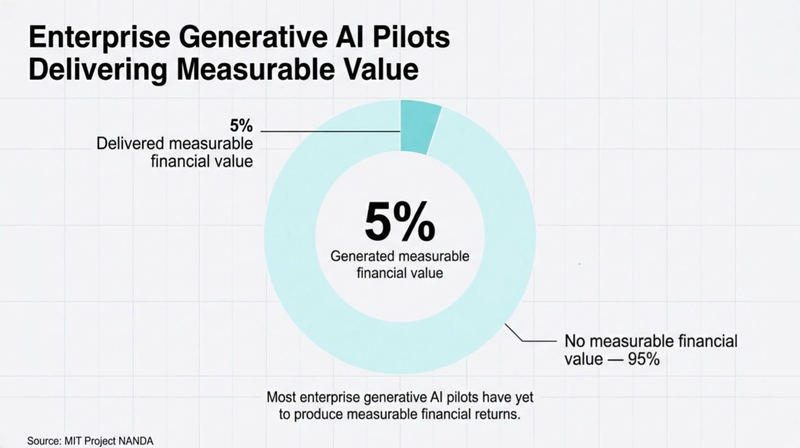
The skills candidates rush to claim are exactly the ones hardest to verify from a resume, and most AI work fails for reasons that a list of technologies never reveals. MIT’s Project NANDA found that only about 5% of enterprise generative AI pilots delivered measurable financial value, with the failure rooted in flawed integration rather than weak models, according to an interview with the report’s lead author published by Fortune. The lesson for hiring is direct: knowing the vocabulary of model deployment is not the same as the judgment to make a system work inside real constraints.
The DevsData LLC solution
We require practical, role-specific assessments rather than trusting a resume’s list of frameworks. Candidates work through architecture exercises, code reviews, or scenario problems such as a model that performs in a notebook but degrades in production, which separates working depth from rehearsed terminology.
Recruiting for an AI startup rewards companies that treat the talent war, retention, salary inflation, and verification as connected problems rather than separate ones.
The distance between a hiring process built for these realities and one that ignores them decides whether a small team holds together and ships, or churns through expensive hires while the product stalls.
Do you have IT recruitment needs?
Choosing a recruitment partner matters more at eight people than at 800. A large company absorbs a bad hire. A startup rebuilds its roadmap around one. The partner is also standing in for a function you do not have, since almost no seed-stage team employs a recruiter, and every hour a founder spends screening is an hour the product does not move. Two capabilities decide whether that substitution works. The first is knowing where engineers who have shipped models into production actually sit. The second is testing them against production work rather than against a stated framework list.
Ask for placements into companies at your stage, not just into your sector. Placing a Machine Learning Engineer into a 500-person organization with an existing platform is a different search from placing the person who will build that platform alone. Ask about first-year retention specifically, since an early hire who leaves at month nine costs a startup its roadmap rather than a requisition.
A startup hiring its first engineer abroad has no in-house counsel to catch a structural mistake. The partner has to know when an employer of record is the right answer and when a B2B arrangement is, and has to raise the risk of creating a taxable presence before an offer goes out rather than after. Candidate slates should already account for these constraints, because a founder discovering at signature that someone cannot be onboarded loses weeks the runway does not allow.
You will not have a senior engineer free to run interviews, which is precisely why stated AI fluency is dangerous at this stage. Look for practical assessments that put a candidate against a real API or a failing pipeline, and for scenario problems that surface how someone reasons about latency and cost when both are constrained. A partner screening only on resumes hands the verification burden back to the person who has the least time for it.
Your company name does not open doors yet. The strongest candidates are employed, rarely read listings, and are already being approached by firms that can pay more, so a partner has to reach them through direct outreach that leads with the problem rather than the brand. Ask how they build a pipeline when the qualified pool is measured in dozens rather than thousands.
Fit at a startup means tolerance for ambiguity as much as technical match. Ask how they screen for engineers who function without a defined roadmap, an established codebase, or a manager, and how they read stability signals in a candidate’s history. A hire who is excellent and miserable inside a five-person team is still a failed search.
A founder needs to know within two weeks whether the role is fillable at the compensation on offer, because the alternative is a quarter spent on a search that was never viable. A strong partner reports pipeline health candidly and says plainly when the brief sits out of step with the market rather than promising a fast fill.
Hiring plans at this stage are tied to a funding milestone or a shipping deadline more often than to a headcount target. A capable partner asks what the round or the launch requires, then works backward to the sequence of hires, instead of optimizing for placement volume.
The questions below translate each of these checks into something concrete you can put to an agency before you sign.
| Stage | Question to ask |
|---|---|
| Track record | Can you show placements for Machine Learning Engineers, Data Engineers, or founding technical leads, with time to hire and first-year retention on projects close to ours? |
| Compliance and engagement | How do you handle hiring across regions through a local entity, an employer of record, or a B2B contractor arrangement, and how does each affect cost and timeline? |
| Technical vetting | What does your assessment process include beyond resumes and interviews, and how do you test for production trade-offs like latency, cost, and accuracy? |
| Sourcing | How do you reach engineers who already hold roles and rarely answer public listings, and how do you build pipelines when the qualified pool runs thin? |
| Retention and fit | How do you screen for stability and motivation beyond pay, and how does that lower the risk of early attrition? |
| Transparency | What timelines do you commit to, and how do you flag when a role’s pay or requirements sit out of step with the market? |
| Business alignment | How do you align sourcing strategy and candidate profiles with goals like building a first team or scaling ahead of a funding milestone? |
Choosing the right recruitment partner for an AI startup takes more than checking for general hiring experience, since durable success depends on knowledge of where the talent sits, compliance fluency, rigorous technical vetting, and the ability to deliver hires who stay and perform.
In addition, fee structure deserves a direct question, since it shapes the decision as much as capability does. Success-fee models charge only on a completed hire, typically a portion of first-year salary, and usually carry a replacement guarantee if the person leaves inside a set window. Retained models spread payment across the search and fit senior or confidential roles. Ask a prospective partner to state the model, the rate, and the guarantee period before you engage.
Website: www.devsdata.com
Company size: ~60 employees
Founding year: 2016
Headquarters: Brooklyn, NY, and Warsaw, Poland
Startups come to us for a reason that rarely applies to larger clients. They have no recruiting function, no engineer free to run technical interviews, and a runway that turns a three-month search into a strategic problem.
At DevsData LLC, we have helped companies across the US, Europe, and Israel hire and scale AI engineering teams, from early-stage products built on foundation-model APIs to teams training and deploying proprietary models into production. Our vetting is built for AI and machine learning roles, covering model development, data pipeline design, Python proficiency, inference and serving architecture, MLOps practices, and how a candidate weighs latency against cost and accuracy under real production load.
A proprietary database of 95000+ vetted IT professionals worldwide gives us reach into engineers who are employed and not reading job listings, and our government-approved recruitment license means the engagement clears compliance review without a founder having to manage it.
Across 100+ satisfied clients and 140+ technical engagements, we have helped organizations avoid stalled pilots, brittle pipelines that fail in production, and costly mismatches between generalists who prototype well and the specialists a funded product actually needs. Whether you need to find a programmer for an app or build a full engineering team through our IT recruitment work, our focus remains on predictable delivery and long-term system performance. With consistent 5.0 ratings on Clutch and GoodFirms, we build reliable AI teams that support stability at scale.
Maersk Tankers partnered with DevsData LLC on AI and data science work for maritime logistics, a domain where models have to perform against real operational data rather than a clean benchmark. The engagement called for people who could reason about data quality, model behavior in production, and the gap between a result that looks good in testing and one that holds up against live conditions, which is the same bar an AI startup faces when its first technical hire decides whether the product works outside a notebook. We vetted for that judgment directly rather than trusting a stated familiarity with machine learning frameworks.
Key learning: the candidates who performed best were those who could show concrete ownership of a model or data system in production, including how they handled messy inputs and edge cases, rather than people whose experience stopped at prototypes that never met real data; the profile whose model runs cleanly in a demo and then breaks on messy inputs and unhandled edge cases the moment it meets live operations.

GlossGenius, a US SaaS company serving more than 70000 businesses, came to DevsData LLC after its own recruitment had stretched past 70 days with critical engineering roles still open. The mandate covered seven senior hires spanning backend, frontend, mobile, and data engineering to expand ETL workflows, all under pressure to move fast without lowering the technical bar. We aligned vetting with the actual stack, delivered a shortlist in 14 business days, and closed seven hires in 35 days. The case mirrors the squeeze an AI startup feels when a stalled search threatens a delivery milestone and the temptation is to drop standards to fill seats.
Key learning: speed and rigor are not opposites. The fastest path to a senior hire who lasts runs through assessment aligned to the real stack, not through skipping the screening that separates a strong engineer from a confident interviewer.
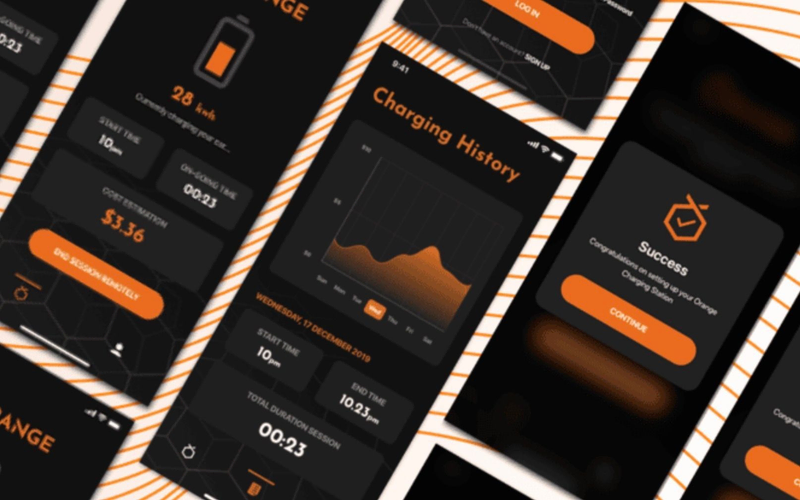
Orange Charger, a San Francisco startup backed by a $6.5 million seed round and staffed by around 40 people, including former Tesla engineers, partnered with DevsData LLC because assembling a full software team in-house would have been too slow and costly for a company at its stage. The work demanded engineers who could handle secure payments, real-time data, and hardware integration across a system that had to scale as the company grew. This is the core trade-off most AI startups face early: build the team slowly in-house or bring in vetted senior talent fast to hit the market while the opportunity is open.
Key learning: for a funded early-stage company, the cost of a slow or mismatched hire is measured in lost time to market. The engineers who delivered were those who combined production ownership with the ability to make sound architectural calls a small team would depend on for years.
Across these engagements, one pattern holds: effective AI and technical recruitment depends on validating production ownership, judgment under real constraints, and architectural reasoning rather than relying on years-of-experience counts or framework keyword matching.
Do you have IT recruitment needs?
Building an AI engineering team presents a distinct challenge for most startups. The market holds capable engineers, yet the supply of candidates who combine genuine technical depth with the judgment to make a model work outside a notebook stays tighter than the headline talent figures suggest. The result is a recruitment market where precision and access to the right people matter more than volume.
Unstructured hiring processes tend to produce predictable problems, including losses to better-funded competitors, mismatches between a candidate’s stated AI fluency and actual capability, and early attrition in a market where strong engineers regularly field outside offers. These issues surface weeks or months after the offer is signed, when correcting them costs far more than getting the hire right the first time.
Clearly defined requirements, rigorous evaluation of technical and problem-solving ability, verification of real-world performance, and attention to fit beyond compensation give a startup hires who deliver and stay. This matters most at the early stage, where a weak architectural decision compounds through every later hire and a wrong first engineer stalls the product the team was built to ship.
This is the process we built our practice around. We support startups through it by pairing targeted sourcing with in-depth candidate assessment. With a global network of vetted professionals, a low candidate acceptance rate, and experience building technical teams across the US, Europe, and the wider region, we concentrate on candidates who bring real technical depth and stay to build on it.
In a market where access to qualified engineers shapes whether a startup can ship its product while the opportunity is open, hiring the right technical talent is not just an operational task. It is a strategic investment in whether the team can ship and hold its edge.
Learn more at www.devsdata.com or contact general@devsdata.com.
Any questions or comments? Let me know on
Twitter/X.
Discover how IT recruitment and staffing can address your talent needs. Explore trending regions
like Poland, Portugal, Mexico, Brazil and more.
 Frequently asked questions (FAQ)
DevsData – your premium technology partner
DevsData is a boutique tech recruitment and software agency. Develop your software project with veteran engineers or scale up an in-house tech team of developers with relevant industry experience.
Free consultation with a software expert
🎧 Schedule a meeting
FEATURED IN


DevsData LLC is truly exceptional – their backend developers are some of the best I’ve ever worked with.”

Nicholas Johnson
Mentor at YC, serial entrepreneur


 Build your project with our veteran developers.
Explore the benefits of technology recruitment and tailor-made software.
Learn how to source skilled and experienced software developers.

Rebecca Botvin

Commercial Director

Tom Potanski
Manager




Categories: Big data, data analytics | Software and technology | IT recruitment blog | IT in Poland | Content hub (blog)















careers@devsdata.com





general@devsdata.com

"I interviewed about a dozen different firms. DevsData LLC is truly exceptional – their backend developers are some of the best I've ever worked with. I've worked with a lot of very well-qualified developers, locally in San Francisco, and remotely, so that is not a compliment I offer lightly. I appreciate their depth of knowledge and their ability to get things done quickly."

Nicholas Johnson
CEO of Orange Charger LLC,
Ex-Tesla Engineer,
Mentor at YCombinator
"DevsData reached out to us, as we've been looking to grow our engineering team in Europe and Poland. Communicating efficiently and professionally, DevsData made a strong impression with their understanding of the recruitment challenges we were facing. They designed a tailored recruitment process for our needs. I was impressed with the technical depth of their approach."

Karim Butt
Co-Founder & CTO at GlossGenius, Inc.
"Out of all the vendors we work with, DevsData clearly stands out. The quality of developers they deliver is beyond what we've received from any other vendor, and they've been able to send profile recommendations very quickly. I'm happy to be their reference for other companies from Israel and talk about their recruitment abilities and what they delivered for us."

Ran Eyal
Senior Manager at
ZIM Integrated
Shipping Services Ltd.
"DevsData demonstrated a strong degree of proactivity, taking time to thoroughly understand the problem and business perspective, and continuously suggesting performance and usability enhancements. Their app exceeded my expectations. I've worked with DevsData on numerous projects over the last 3 years and I'm very happy. Being both responsive and honest in communication."

Jonas Lee
Partner & Executive VP of Verus,
Financial LLC, Investor,
& Serial Entrepreneur
Acknowledgments