Thanks for subscribing.
Your gift is on the way.



HR outsourcing has become an increasingly popular strategy for businesses to streamline operations and reduce administrative costs. In fact, it’s becoming a staple in how companies manage their operations, with 80% continuing to maintain or even increase their investment in external providers.
Over the past few years, a fundamental shift has occurred in how companies manage their workforce. The rapid adoption of AI across industries has reshaped everything from talent acquisition to performance tracking, compressing tasks that once required entire teams into automated workflows. Alongside this, the pandemic triggered a global rethink of work, accelerating remote hiring and the rise of distributed global teams. According to the World Economic Forum, 83% of companies plan to increase the use of remote work or hybrid arrangements long-term. This decentralization of teams, while increasing flexibility, has also introduced operational complexity in areas like compliance, payroll, and benefits management. As a result, HR departments are struggling to keep pace, especially as employee expectations around wellbeing, career development, and diversity continue to grow. A SHRM survey found that 61% of HR professionals report being overwhelmed by the scope of their responsibilities. These challenges have made in-house HR increasingly unsustainable for many organizations. In response, businesses are turning to outsourcing as a strategic solution, not only to cut costs but also to gain immediate access to regional expertise, and specialized talent that enable them to operate efficiently in an increasingly complex world of work.
While outsourcing HR services can lead to significant cost savings, increased compliance, and access to specialized expertise, it also involves financial considerations that vary depending on business size, service scope, and provider type.
Pricing structures range from per-employee fees to percentage-based models, with hidden costs sometimes impacting the overall expense.
This guide explores the factors that influence HR outsourcing costs, common pricing models, and strategies for optimizing costs. Whether you’re a startup or an enterprise, understanding the financial implications of outsourcing HR functions can help you make informed decisions for sustainable growth.
Human Resource (HR) outsourcing involves delegating specific HR functions to external service providers, allowing organizations to focus on their core operations. This is achieved by shifting time-consuming and complex tasks, such as payroll processing, benefits administration, or regulatory compliance, to specialists who use dedicated tools and standardized processes. As a result, companies gain access to expert support, reduce errors, lower internal workload, and often cut operational costs.
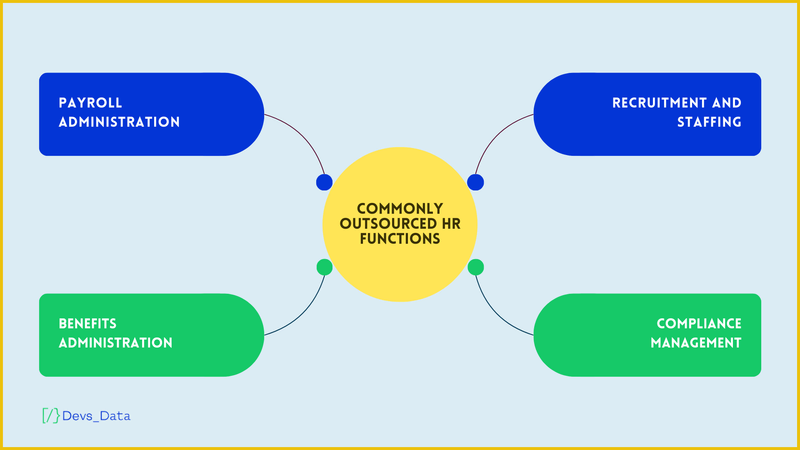
Payroll administration
Managing employee compensation, tax withholdings, and compliance with payroll regulations is complex and time-consuming. Payroll errors can lead to costly penalties, employee dissatisfaction, and regulatory violations, making accurate payroll management essential for businesses of all sizes. To mitigate these risks and streamline operations, many companies turn to payroll outsourcing. A survey indicates that 61% of American companies outsource some or all of their payroll operations, allowing them to reduce administrative burdens, enhance compliance, and focus on strategic business growth.
Recruitment and staffing
Handling the hiring process, from sourcing candidates to onboarding new employees, requires significant time, effort, and resources. Companies must attract top talent, conduct background checks, and ensure a smooth onboarding process, all while maintaining efficiency in their recruitment processes. Many organizations outsource recruitment to reduce costs, improve efficiency, and tap into specialized expertise that would be difficult to build internally.
Benefits administration
Overseeing employee benefits programs, including health insurance, retirement plans, paid leave policies, and wellness initiatives, is a crucial yet intricate aspect of HR management. Ensuring compliance with government regulations, negotiating with benefits providers, and addressing employee concerns require specialized expertise and constant updates on changing policies. Many businesses, especially those with limited HR resources, struggle to manage these responsibilities in-house. Based on the research, around 40% of companies outsource benefits functions to handle these complex tasks effectively and reduce administrative burdens. By outsourcing, companies can ensure legal adherence, improve employee satisfaction, and optimize costs associated with benefits administration.
Compliance management
Ensuring adherence to labor laws and regulations is a critical responsibility for businesses, as violations can result in severe penalties, legal disputes, and reputational damage. Companies must stay up to date with constantly evolving employment laws, including wage regulations, workplace safety standards, anti-discrimination policies, and data protection requirements. This process can be particularly challenging for businesses operating in multiple regions, where different jurisdictions impose varying legal obligations. To mitigate legal risks and ensure compliance with labor laws, many organizations rely on HR outsourcing services that specialize in regulatory compliance and labor law management.
Companies most frequently outsource payroll administration, recruitment, benefits administration, and compliance management. Each of these functions carries a high administrative load, requires specialized knowledge, and exposes businesses to financial or legal risk when handled incorrectly. Delegating them to external providers allows organizations to reduce overhead, maintain regulatory accuracy, and redirect internal resources toward strategic priorities.
Do you have IT recruitment needs?
HR outsourcing costs are shaped by factors like company size, service complexity, provider type, and regional wage differences. Understanding how these elements interact can help businesses choose the right model, avoid hidden expenses, and align HR support with growth goals.
Scope of services – comprehensive vs. selective outsourcing
The range of HR functions a company chooses to outsource significantly impacts costs. Comprehensive outsourcing, where a business delegates most HR activities to an external provider, typically incurs higher expenses because managing interconnected functions like payroll, benefits, compliance, and recruitment requires deeper integration, more dedicated support staff, and broader technology infrastructure. Conversely, selective outsourcing, focusing on specific functions like payroll processing or recruitment, can be more cost-effective.
Company size and employee count
HR outsourcing costs scale with company size. Larger organizations face higher expenses due to complex needs like high-volume payroll, diverse benefits, and broad recruitment. These require more customization and support from providers. In contrast, smaller businesses often benefit from standardized, cost-effective packages that eliminate the need for in-house HR teams. As companies grow, both the scope and cost of HR services typically increase.
Service provider type – PEOs, EoRs, specialized HR firms, or freelancers
Professional Employer Organizations (PEOs) act as co-employers, managing payroll, benefits, and compliance while businesses handle daily operations. Employers of Record (EoRs) serve as the legal employer for international hires. Both provide broad HR solutions with strong compliance support, typically at a premium price. A PEO partners with a business through a co-employment model, handling functions like payroll, benefits, tax filings, and compliance, while the client company retains control over day-to-day operations. PEOs commonly charge either a percentage of payroll (often around 2%-12% of total wages) or a flat fee per employee, with many using a per-employee-per-month (PEPM) model. Well-known PEO providers include ADP TotalSource, TriNet, and Insperity, which serve small to mid-sized businesses looking for comprehensive HR support within the US. An EoR (Employer of Record), on the other hand, becomes the legal employer of record for workers, particularly useful for hiring in foreign countries, managing all legal, tax, and regulatory responsibilities on behalf of the client. This model is commonly used by businesses expanding globally without setting up local entities. Leading EoR providers include Deel, Remote, and Papaya Global, known for enabling fast, compliant international hiring. In general, EoR fees range from $199 to $650 per employee per month for standard services. This flat fee usually covers payroll, compliance, and benefits. For lighter needs, specialized HR firms offer recruitment or training on a project or hourly basis. Freelancers and small agencies are cost-effective for one-off tasks but may lack scale. Choosing the right provider depends on your HR needs, complexity, and budget.
Geographic location – differences in outsourcing costs by region
Geographical location plays a significant role in determining HR outsourcing costs. According to OECD data from 2023, average annual wages range from approximately $80000 in the US to just over $20000 in Mexico, the lowest-earning OECD member. Partnering with providers in regions where labor costs sit well below this OECD average, such as the Philippines, India, Eastern Europe, or Latin America, can produce substantial savings. The ILO’s Global Wage Report 2024 to 2025 confirms that wage levels remain significantly lower in these regions compared to North America and Western Europe. Time zone differences, cultural nuances, and language barriers should factor into this calculation, as they affect communication efficiency and operational continuity.
Technology and automation – impact of HR software and AI-driven HR solutions
Providers that leverage modern HR technologies, such as automated payroll platforms, AI-based resume screening tools, self-service employee portals, and compliance tracking systems, can deliver services more efficiently and reduce manual workloads. These tools streamline repetitive tasks like payroll processing, candidate filtering, onboarding, and time-off management. While adopting such technologies can lead to long-term cost savings, they may involve higher upfront setup or licensing fees, especially for customized or enterprise-level implementations.
Contract type and flexibility – fixed pricing vs. pay-as-you-go models
The structure of the outsourcing contract significantly affects overall costs. Fixed pricing models provide a set fee for a defined range of services, offering budget predictability. In contrast, pay-as-you-go models charge based on actual service usage, which can be cost-effective for businesses with fluctuating HR needs. Understanding the contract terms and aligning them with the company’s operational patterns is crucial for cost management.
Businesses that map these cost drivers against their actual HR pain points, rather than defaulting to the cheapest option, tend to build outsourcing arrangements that hold up as the company scales and regulatory demands shift.
Do you have IT recruitment needs?
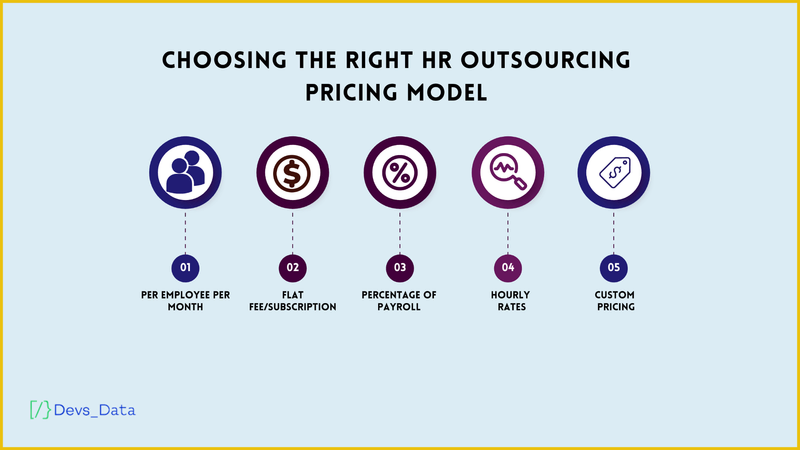
Selecting a pricing model is not a formality. The wrong structure can lock a company into overpaying for services it barely uses or leave it exposed to spiraling costs during periods of growth. Each model below suits a different operational profile, and the right choice depends on headcount trajectory, service complexity, and how predictable the company’s HR needs are.
Per employee per month (PEPM)
In the PEPM model, businesses pay a fixed fee for each employee every month. This structure is prevalent in services like payroll processing and benefits administration because these functions scale directly with headcount. Each additional employee requires the same recurring set of tasks, such as paycheck processing or benefits enrollment. PEPM works best for companies with stable or slowly growing teams, where month-to-month HR costs need to remain predictable. Startups in early growth stages and mid-sized companies with 50 to 500 employees tend to benefit most, since the per-head cost stays transparent and easy to forecast. Businesses with high seasonal turnover, on the other hand, should be cautious: onboarding and offboarding fees can accumulate fast under this structure.
Flat fee/subscription
Under this model, companies pay a consistent flat fee, often on a monthly or annual basis, for a comprehensive suite of HR services. This approach works well for organizations that need broad HR coverage and want a single line item in their budget. Companies running lean with no internal HR department, typically those under 50 employees, gain the most from this structure because it replaces an entire function at a fixed cost. The risk lies in bundling. If the package includes services the company does not use, such as executive coaching or outplacement support, the flat fee becomes inflated. Before signing, businesses should audit which services they will actively use within the first 12 months and negotiate to remove or discount the rest.
Percentage of payroll
Professional Employer Organizations (PEOs) and Employers of Record (EoRs) commonly use this pricing model, charging a percentage of the company’s total payroll. This structure aligns provider incentives with company size, making it appealing for businesses expanding headcount rapidly. The trade-off surfaces when salaries rise. A company that promotes aggressively or hires senior talent will see outsourcing costs climb even if the provider’s workload stays the same. This model fits organizations where headcount growth outpaces salary inflation, such as companies scaling operations teams or customer support. For businesses hiring primarily senior or executive-level roles, a flat PEPM rate often delivers better value.
Hourly rates
For specialized HR services or short-term projects, some providers charge hourly rates. HR Consultants offering expertise in organizational development, compliance audits, or employee training programs frequently operate on this basis. Hourly pricing suits companies that need targeted interventions rather than ongoing support, such as a compliance review before entering a new market or a one-time restructuring of compensation bands. The flexibility comes at a premium: hourly rates for experienced HR Consultants can range significantly based on specialization and geography. Companies should define the project scope tightly and set a maximum hours cap in the contract to prevent cost overruns.
Custom pricing
Tailored enterprise-level solutions often call for custom pricing models. In these cases, HR outsourcing providers assess the organization’s scale, geographic footprint, and compliance complexity to develop a bespoke pricing structure. This approach is most relevant for enterprises operating across multiple jurisdictions with over 1000 employees, where no standard model can accommodate the layered regulatory and administrative demands. Custom agreements typically combine elements of PEPM, flat fees, and project-based billing into a single contract. The negotiation process takes longer, but the result is a pricing structure that reflects actual service consumption rather than a one-size-fits-all package.
Matching the pricing model to the company’s current stage and growth trajectory, rather than defaulting to the provider’s standard offering, is the single most effective way to control long-term outsourcing costs.
When evaluating the financial implications of managing Human Resources (HR) in-house versus outsourcing, it’s essential to consider various cost components and potential savings.
The decision between maintaining an in-house HR team and outsourcing comes down to more than salary savings. Each approach carries distinct cost structures, risk profiles, and scalability constraints. The comparison below highlights the most significant differences across the areas where cost and efficiency gaps tend to be largest.
| HR function | In-house HR | Outsourced HR |
|---|---|---|
| Salaries and staffing | Median HR Manager wage: $140030/year (US Bureau of Labor Statistics, 2024), plus benefits and office costs. | No HR headcount needed. Costs tied to service level and usage. |
| Software, compliance, and legal | Separate software licenses ($20 to $200/month per employee), legal consultations, and compliance training. | Bundled into provider packages. Legal updates and software access included. |
| Recruitment | Dedicated Recruiters, ATS software, job board fees, and internal staff time. | Agencies charge a percentage of salary for faster, specialized hiring. |
| Payroll | Payroll staff, software, tax compliance, and error-related penalties. | $20 to $150 per employee/month, covering tax filings, deposits, and compliance. |
| Scalability | Requires new hires or system investments. Slow and capital-intensive. | Scales with business size and seasonality. Costs adjust accordingly. |
| Risk and predictability | Costs fluctuate. Understaffed teams increase legal exposure. | Flat-rate or usage-based pricing. Providers absorb regulatory risk. |
Neither model is universally superior. Companies with fewer than 50 employees and no dedicated HR staff tend to see the greatest cost advantage from outsourcing, since they avoid building an entire function from scratch. Larger organizations with complex internal cultures or unionized workforces often retain core HR in-house while outsourcing transactional functions like payroll and benefits administration. The strongest results come from treating this as a portfolio decision, keeping strategic HR work internal and shifting administrative load to external providers.
Outsourcing does not eliminate HR costs. It restructures them. Instead of carrying fixed expenses like salaries, benefits, and software licenses year-round, companies convert those into variable costs that flex with actual demand. The operational gains go beyond the budget line, freeing internal teams to focus on work that directly drives revenue.
Reduced personnel costs
Outsourcing allows businesses to lower expenses tied to hiring full-time HR staff, including salaries, benefits, office space, and internal software. While companies still pay outsourcing providers, these costs are often more predictable and scalable, typically aligned with usage or headcount. As a result, businesses can reallocate part of their HR budget toward core functions, innovation, or growth initiatives without carrying the full overhead of an in-house HR team.
Access to expertise
Outsourcing provides businesses with immediate access to highly skilled and experienced HR professionals who specialize in various areas such as payroll management, benefits administration, compliance, and talent acquisition, all without the need for lengthy recruitment processes, costly training programs, or additional overhead expenses associated with maintaining an in-house HR team.
This flexibility ensures that HR services remain cost-effective, efficient, and fully aligned with evolving organizational needs, eliminating the burden of hiring additional in-house HR staff or investing in new infrastructure as the business scales.
Businesses have reported notable financial benefits from outsourcing HR.
Payroll processing
According to Business.com, outsourcing payroll services can range from $20 to $150 per employee per month, depending on the level of service and additional features such as tax filings, direct deposit, compliance monitoring, and benefits integration. This pricing structure often proves to be more cost-effective than managing payroll internally, where businesses must account for not only HR staff salaries but also the cost of payroll software, tax compliance management, and potential penalties for payroll errors.
Recruitment
According to the Bureau of Labor Statistics, external recruitment agencies typically charge between 20% and 25% of a new employee’s annual salary as a placement fee, covering services such as candidate sourcing, screening, interviews, and onboarding support. While this may seem like a substantial expense, it can often be more economical than maintaining an in-house recruitment team, which requires ongoing salaries, hiring software, job board subscriptions, and extensive time investment from HR personnel. This model is particularly beneficial for businesses looking to fill specialized or executive roles, where industry expertise, access to a vast talent network, and streamlined hiring processes can lead to better hiring outcomes while reducing overall recruitment costs.
Compliance management
Outsourcing compliance-related HR tasks plays a crucial role in helping businesses mitigate risks associated with regulatory violations, labor law infractions, and costly penalties that can arise from non-compliance.
Ensuring that all HR policies, employee classifications, tax filings, and workplace regulations are up to date requires specialized expertise and constant monitoring of legal changes. For example, the US Department of Labor conducted over 24700 compliance actions in a single year, leading to millions of dollars in fines and settlements for businesses that failed to meet legal standards. By outsourcing compliance management to experienced HR providers, companies can significantly reduce legal exposure, maintain accurate records, and ensure full adherence to evolving labor laws, ultimately protecting their financial and operational stability.
By carefully assessing these factors, organizations can determine the most cost-effective approach to managing HR functions, balancing internal resources with external expertise to achieve optimal results.
Effectively managing HR outsourcing expenses allows businesses to maintain operational agility, reduce overhead, and ensure high-quality service without overspending. By implementing strategic measures, organizations can maximize the benefits of outsourcing while minimizing expenses.
Businesses should evaluate potential partners based on reliability, pricing, and flexibility. A comprehensive assessment includes reviewing the provider’s track record, client testimonials, and service offerings. Global Business Services organizations are centralized entities that integrate and deliver support services, such as HR, finance, IT, and procurement, across business units, often through a mix of shared services, outsourcing, and automation. Their goal is to enhance efficiency, reduce duplication, and drive consistent service delivery across the enterprise. However, achieving meaningful cost savings without sacrificing service quality requires careful provider selection.
To maximize value, businesses should prioritize outsourcing partners that offer competitive pricing structures while maintaining high performance standards and robust compliance practices. Moreover, choosing a provider that offers flexible service agreements is essential. This flexibility enables companies to scale services up or down in response to shifting workforce sizes, business cycles, or strategic pivots, ensuring ongoing cost efficiency and operational agility.
Additionally, careful contract negotiation plays a vital role in maximizing value. Organizations should ensure they pay only for the services they need, and clarify any potential hidden fees or cost triggers for different service levels. Well-structured, flexible agreements allow companies to scale services based on changing needs, preventing both overcommitment and underperformance.
Ultimately, aligning with the right provider means forging a partnership that delivers both cost savings and long-term adaptability to support business growth.
Leverage technology
Integrating advanced technology, such as artificial intelligence (AI) and automation, into HR processes can significantly reduce manual workloads and associated costs. For instance, AI-powered platforms can streamline payroll, recruitment, and performance management tasks. By adopting an AI-enabled HR system, a company reduced its payroll processing time from days to just an hour, allowing HR professionals to focus on strategic initiatives. In the context of HR outsourcing (HRO), service providers increasingly incorporate these technologies into the solutions they deliver, allowing client organizations to access the benefits of automation and AI without needing to build or maintain such systems in-house. This not only improves efficiency but also enhances the value proposition of outsourcing by offering smarter, tech-enabled HR operations.
Monitor performance and ROI
Regularly assessing the performance and return on investment (ROI) of outsourced HR services ensures that the partnership remains beneficial. Key performance indicators (KPIs) such as employee satisfaction, compliance rates, and cost savings should be tracked.
Pricing models and cost comparisons only matter if the provider behind them can deliver. A poorly chosen partner can negate every projected saving through missed deadlines, compliance gaps, or rigid contracts that do not adapt as the business evolves. The criteria below outline what to prioritize during provider selection, followed by a closer look at how DevsData LLC applies these principles in its own IT outsourcing and HR solutions.
Website: www.devsdata.com
Company size: ~60 employees
Founding year: 2016
Headquarters: Brooklyn, NY, and Warsaw, Poland
DevsData LLC, a trusted name in IT outsourcing and recruitment, extends its expertise to HR solutions, offering cost-effective talent acquisition and workforce management strategies for businesses worldwide. Since its establishment in 2016, DevsData LLC has grown to a team of 60 skilled professionals, including specialists from the US, who help companies reduce HR operational costs through smart recruitment, talent matching, and workforce scaling solutions. The company’s database of 95000 candidates provides unparalleled access to top-tier IT and business professionals, ensuring that businesses can efficiently fill roles while minimizing the expenses associated with traditional in-house hiring processes.
What sets DevsData LLC apart in the HR outsourcing space is its success-fee model, meaning clients pay only when a hire is confirmed, with a guarantee period that protects against early attrition. Every candidate goes through a 90-minute structured interview assessing analytical thinking, real-world experience, and communication skills. This screening process reduces the risk of costly mis-hires, one of the largest hidden expenses in HR outsourcing, where replacing a single bad hire can cost up to 30% of the employee’s annual salary. By front-loading evaluation rigor, DevsData LLC helps companies lower long-term recruitment costs while maintaining team quality.
Client public testimonials showcase the company’s exceptional performance, backed by perfect 5.0 ratings on both Clutch and GoodFirms, a testament to an unwavering commitment to excellence.
By combining IT expertise, advanced HR recruitment solutions, and a deep understanding of global hiring trends, DevsData LLC provides companies with an optimal, cost-efficient HR outsourcing strategy. Whether businesses seek scalable workforce solutions, talent acquisition for niche roles, or compliance-driven HR outsourcing, DevsData LLC stands as a reliable partner, delivering cost-effective, high-quality recruitment and HR solutions tailored to dynamic business needs.
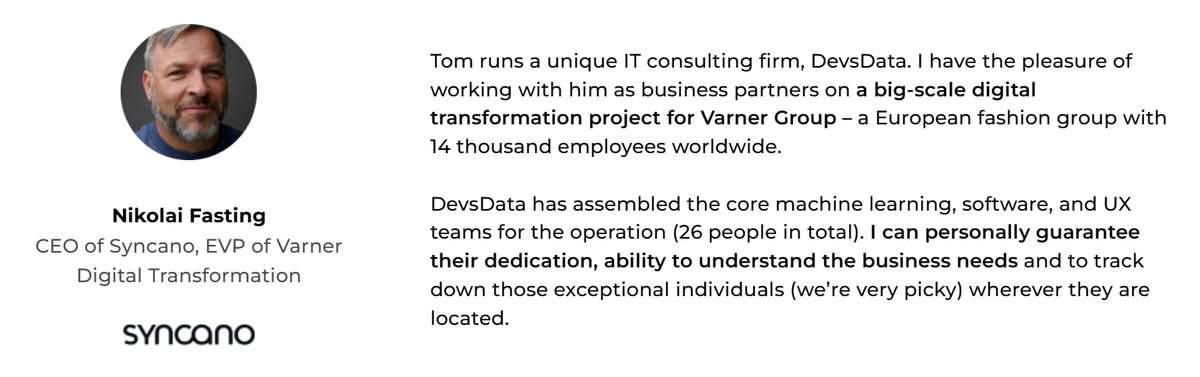
A key example of HR outsourcing optimizing workforce costs is DevsData LLC’s collaboration with an international fashion corporation undergoing a $9 million digital transformation to stay competitive. Instead of relying on costly in-house hiring, the company outsourced talent acquisition to DevsData LLC, which sourced top-tier machine learning, software development, and UX/UI specialists from Europe, the US, and Canada. This global recruitment strategy reduced hiring expenses, minimized relocation costs, and accelerated the onboarding process, ensuring the right experts were in place. By leveraging outsourced HR services, the company efficiently filled key roles to build an e-commerce platform, an AI pricing tool, and a smart logistics system, boosting efficiency while reducing workforce costs. This case highlights how HR outsourcing allows businesses to access specialized talent while optimizing expenses and streamlining recruitment efforts.
Do you have IT recruitment needs?
HR outsourcing has proven to be a cost-effective and strategic solution for businesses looking to streamline operations, reduce overhead, and access top-tier talent without the burden of maintaining an in-house HR team. By leveraging outsourced HR services, companies can optimize recruitment, payroll management, compliance, and workforce administration, ensuring efficiency and scalability.
As companies adapt to evolving workforce demands, HR outsourcing remains a tool for optimizing costs and driving business success. With the right outsourcing partner, businesses can scale efficiently, remain agile, and focus on core growth initiatives, all while maintaining a well-managed and cost-effective workforce.
With its expertise in global talent acquisition and HR outsourcing, DevsData LLC continues to help businesses reduce hiring costs, enhance operational efficiency, and secure specialized professionals across industries. Whether it’s sourcing elite tech talent, optimizing workforce structures, or integrating AI-driven HR solutions, DevsData LLC provides tailored, cost-efficient HR outsourcing services to meet diverse business needs.
Learn more about DevsData LLC at www.devsdata.com or reach their team directly at general@devsdata.com.
Discover how IT recruitment and staffing can address your talent needs. Explore trending regions
like Poland, Portugal, Mexico, Brazil and more.
 Frequently asked questions (FAQ)
DevsData – your premium technology partner
DevsData is a boutique tech recruitment and software agency. Develop your software project with veteran engineers or scale up an in-house tech team of developers with relevant industry experience.
Free consultation with a software expert
🎧 Schedule a meeting
FEATURED IN


DevsData LLC is truly exceptional – their backend developers are some of the best I’ve ever worked with.”

Nicholas Johnson
Mentor at YC, serial entrepreneur


 Build your project with our veteran developers.
Explore the benefits of technology recruitment and tailor-made software.
Learn how to source skilled and experienced software developers.

Rebecca Botvin

Commercial Director

Tom Potanski
Manager




Categories: Big data, data analytics | Software and technology | IT recruitment blog | IT in Poland | Content hub (blog)
















careers@devsdata.com





general@devsdata.com

"I interviewed about a dozen different firms. DevsData LLC is truly exceptional – their backend developers are some of the best I've ever worked with. I've worked with a lot of very well-qualified developers, locally in San Francisco, and remotely, so that is not a compliment I offer lightly. I appreciate their depth of knowledge and their ability to get things done quickly."

Nicholas Johnson
CEO of Orange Charger LLC,
Ex-Tesla Engineer,
Mentor at YCombinator
"DevsData reached out to us, as we've been looking to grow our engineering team in Europe and Poland. Communicating efficiently and professionally, DevsData made a strong impression with their understanding of the recruitment challenges we were facing. They designed a tailored recruitment process for our needs. I was impressed with the technical depth of their approach."

Karim Butt
Co-Founder & CTO at GlossGenius, Inc.
"Out of all the vendors we work with, DevsData clearly stands out. The quality of developers they deliver is beyond what we've received from any other vendor, and they've been able to send profile recommendations very quickly. I'm happy to be their reference for other companies from Israel and talk about their recruitment abilities and what they delivered for us."

Ran Eyal
Senior Manager at
ZIM Integrated
Shipping Services Ltd.
"DevsData demonstrated a strong degree of proactivity, taking time to thoroughly understand the problem and business perspective, and continuously suggesting performance and usability enhancements. Their app exceeded my expectations. I've worked with DevsData on numerous projects over the last 3 years and I'm very happy. Being both responsive and honest in communication."

Jonas Lee
Partner & Executive VP of Verus,
Financial LLC, Investor,
& Serial Entrepreneur
Acknowledgments