Thanks for subscribing.
Your gift is on the way.



When people prefer to find answers and complete actions themselves, organizations respond by shifting digital service delivery toward self-directed access. Approximately 95% of companies worldwide report rising self-service requests, and 79% of US consumers say they have used online self-service support for customer service needs. Web portals sit at the center of this shift, providing authenticated, role-specific access to tools and data that users once reached only through assisted channels.
These trends underscore the importance of web portals in modern business strategy. In this article, we explain what web portals are, examine current trends and challenges in web portal development, and share insights from DevsData LLC’s experience in delivering successful portal solutions.
A web portal is a secure, login-based website or application that gives users personalized, role-specific access to tools, data, and services within a unified interface. Most portals run on a frontend framework such as React or Angular paired with a backend in Node.js, Java, or .NET, while content-heavy portals are often built on platforms like Liferay or Drupal. In contrast to a public website, which is the same for all visitors, a portal authenticates each user and tailors the content and functionality to their needs. For example, a customer portal might display an individual’s support tickets, account balance, or knowledge base articles, whereas an employee portal could present internal company resources, dashboards, and workflows relevant to that employee’s role. A web portal consolidates requests, transactions, and collaboration into a single authenticated interface, removing the need to switch between systems.
Modern portals often connect to various backend systems and databases, enabling real-time transactions and data sharing. In essence, a well-designed portal functions as a single source of truth and interaction for its users, integrating information and services that would otherwise be scattered across different platforms.
Do you have IT recruitment needs?
Web portals deliver significant value by enhancing user experience, improving operational efficiency, and strengthening customer engagement. The following statistics highlight why portals have become essential for organizations today:
Rising self-service demand
Businesses are responding to changing customer preferences for self-service. Around 95% of companies have experienced growing demand for self-service options in recent years. Likewise, 79% of US consumers report having utilized online self-service support for customer service inquiries – a clear indicator that customers expect to find answers and complete transactions via web portals without needing to pick up the phone or send an email.
Operational efficiency gains
Organizations implementing customer or client portals often see substantial productivity benefits. Roughly 63% of businesses that use customer portals report significant reductions in customer service workload. By deflecting routine inquiries to self-service and automating workflows, portals free up support and operations teams to focus on higher-value tasks. The result is faster service and lower support costs.
Higher retention and loyalty
Smoother portal experiences lead to more loyal users. Studies show 88% of customers are more likely to remain loyal to a brand if they encounter minimal friction during service interactions. Features like single sign-on, saved preferences, and intuitive navigation contribute to this frictionless experience. By reducing the frustration of repeating information or waiting on hold (a common complaint, with 72% of customers frustrated when they must re-explain issues to multiple agents), portals help maintain user goodwill and long-term engagement.
Organizations that reduce friction in portal interactions retain more customers. The data above points to a direct link between self-service quality and long-term loyalty, which makes portal design a revenue decision, not a technical one.
Portal investment pays back through lower support costs and longer customer relationships, both measurable within the first year of deployment.
Web portal development is continuously evolving, especially as new technologies and user expectations emerge. As we head through 2024 and into 2026, several key trends are shaping how portals are built and what features they offer. Notably, the global market for web portal software is growing rapidly, projected to more than double from ~$14.3 billion in 2023 to about $31.4 billion by 2032 (a ~9% CAGR). This growth is fueled by organizations across industries seeking better ways to engage users and manage information digitally. Here are some of the dominant trends driving portal development:
Artificial intelligence and machine learning now handle a growing share of portal interactions. A support portal might deploy a conversational assistant that walks users through password resets or surfaces order tracking updates without routing to a human agent. Generative AI has also entered the build process itself, where development teams use it to draft interface prototypes, scaffold backend code, and accelerate early-stage design before a single component reaches production. These interactions reduce ticket volume for support teams while giving users faster resolution. Beyond task automation, AI also powers content recommendations and predictive search, surfacing relevant knowledge base articles or dashboard views based on each user’s history and role.
Modern portals leverage user data to tailor the experience to each individual. This goes beyond just greeting a user by name – it means dynamically adjusting content, recommendations, or interface elements based on a user’s past behavior, role, or preferences. The push for personalization is supported by users’ willingness to share data when there’s a clear benefit: about 79% of customers say they are more likely to share personal data if it leads to more personalized interactions and services.
With the majority of users accessing portals via mobile devices, mobile-first design has become a de facto standard. In practice, this means portal developers prioritize responsive design, ensuring the portal UI/UX is as smooth on a smartphone as on a desktop. Beyond just mobile responsiveness, many portals are evolving into omnichannel platforms. Users expect to start an interaction on one device and continue it on another seamlessly. Consistency and continuity across devices and channels is a key trend, forcing developers to focus on unified user experiences. Simplified, app-like interfaces, push notifications for updates, and even dedicated mobile portal apps are becoming common features to keep users continuously engaged.
As portals handle increasingly sensitive data such as financial information, personal records, and business intelligence, security has become a top priority in portal development. The scale of the risk is concrete, with the global average cost of a data breach reaching about $4.4 million in 2025 and nearly 94 million records leaked in the second quarter of that year alone, which leaves user trust resting on how well a portal guards what it holds. In response, companies are prioritizing secure portal architectures by implementing strong user authentication (multi-factor authentication, single sign-on), end-to-end data encryption, and strict access controls that ensure each user sees only what they are authorized to see. Data privacy regulations such as GDPR and CCPA are also influencing design decisions. Trends in this area include integrating privacy consent management into portals, providing transparency, and building audit trails for compliance. Security work starts during architecture design, where threat modeling identifies attack surfaces before any code is written. From that point, developers run regular vulnerability assessments and align implementation with frameworks like OWASP, building controls into the system rather than patching them in after launch.
Companies investing in portal development are leveraging AI and personalization to delight users and ensure portals seamlessly fit into the larger digital environment via cloud and integrations.
Do you have IT recruitment needs?
While web portals offer many benefits, developing and maintaining them is not without challenges. Business and tech leaders should be aware of common hurdles that arise in portal projects so they can be addressed proactively. Below are some of the major challenges in web portal development and deployment.
| Challenge area | Description |
|---|---|
| Security vulnerabilities | Web portals expose sensitive data through authenticated access, which increases risk when validation, access control, or encryption fall short. Industry research indicating that roughly 50 percent of web applications contain high-risk vulnerabilities highlights how missed security controls translate directly into breach exposure, especially across integrated systems. |
| Integration complexity | Portals rely on real-time data from CRM, ERP, databases, and third-party APIs, which introduces ongoing integration overhead. Inconsistent data models, API limits, and upstream system changes raise maintenance effort and increase failure risk without strong architectural boundaries. |
| User adoption and UX | High portal availability does not guarantee use, as shown by patient portals where adoption trails deployment. Low usage typically reflects unclear workflows, weak onboarding, or limited task completion, which pushes users back to assisted channels. |
| Talent and skill gaps | Portal development requires coordination across frontend, backend, security, cloud, and UX disciplines. Many teams lack experience with modern architectures or security standards, which slows delivery and raises long-term operational risk. |
| Keeping up with change | Portals must evolve alongside business processes, regulations, and platform dependencies. Tightly coupled systems increase update cost, while modular architectures support incremental changes without large rewrites. |
Each of these challenges must be carefully managed in any web portal development initiative. Organizations that acknowledge and plan for these hurdles are far more likely to deliver a successful portal that stands the test of time. In our experience, addressing these challenges often requires a combination of strong technical leadership, user-centered design thinking, and choosing the right development partners or tools to complement your in-house capabilities.
Web portal developers design, build, and operate authenticated web applications that connect users with data, workflows, and internal systems. The role spans frontend implementation, backend architecture, integration work, and operational ownership.
They design user interfaces that support frequent, repeated usage across devices. This work focuses on navigation clarity, responsive layouts, and fast access to key actions, since portals often serve customers, employees, or partners with different permissions and goals. Frontend decisions directly affect trust and adoption, as user perception of credibility strongly correlates with interface quality.
They build backend systems that power portal functionality. This covers API development in frameworks like Express or Spring Boot, authorization logic often handled through OAuth and identity providers such as Okta or Auth0, database access across PostgreSQL or MongoDB, and integration with CRM, ERP, and third-party services. Performance and scalability remain central issues, as portals often process high request volumes and real-time queries tied to business operations.
They implement security and compliance controls as part of the core architecture. Portal developers configure authentication flows, encryption, audit logging, and vulnerability mitigation aligned with standards such as OWASP guidance. Security work continues after launch through monitoring, patching, and periodic testing.
They deliver personalization and functional features that reflect business rules. User roles, historical data, and permissions determine what content appears and which actions remain available. Developers translate these requirements into stable workflows, dashboards, forms, and automation without degrading performance.
They maintain and evolve the portal after release. Ongoing work includes bug fixes, integration updates, performance monitoring, and feature changes driven by user behavior or system dependencies. Most teams rely on iterative release cycles and automated deployment pipelines to support continuous change.
Portal developers operate at the intersection of business logic and system reliability. The role does not end at delivery, since long-term value depends on adaptability, operational discipline, and consistent alignment between the portal and the systems behind it.
Company size: ~60 employees
Founding year: 2016
Website: www.devsdata.com
Headquarters: Brooklyn, NY, and Warsaw, Poland
Founded in 2016, DevsData LLC is headquartered in New York City with additional offices and team members across Europe. DevsData LLC specializes in tackling challenging software projects – their services span custom web and mobile development, IT consulting, Big Data and AI solutions, and elite tech recruitment for organizations in need of top talent.
Over the years, DevsData LLC has amassed a strong track record in delivering projects successfully. The company has completed over 100 projects for more than 80 global clients to date, earning a reputation for quality and reliability. Notably, DevsData LLC has maintained a perfect 5.0/5.0 rating in client reviews on platforms such as Clutch and GoodFirms. These accolades speak to the company’s commitment to precision, transparency, and long-term client success. The domains of DevsData LLC’s work are diverse – the team has built robust software and data systems across FinTech, eLearning, enterprise IT, big data analytics, eCommerce, and other sectors.
DevsData LLC’s approach to web portal development emphasizes both technical excellence and alignment with business goals. Drawing on its expertise in enterprise architecture and modern tech stacks such as React and Node.js on the application layer, Java and Python on the backend, and cloud platforms like AWS and Azure, the company designs portals with scalability and integration in mind from day one. A core strength of DevsData LLC is its ability to assemble dedicated teams for each project – often including Frontend and Backend Developers, UX/UI Designers, QA Testers, DevOps Engineers, and Project Managers – to ensure all aspects of the portal are handled by specialists. Clients benefit from this comprehensive service model as it reduces the friction of coordinating multiple vendors and ensures accountability.
To illustrate DevsData LLC’s capabilities, consider a few brief examples of projects that mirror web portal development challenges:
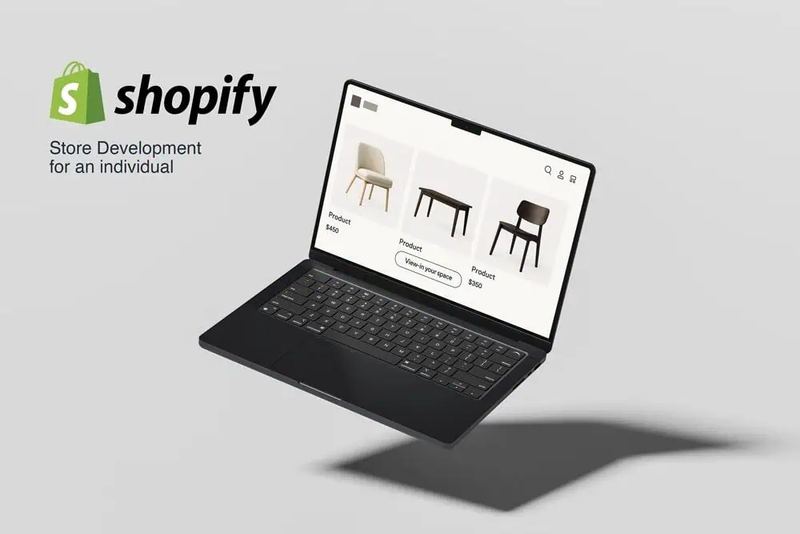
DevsData LLC partnered with a high-net-worth entrepreneur to build a luxury eCommerce web portal (an online store with advanced features) on an extremely tight timeline. By recruiting and coordinating a small, high-powered team, DevsData LLC delivered a fully functional, mobile-first portal with AR product previews in just 3.5 weeks.
The portal provided a premium user experience with interactive 3D/AR views of products, smooth checkout flows, and a custom visual design tailored to the luxury market. This project showcased DevsData LLC’s ability to move fast without sacrificing quality, using a lean agile approach and deep eCommerce expertise.
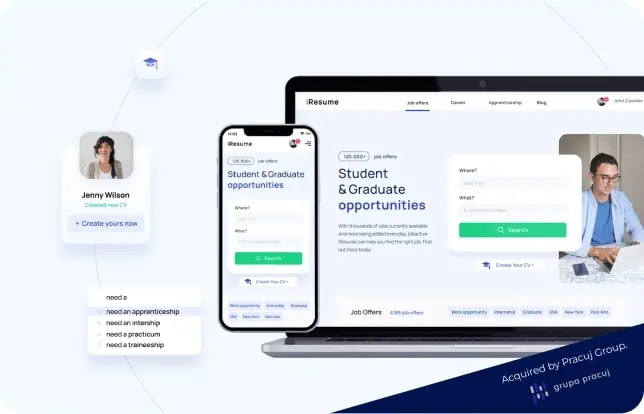
DevsData LLC delivered an end-to-end web portal designed to support students entering the labor market and employers recruiting for entry-level roles. The platform, later acquired by students.pl, focused on early career discovery by combining job listings with career education, events, and guided profile creation for students who lacked clarity around industries, roles, and first job expectations.
The core challenge involved aligning two sides with asymmetrical needs. Students required structure, direction, and confidence, while employers needed a reliable way to reach motivated candidates with limited experience. DevsData LLC addressed this by designing a portal that supported filtered job search, professional profile and CV creation, employer job posting, and access to educational content, all within a single authenticated environment.
The company’s blend of premium recruitment and software development services means it can both staff and execute portal projects at a high level of quality. For business decision-makers considering a portal initiative, DevsData LLC’s experience demonstrates the value of having an experienced partner: one who understands the latest trends (from AI to security), can navigate the challenges (integration, UX, etc.), and ultimately deliver a portal that achieves the desired business outcomes.
Do you have IT recruitment needs?
Web portals now sit at the center of digital operations, shaping how users access services, complete tasks, and resolve issues. When designed well, portals support self-service, improve operational efficiency, and create measurable business value, although success depends on handling security, integration, and adoption challenges with discipline rather than assumptions.
DevsData LLC’s delivery model pairs software engineering with technical recruitment, which means project teams are assembled specifically for each portal’s domain and technology stack. This structure shortens ramp-up time and keeps specialized knowledge close to the codebase, whether the project involves a greenfield build or a platform modernization.
Web portals will continue to expand in importance as AI-driven interfaces, mobile usage, and distributed work models shape user expectations. For more information, contact them at general@devsdata.com or visit their website www.devsdata.com.
Discover how IT recruitment and staffing can address your talent needs. Explore trending regions
like Poland, Portugal, Mexico, Brazil and more.
 Frequently asked questions (FAQ)
DevsData – your premium technology partner
DevsData is a boutique tech recruitment and software agency. Develop your software project with veteran engineers or scale up an in-house tech team of developers with relevant industry experience.
Free consultation with a software expert
🎧 Schedule a meeting
FEATURED IN

DevsData LLC is truly exceptional – their backend developers are some of the best I’ve ever worked with.”

Nicholas Johnson
Mentor at YC, serial entrepreneur


 Build your project with our veteran developers.
Explore the benefits of technology recruitment and tailor-made software.
Learn how to source skilled and experienced software developers.
Build your project with our veteran developers.
Explore the benefits of technology recruitment and tailor-made software.
Learn how to source skilled and experienced software developers.

Rebecca Botvin

Commercial Director

Tom Potanski
Manager




Categories: Big data, data analytics | Software and technology | IT recruitment blog | IT in Poland | Content hub (blog)
















careers@devsdata.com









general@devsdata.com

"I interviewed about a dozen different firms. DevsData LLC is truly exceptional – their backend developers are some of the best I've ever worked with. I've worked with a lot of very well-qualified developers, locally in San Francisco, and remotely, so that is not a compliment I offer lightly. I appreciate their depth of knowledge and their ability to get things done quickly."

Nicholas Johnson
CEO of Orange Charger LLC,
Ex-Tesla Engineer,
Mentor at YCombinator
"DevsData reached out to us, as we've been looking to grow our engineering team in Europe and Poland. Communicating efficiently and professionally, DevsData made a strong impression with their understanding of the recruitment challenges we were facing. They designed a tailored recruitment process for our needs. I was impressed with the technical depth of their approach."

Karim Butt
Co-Founder & CTO at GlossGenius, Inc.
"Out of all the vendors we work with, DevsData clearly stands out. The quality of developers they deliver is beyond what we've received from any other vendor, and they've been able to send profile recommendations very quickly. I'm happy to be their reference for other companies from Israel and talk about their recruitment abilities and what they delivered for us."

Ran Eyal
Senior Manager at
ZIM Integrated
Shipping Services Ltd.
"DevsData demonstrated a strong degree of proactivity, taking time to thoroughly understand the problem and business perspective, and continuously suggesting performance and usability enhancements. Their app exceeded my expectations. I've worked with DevsData on numerous projects over the last 3 years and I'm very happy. Being both responsive and honest in communication."

Jonas Lee
Partner & Executive VP of Verus,
Financial LLC, Investor,
& Serial Entrepreneur
Acknowledgments