Thanks for subscribing.
Your gift is on the way.



Businesses in FinTech, e-commerce, and AI face constant pressure to innovate quickly, control costs, and deliver flawless digital experiences. Building everything in-house often proves difficult – skilled engineers are scarce, salaries keep rising, and internal teams are stretched thin. Partnering with a software development company helps organizations overcome these barriers by providing them with access to specialized expertise, enabling faster product launches, and allowing them to scale resources on demand. It also reduces operational risk, allowing in-house teams to focus on strategy instead of execution. Recent studies confirm the trend: 24% of small businesses already outsource software development, and more than half plan to expand outsourcing year over year, with cost reductions of up to 60% in some cases.
This article offers a step-by-step framework to help you evaluate potential partners effectively. It covers everything from defining project requirements and researching vendors to assessing technical capabilities, pricing models, and cultural fit. You’ll also learn about common red flags to avoid, the role of AI in development, and how to select a partner that aligns with your business vision, ensuring a smoother collaboration and better outcomes.
Before you search for a software development company, having a well-defined project vision is crucial. Clarifying your goals, scope, and technical requirements will help streamline the selection process, prevent miscommunication, and ensure a smooth development journey. Without this foundation, you risk project delays, unexpected costs, and misaligned expectations.
Taking the time to clarify these aspects before reaching out to development firms has several advantages:
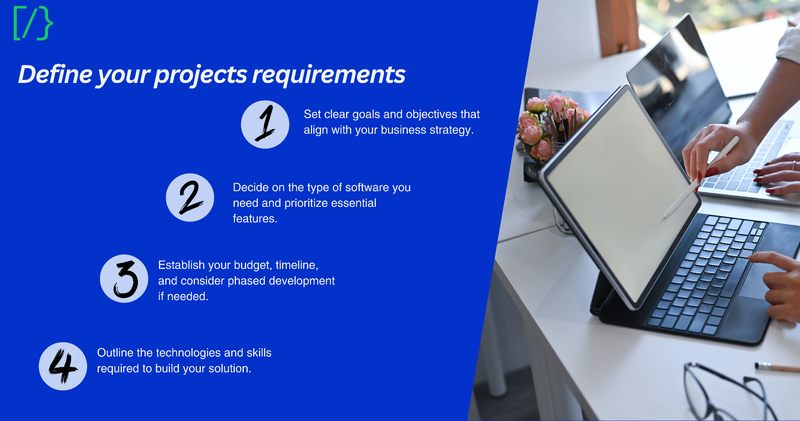
To find the right software development partner, consider the following factors:
Define your project goals with a focus on impact. Instead of jumping straight into a list of features, clarify the problems the software is meant to solve and the value it should bring – whether that’s enhancing customer experience, improving internal workflows, or streamlining operations. Outline what success looks like, and distinguish between must-have functionalities and nice-to-haves. This clarity not only provides internal alignment but also helps development partners design solutions that deliver real business outcomes rather than just technical output.
Your financial and time constraints will directly influence the scope and structure of the project. Before engaging with a software development company, determine your maximum budget, critical deadlines, and whether you’re open to a phased rollout, such as starting with an MVP. Communicating these boundaries early on helps avoid surprises and supports smoother negotiations and execution.
You don’t need to be a tech expert to prepare for conversations with development firms. Instead of listing specific frameworks or programming languages, focus on the type of product you want to build. For example, a mobile app, a web platform, or a cloud-based solution. If you know you’ll need features like AI-driven recommendations, blockchain integration, or complex data processing, note these as high-level requirements. A qualified software partner can then translate these needs into the right technology stack. Having even a general direction makes it easier to evaluate whether a company has the right expertise for your project.
Do you have software development needs?
Finding the right software development partner begins with building a solid shortlist of providers that broadly match your project needs. Start by combining two main sources:
When evaluating potential partners for your list, consider factors such as geography (onshore, nearshore, or offshore), company size, technology specialization, budget fit, and track record with projects of similar scale.
This structured approach ensures your shortlist reflects both objective research and trusted recommendations, making the next stage of evaluation far more efficient.
Once your shortlist is ready, the next step is verifying each company’s credibility, track record, and alignment with your goals. It’s not enough to rely on marketing claims – dig deeper to ensure you’re choosing a capable and trustworthy partner.
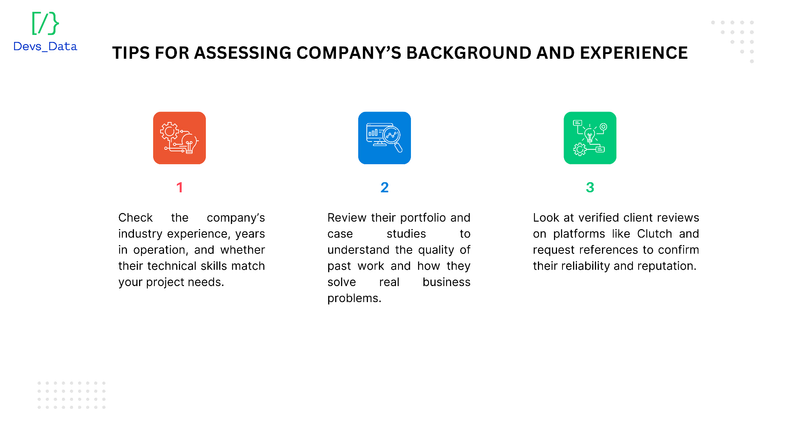
Ensure the company has well-documented, real-world experience. Review case studies and portfolios to check if they’ve handled projects similar to yours in scope, industry, or tech stack. Look for detailed examples with measurable outcomes, modern tools, and clear problem-solving approaches.
If confidentiality prevents them from sharing specifics, ask about methodologies, workflows, and how success is typically measured.
A strong digital footprint often reflects an engaged and quality-driven team. Review their presence on platforms such as LinkedIn, Medium, GitHub, or YouTube. Are they contributing to open-source projects, writing technical content, or engaging with the dev community? These signals indicate a culture of transparency, innovation, and continuous learning. By contrast, an inactive GitHub with no recent commits, Medium articles that read more like marketing copy than technical insight, or a sparse LinkedIn presence with little activity can all indicate weaker expertise or limited community involvement.
Online reviews are a helpful starting point – use platforms like Clutch, Trustpilot, and GoodFirms to read verified testimonials. Focus on consistency across key themes: communication, reliability, technical skill, and ability to meet deadlines.
To go a step further, ask for references and speak directly with past or current clients. Ask questions like:
You can also scan Glassdoor to get a glimpse into the company’s internal culture and team stability.
Once you’ve narrowed it down to one or two strong candidates, request a detailed proposal and compare project scope, timeline, methodology, and pricing models. Set up a discovery call to gauge responsiveness and alignment. When in doubt, run a short pilot project – typically two to six weeks long with a modest budget allocation, often 5–15% of the projected full project cost. This gives both sides a chance to validate collaboration, communication style, and technical quality before making a full commitment.
Do you have software development needs?
Choosing the right software development company involves more than just evaluating their skills – it’s about ensuring their technology stack, security measures, and long-term support services align with your business needs. These factors are crucial to your software’s scalability, security, and maintainability.
The company’s technology stack will significantly impact your project’s performance, scalability, and long-term maintenance. When evaluating a potential partner, consider the programming languages, frameworks, libraries, and databases they specialize in and whether they align with your project requirements.
A well-matched tech stack ensures that your software is built for performance, future scalability, and easy maintenance.
Outsourcing software development must go hand in hand with strong security practices to protect your intellectual property, user data, and business information. Ask potential development partners about the following:
Additionally, clarify code ownership upfront. If the software provider retains rights to the source code, you may face future limitations on updates, modifications, or licensing fees. Always ensure that you fully own the source code to maintain control over your product.
Software development doesn’t end with deployment. To keep your product functional and up to date, a reliable development company should provide the following:
Without post-launch support, your software may become outdated or vulnerable to security risks. Ensure your development partner offers a clear support and maintenance plan to protect your investment.
A structured development process is key to avoiding delays, maintaining transparency, and aligning expectations. Before choosing a software development partner, ensure you understand their approach to project execution, their communication style, and how progress is reported.
Most software development companies follow either Agile or Waterfall methodologies or a hybrid of both. Each approach has its strengths, depending on your project’s complexity, timeline, and flexibility requirements.
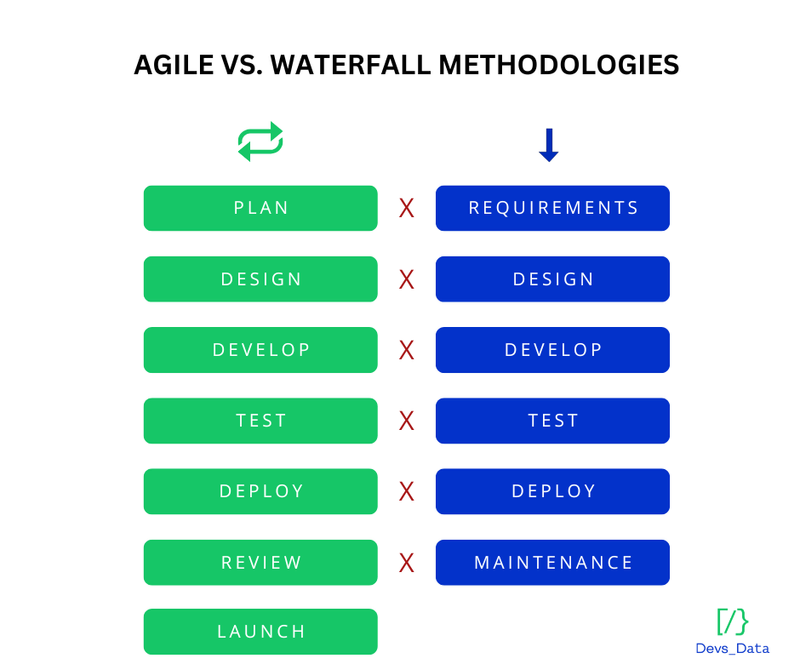
Agile is the go-to method for projects with evolving requirements or user-driven features. It emphasizes flexibility, rapid delivery, and frequent collaboration between stakeholders and developers. The work is broken down into smaller increments (called sprints), typically lasting 1-4 weeks, allowing teams to iterate based on continuous feedback.
Popular Agile frameworks include:
Agile is ideal when product requirements may change based on testing, market shifts, or user feedback. It encourages collaboration and adaptability but requires a high level of client involvement throughout the development cycle.
The waterfall model is a linear, sequential approach where the project progresses through predefined phases, including requirements, design, development, testing, and deployment. Each phase must be completed before moving on to the next, with limited opportunity to revisit earlier stages.
This model is suitable for projects with fixed scopes, budgets, and deadlines, such as infrastructure upgrades, compliance-focused systems, or when requirements are fully known from the start. Waterfall allows for detailed documentation and predictable delivery, but it lacks the flexibility to adapt once development is underway.
Some companies may also offer hybrid models, combining Agile’s flexibility with Waterfall’s structure – for instance, planning and budgeting via Waterfall but executing development in sprints using Agile techniques.
| Criteria | Agile | Waterfall |
|---|---|---|
| Approach | Iterative and incremental; work is done in short cycles (sprints). | Linear and sequential; each phase must be completed before moving forward. |
| Flexibility to Change | High – changes are expected and welcomed throughout the project. | Low – changes are difficult and costly once development begins. |
| Client Involvement | Continuous – stakeholders provide ongoing feedback and participate in reviews. | Minimal – typically involved at the beginning and end. |
| Delivery Timeline | Frequent releases with working software delivered at the end of each sprint. | Single final delivery at the end of the development cycle. |
| Documentation | Lightweight and adaptive; evolves with the product. | Extensive and predefined; created upfront. |
| Best For | Projects with evolving requirements, uncertain scope, or user-driven needs. | Projects with fixed scope, budget, and timeline. |
Strong project management is just as important as methodology. Leading companies use tools like Jira, Trello, Asana, or ClickUp to manage tasks and track progress. These platforms provide visibility into timelines, responsibilities, and blockers, enabling you to stay informed throughout the process.
Ask how your potential partner handles scope changes, milestone tracking, and feedback loops to ensure they can adapt without derailing the project.
Even the best processes break down without clear, timely communication. Pay attention to how responsive and proactive the team is during early conversations. Time zone overlap, language fluency, and shared communication norms can significantly affect collaboration, especially with remote or distributed teams.
Cultural compatibility also matters. A team that shares your work ethic, values feedback, and adapts to your workflow will be easier to partner with in the long term. Misalignments in decision-making, escalation, or collaboration styles can hinder progress and lead to friction.
Cost is one of the most important factors when partnering with a software development company. While affordability is important, it shouldn’t come at the expense of quality or transparency. Understanding different pricing models, engagement types, and hidden cost risks will help you make a well-informed decision and avoid unpleasant surprises later.
Common pricing models
| Pricing Model | Description | Best Suited For | Pros | Cons |
|---|---|---|---|---|
| Fixed Price | Predetermined cost, scope, timeline, and deliverables are agreed upon upfront. | Small projects with well-defined, stable requirements. | Cost predictability, low risk for the buyer. | Low flexibility, costly to accommodate scope changes. |
| Time and Materials (T&M) | Billing is based on actual time and resources used. | Long-term, complex, or Agile projects with evolving requirements. | High flexibility, supports ongoing discovery. | Requires strong project management to avoid cost overruns. |
| Milestone-Based Payments | Payments are tied to specific deliverables or project phases. | Medium to large projects needing phased delivery and oversight. | Balanced risk, improves accountability. | Requires clear milestone definitions and deliverable tracking. |
| Dedicated Team / Retainer | Ongoing access to a development team for a fixed monthly fee. | Long-term collaboration, fast-growing companies. | Full control, long-term cost efficiency, and faster onboarding. | Requires continuous workload and management from the client. |
Outsourcing software development offers access to global talent, specialized expertise, and major cost advantages – but where you outsource plays a significant role in shaping your budget, collaboration style, and overall results.
Each model has trade-offs in terms of price, communication, and risk. That’s why it’s essential to conduct proper due diligence, check client references, and validate technical capabilities before committing to any outsourcing partner.
To stay on budget and avoid surprises, request detailed cost breakdowns (covering development hours, QA, project management, and infrastructure), clarify what is included in the contract, and confirm that payment schedules align with milestones.
Prevent scope creep by locking in core features early and ensuring transparency through regular reporting, such as time logs and sprint updates. These best practices help you keep financial control while maintaining momentum.
When evaluating potential software development partners, look for warning signs that could indicate future problems. Ignoring these red flags can lead to missed deadlines, poor-quality deliverables, and frustrating collaboration.
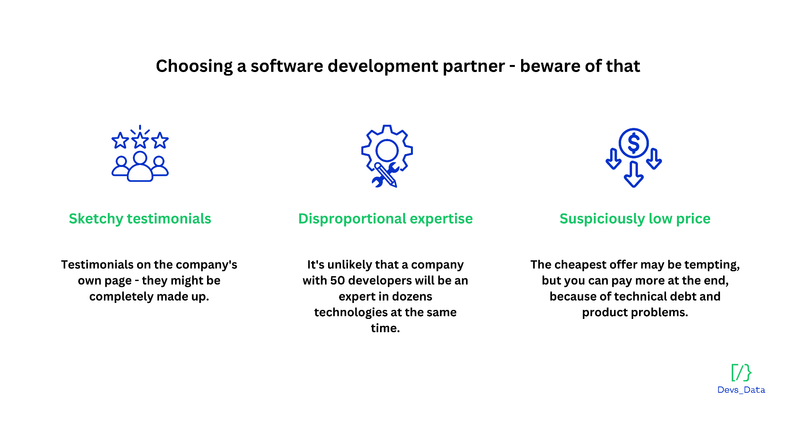
If a company lacks detailed case studies or only presents vague, overly polished testimonials, take caution. Reliable vendors should be able to share client names, project outcomes, or direct references – even if under NDA. Sketchy or overly generic feedback often signals a lack of real-world experience or inflated claims.
Beware of companies that list dozens of technologies or industries without showing relevant, recent work to back it up. A firm claiming expertise in everything may specialize in nothing. Look for signs of disproportionate knowledge, like a small team promising enterprise-scale delivery without adequate resources.
While affordability matters, pricing that seems too good to be true usually is. Extremely low quotes may conceal poor code quality, inadequate documentation, or potential future upselling. Be cautious if estimates lack detail or if the company avoids clear conversations about what’s included in the cost.
A reliable partner should be transparent, technically competent, and upfront about pricing, communication, and delivery expectations. Spotting red flags early can help you avoid costly setbacks later.
Website: www.devsdata.com
Team size: ~60 employees
Founded: 2016
Headquarters: Brooklyn, NY, and Warsaw, Poland
For businesses seeking a dependable and cost-effective software development company, DevsData LLC stands out as a top choice. With a proven track record and a team of highly skilled professionals, including Google-level engineers and US-based specialists, they provide comprehensive services tailored to meet specific business needs.
The company’s certified experts bring extensive experience across various software development methodologies. Their specialties include full-cycle software development, custom solutions, mobile and web app development, software maintenance, and support. DevsData LLC specializes in Big Data and Machine Learning, helping businesses leverage advanced analytics and AI-driven solutions. By partnering with DevsData LLC, enterprises benefit from high-quality deliverables, time zone alignment, cultural compatibility, and strong data security and privacy measures.
With a portfolio of over 100 successful projects and 80+ satisfied clients, DevsData LLC collaborates with innovative startups and high-growth companies from the US and Israel. Their flexible, personalized approach ensures competitive pricing and premium-quality outcomes, consistently earning them top ratings on platforms like Clutch and GoodFirms.
DevsData LLC partnered with a Silicon Valley FinTech company to develop a next-generation payment processing system that significantly enhanced cross-border transactions between Latin America and the United States. As a result of the collaboration, transaction times were reduced by over 60%, and processing costs decreased by nearly 40%, delivering measurable efficiency gains for both the client and end-users. This project illustrates DevsData LLC’s ability to combine deep technical expertise with localized insights to provide scalable, high-impact solutions.
Their development teams, composed of professionals with an average of 10+ years of specialized experience, consistently set new benchmarks in software development. This excellence is reflected in their extensive portfolio and client success stories. DevsData LLC also provides comprehensive employer-of-record (EoR) solutions, administrative support, and payroll, compliance, and other operational needs in various countries.
DevsData LLC’s reliable services and unique approach make it a trusted partner for software development, whether your organization is a startup or an established enterprise. For more information, contact DevsData LLC at general@devsdata.com or visit their website at www.devsdata.com.
Do you have software development needs?
With the fast expansion of the global software development market, selecting the right partner has become increasingly challenging. Thousands of firms now offer software services, and outsourcing continues to rise. Choosing the wrong company can lead to missed deadlines, budget overruns, security risks, and poor post-launch support, making a structured selection process essential. Defining clear project requirements, thoroughly vetting technical expertise, and assessing cultural and communication compatibility can significantly reduce these risks.
A successful partnership extends beyond technical capabilities. Businesses must also evaluate security compliance, industry regulations, and long-term software maintenance. AI-driven solutions are transforming development, optimizing workflows, and enhancing product viability. Choosing a company proficient in AI ensures future-proof applications that adapt to emerging technologies.
One standout company in this field is DevsData LLC, known for its expertise in software development methodologies, security compliance, and AI-driven innovation. Their work, including a successful FinTech project improving cross-border transactions, showcases their ability to drive global innovation while maintaining localized expertise.
Ultimately, the key to selecting the right software development partner is careful research, due diligence, and clear communication. A well-chosen partner won’t just deliver a great product – they will contribute to long-term business growth, innovation, and digital transformation. For more information, contact DevsData LLC at general@devsdata.com or visit their website at www.devsdata.com.
Discover how IT recruitment and staffing can address your talent needs. Explore trending regions
like Poland, Portugal, Mexico, Brazil and more.
 Frequently asked questions (FAQ)
DevsData – your premium technology partner
DevsData is a boutique tech recruitment and software agency. Develop your software project with veteran engineers or scale up an in-house tech team of developers with relevant industry experience.
Free consultation with a software expert
🎧 Schedule a meeting
FEATURED IN
DevsData LLC is truly exceptional – their backend developers are some of the best I’ve ever worked with.”

Nicholas Johnson
Mentor at YC, serial entrepreneur


 Build your project with our veteran developers.
Explore the benefits of technology recruitment and tailor-made software.
Learn how to source skilled and experienced software developers.
Build your project with our veteran developers.
Explore the benefits of technology recruitment and tailor-made software.
Learn how to source skilled and experienced software developers.

Rebecca Botvin

Commercial Director

Tom Potanski
Manager




Categories: Big data, data analytics | Software and technology | IT recruitment blog | IT in Poland | Content hub (blog)












careers@devsdata.com









general@devsdata.com

"I interviewed about a dozen different firms. DevsData LLC is truly exceptional – their backend developers are some of the best I've ever worked with. I've worked with a lot of very well-qualified developers, locally in San Francisco, and remotely, so that is not a compliment I offer lightly. I appreciate their depth of knowledge and their ability to get things done quickly."

Nicholas Johnson
CEO of Orange Charger LLC,
Ex-Tesla Engineer,
Mentor at YCombinator
"DevsData reached out to us, as we've been looking to grow our engineering team in Europe and Poland. Communicating efficiently and professionally, DevsData made a strong impression with their understanding of the recruitment challenges we were facing. They designed a tailored recruitment process for our needs. I was impressed with the technical depth of their approach."

Karim Butt
Co-Founder & CTO at GlossGenius, Inc.
"Out of all the vendors we work with, DevsData clearly stands out. The quality of developers they deliver is beyond what we've received from any other vendor, and they've been able to send profile recommendations very quickly. I'm happy to be their reference for other companies from Israel and talk about their recruitment abilities and what they delivered for us."

Ran Eyal
Senior Manager at
ZIM Integrated
Shipping Services Ltd.
"DevsData demonstrated a strong degree of proactivity, taking time to thoroughly understand the problem and business perspective, and continuously suggesting performance and usability enhancements. Their app exceeded my expectations. I've worked with DevsData on numerous projects over the last 3 years and I'm very happy. Being both responsive and honest in communication."

Jonas Lee
Partner & Executive VP of Verus,
Financial LLC, Investor,
& Serial Entrepreneur
Acknowledgments