Thanks for subscribing.
Your gift is on the way.



The world of work has shifted dramatically in just a few years. The pandemic accelerated remote and hybrid work, globalization intensified competition for talent, and employees now expect not only fair pay but also flexibility, mental health support, and clear opportunities for growth. Meanwhile, artificial intelligence is transforming how organizations operate – automating repetitive tasks, reshaping job structures, and introducing new roles that demand continuous upskilling.
At the same time, businesses face increasing regulatory pressure: wage transparency laws in the US, evolving labor standards in the EU, and stricter data privacy and compliance requirements worldwide – all while being asked to control costs and boost productivity.
HR departments sit at the center of this complex landscape. On a daily basis, they must balance payroll management, employee relations, compliance, and recruitment, often leaving little room for long-term planning. The challenge grows as organizations try to build a strong culture, promote learning and development, and sustain engagement across distributed teams.
For many organizations, external HR consultants have become essential not as a luxury, but as a strategic necessity. They bring specialized expertise in areas internal teams often lack time or capacity for – whether that means redesigning compensation systems, implementing AI-driven HR analytics, or creating development frameworks that prepare employees for the future of work.
“HR is no longer just about compliance and administration. It is about building organizations that can adapt, grow, and thrive in a world of constant change.” – Josh Bersin, a global HR industry analyst.
This shift is clearly visible in recent market data. The Human Resource Consulting Market was estimated to reach USD 79.03 billion in 2025 and is expected to grow to USD 111.43 billion by 2030, reflecting a 7.11% CAGR. Growth is driven largely by widening capability gaps inside organizations. According to Gartner, 77% of HR leaders report that their teams lack the skills needed to support future business priorities, which increases reliance on specialized external partners.
With this rapid growth, companies are turning to experienced partners to navigate compliance, optimize HR operations, and attract the right talent. Drawing on projects with both Fortune 500 corporations and fast-growing startups, this article outlines key HR consulting services, benefits, and practical insights based on DevsData LLC’s experience in workforce strategy and recruitment.
HR consulting, also known as human capital advisory, involves engaging external experts to manage or enhance HR functions. Instead of a permanent employee, businesses rely on consultants to address specific problems, design strategies, or lead transformation projects.
“HR consulting is no longer a luxury service; it’s an essential part of strategic workforce planning.” – Grand View Research, 2024
Typical responsibilities include reviewing existing HR processes, designing compensation systems, ensuring compliance with labor laws, and advising leadership on organizational culture. Consultants may also step in to recruit talent, create training programs, or implement digital HR systems.
The key difference between in-house HR and external consultants lies in scope and focus. Internal teams manage ongoing operations and employee relations, while consultants are engaged to deliver specialized knowledge, solve urgent challenges, and drive transformation.
HR consulting is especially valuable during high-impact business initiatives such as mergers and acquisitions (M&A), large-scale transformation programs, organizational restructuring, entering new markets, or rapid scaling after an investment round. In these scenarios, external experts bring the frameworks, data insights, and change management experience required to align people, processes, and culture with evolving business goals.
Do you have IT recruitment needs?
The scope of HR consulting is broad, but most organizations engage consultants for several core areas.
| Service Area | Description |
|---|---|
| Compliance and Risk Management | Audits policies, contracts, and procedures to ensure compliance with labor and data laws, reducing exposure to costly fines. |
| Compensation and Benefits Design | Develops competitive pay structures, bonus schemes, and benefits programs that balance cost efficiency with employee satisfaction. |
| Recruitment and Talent Acquisition | Refines hiring strategies, improves job descriptions, and applies structured vetting processes to secure better matches and faster placements. |
| Organizational Transformation | Guides companies through growth, mergers, or digital change by reshaping culture, roles, and workflows while minimizing disruption. |
| Learning and Development | Designs training programs and career path frameworks that strengthen skills, enhance performance, and prepare future leaders. |
| HR Technology and Analytics | Implements digital HR systems, automates manual processes, and uses workforce analytics to drive data-informed strategic decisions. |
Taken together, these services address the core challenges most HR teams face: staying compliant with changing regulations, keeping compensation competitive, hiring the right people quickly, and developing employees’ skills for the future. By covering both day-to-day operations and long-term workforce planning, HR consulting helps companies run more smoothly while also preparing for growth.
Beyond engagement, HR consulting delivers measurable business impact. According to PwC’s 2024 Workforce Survey, organizations that adopt structured HR strategies see up to 30% faster hiring times and 25% lower turnover. Consultants help achieve this by aligning job architecture, refining recruitment processes, and improving employer branding – ensuring companies attract and retain the right talent more efficiently.
Another tangible advantage lies in compliance and risk mitigation. With labor laws and pay transparency regulations evolving rapidly, even a small compliance error can result in costly penalties or reputational damage. HR consultants bring specialized legal and procedural knowledge that helps organizations stay compliant across jurisdictions, reducing risk while freeing internal HR teams to focus on strategic initiatives.
Consultants also add value during transformation periods, such as mergers, restructuring, or scaling into new markets. They design transition plans, communication frameworks, and performance systems that keep employees informed and motivated during uncertainty. According to Deloitte’s 2023 Human Capital Trends Report, 79% of companies undergoing major change report smoother transitions when supported by external HR partners.
Finally, HR consulting directly influences employee satisfaction – a critical metric tied to retention and productivity. Gallup’s 2024 Global Workplace Report found that companies with highly satisfied employees experience up to 43% lower turnover and 23% higher profitability. By improving leadership practices, performance management, and workplace culture, consultants help foster environments where employees feel valued, supported, and motivated to perform at their best.
Do you have IT recruitment needs?
Not every company needs external support at all times. In-house HR teams are essential for maintaining day-to-day operations, but there are moments when partnering with consultants delivers faster, more strategic results – especially during periods of growth, change, or compliance risk.
| Aspect | In-House HR Team | HR Consulting Partner |
|---|---|---|
| Focus | Ongoing operations, employee relations, and administrative tasks | Strategic initiatives, transformation projects, and specialized expertise |
| Expertise | Deep understanding of internal culture and policies | Broader market perspective and access to best practices across industries |
| Scalability | Limited capacity during rapid growth or restructuring | Flexible engagement model – project-based, interim, or retainer support |
| Compliance Management | Handles routine compliance within known jurisdictions | Ensures multi-jurisdictional compliance and adapts to evolving regulations |
| Recruitment & Workforce Planning | Manages standard hiring and internal mobility | Optimizes hiring frameworks, employer branding, and retention strategies |
| Technology & Analytics | May lack dedicated tools or expertise for analytics | Implements HR tech systems and data-driven workforce insights |
| Cost Structure | Fixed costs for salaries, benefits, and systems | Variable cost aligned with project scope and outcomes |
| Ideal Scenario | Stable operations with predictable HR workload | Periods of expansion, digital transformation, or compliance overhaul |
In essence, in-house HR teams excel at maintaining stability and managing daily operations, while HR consulting partners add value when organizations face change or rapid growth. Consultants bring a broader market perspective and specialized expertise in areas like compliance and HR technology. Their flexible, outcome-based cost structure enables companies to access high-level guidance, making them particularly valuable during periods of expansion or regulatory transitions.
“Companies with structured HR and recruitment processes are 40% more likely to retain top talent.” – McKinsey & Company, 2023
HR consulting comes in different forms, depending on organizational needs and budget priorities. Each model offers distinct advantages in terms of flexibility, duration, and cost efficiency.
| Model | How it Works | Best For | Typical Cost Structure |
|---|---|---|---|
| Project-based | Consultants are engaged for a specific issue (e.g., compliance audit, grading system). | Companies needing quick, targeted solutions without long-term commitments. | Usually billed per project or per deliverable. Costs range from $120-$300/hour, depending on project scope and expertise level. |
| Interim leadership | A senior HR professional temporarily fills an executive role during transitions. | Organizations facing leadership gaps or restructuring periods. | Often billed as a monthly retainer or day rate, typically 30-50% lower than the equivalent full-time executive salary. |
| Retainer-based | Ongoing access to HR expertise without building a full-time team. | Firms that need regular support but want to avoid the cost of in-house staff. | Priced as a flat monthly fee, often 40-60% less than maintaining a comparable internal HR function. |
| Success-fee based | Payment is tied to specific outcomes, such as successful hires, measurable cost reductions, or achievement of agreed-upon performance metrics. | Organizations seeking accountability and ROI-focused consulting engagements. | Fees are paid only when objectives are met, typically as a percentage of achieved savings, placements, or project value. |
When compared to traditional in-house HR teams, which incur fixed costs for salaries, benefits, and HR systems, consulting models offer greater financial flexibility and access to senior expertise on demand. The right model depends on whether a company needs rapid problem-solving, ongoing advisory support, or outcome-based accountability. Increasingly, hybrid models are emerging, blending retainer and success-fee elements to ensure both consistency and performance-driven results.
Not all HR consulting firms operate the same way. Some specialize in compliance, others in recruitment, and others in large-scale transformation projects. Choosing the right partner depends on your company’s size, needs, and strategic goals.
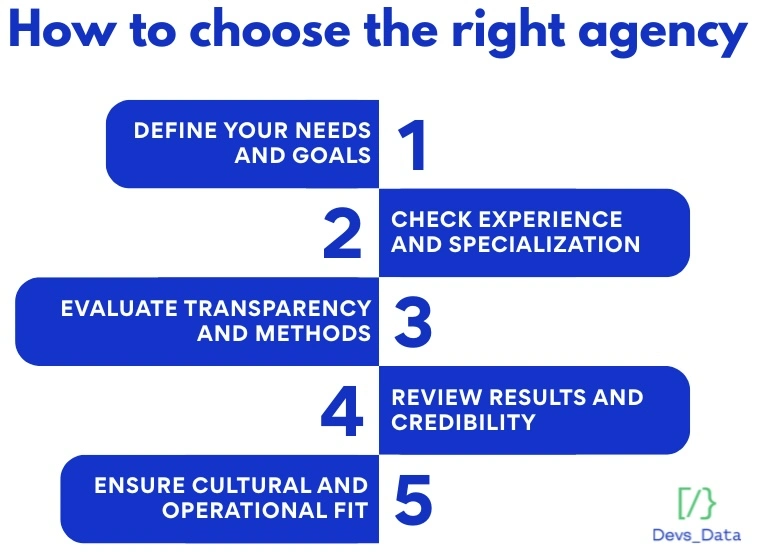
First, look at experience and specialization. An agency that has worked with organizations similar to yours will understand your challenges better than a generalist. For example, a firm experienced in scaling startups will take a very different approach than one focused on Fortune 500 compliance.
Second, evaluate transparency and methodology. A reliable consultant should clearly explain how they assess HR gaps, design solutions, and measure success. Beware of vague promises or buzzword-heavy pitches that lack specifics.
Third, assess their track record. Case studies, client testimonials, and measurable results matter more than brand size. An agency that can point to reduced turnover, faster hiring times, or improved compliance rates will provide more value than one offering generic strategies.
Consider cultural alignment. HR consulting is about people. The best partner will understand your company culture and propose solutions that employees can adopt and embrace. Without that fit, even well-designed strategies may fail in practice.
Website: www.devsdata.com
Company size: ~60 employees
Founding year: 2016
Headquarters: Brooklyn, NY, and Warsaw, Poland
At DevsData LLC, we combine HR consulting with our deep expertise in technology recruitment and workforce strategy. Our consultants help organizations design scalable people frameworks, optimize compensation systems, and strengthen compliance across multiple jurisdictions. We advise on organizational culture, leadership development, and digital HR transformation – ensuring that every aspect of the workforce strategy supports business growth.
What makes our approach different is precision and accountability. Beyond traditional consulting, we provide hands-on implementation support – from auditing HR processes and refining performance systems to guiding cultural change and employee engagement programs. For recruitment-related consulting, our approach is deliberately selective: out of thousands of candidates, fewer than 6% pass our multi-stage vetting process, which includes a 90-minute technical interview led by senior engineers.
We also operate on a success-fee model, ensuring our compensation is directly tied to measurable outcomes, such as improved retention, faster hiring, or successful organizational transitions. This performance-based structure gives clients confidence that we are fully aligned with their results, not just their process.
Our team includes HR and compliance specialists who advise clients on labor standards, wage transparency rules, and cross-border hiring regulations. We hold an official, government-approved license for recruitment and HR services, demonstrating our commitment to ethical, compliant, and transparent operations.
With offices in New York and Warsaw, a vetted network of 95000+ professionals, and a track record of 5/5 client satisfaction on Clutch and GoodFirms, DevsData LLC stands as a trusted partner for companies seeking data-driven, outcome-oriented HR consulting solutions that deliver lasting impact.
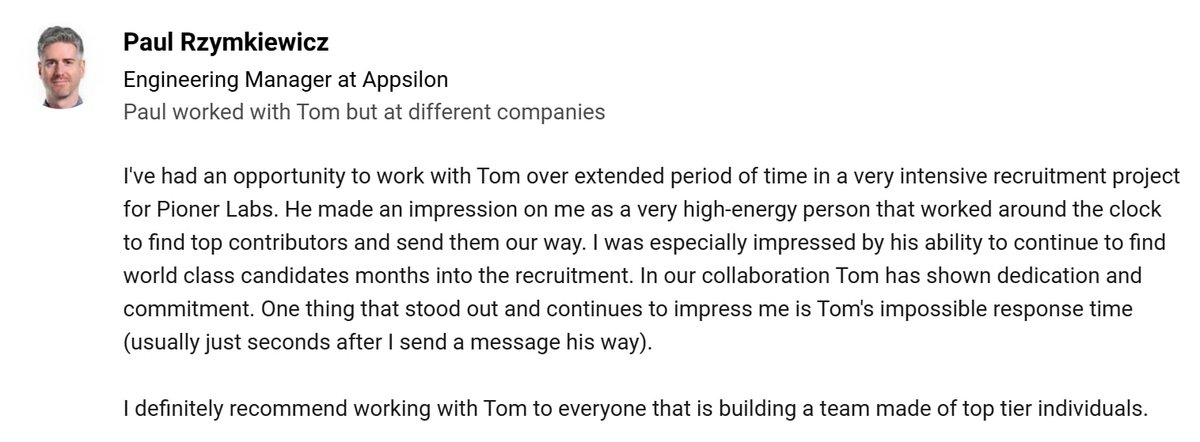
One example comes from our collaboration with Hypatos, a German AI company undergoing rapid growth. Our engagement extended beyond recruitment: DevsData LLC advised on organizational design, leadership structure, and cultural alignment during a crucial scaling phase. We supported the creation of new management layers, refined job architecture, and helped implement performance frameworks that strengthened accountability while preserving startup agility. By combining HR consulting with targeted hiring, we enabled Hypatos to build a cohesive, high-performing team ready to scale globally.
A further example is Imagine Anything Ltd., a British AI startup that built its entire technology division with DevsData LLC’s support. The project required creating a full cross-functional software team from scratch, including a CTO, senior developers, and design specialists. Beyond recruitment, our consultants provided guidance on team composition, role design, and process implementation, helping the company transition from an idea-stage startup into a structured engineering organization in under two months.
Similarly, Shipwell, an American logistics technology company, engaged DevsData LLC for its Latin American expansion. Our HR consultants advised on compensation benchmarking, local labor compliance, and talent retention frameworks, ensuring a consistent global culture while hiring top QA testers and senior developers from Brazil and Mexico.
Across all these engagements, DevsData LLC combined HR consulting and recruitment execution to help clients design scalable people frameworks, align workforce structures with business goals, and accelerate organizational growth in new markets and industries.
Do you have IT recruitment needs?
Human resources consulting has evolved from administrative support into a strategic enabler of business performance. In today’s environment, organizations face increasing compliance risks, rising costs, talent shortages, and the pressure to adapt to digital transformation. These challenges require more than internal effort – they call for specialized expertise, an external perspective, and the ability to act with speed.
Consultants step in not just to solve immediate problems, but to design long-term systems that sustain growth. From compliance frameworks that reduce risk, to compensation strategies that attract and retain top talent, to digital HR tools that drive efficiency, consulting has become a catalyst for competitive advantage.
At DevsData LLC, we see HR consulting as a way to help businesses unlock their workforce’s full potential. By integrating HR strategy with our core expertise in recruitment, we ensure that organizations gain both the right structures and the right people. Our rigorous 6% acceptance rate, success-based pricing, and guarantee period reflect our commitment to delivering measurable, lasting results.
If your company is planning organizational change, scaling into new markets, or strengthening compliance frameworks, our HR consultants can help you build a strategy that aligns people with performance.
Discover how IT recruitment and staffing can address your talent needs. Explore trending regions
like Poland, Portugal, Mexico, Brazil and more.
 Frequently asked questions (FAQ)
DevsData – your premium technology partner
DevsData is a boutique tech recruitment and software agency. Develop your software project with veteran engineers or scale up an in-house tech team of developers with relevant industry experience.
Free consultation with a software expert
🎧 Schedule a meeting
FEATURED IN
DevsData LLC is truly exceptional – their backend developers are some of the best I’ve ever worked with.”

Nicholas Johnson
Mentor at YC, serial entrepreneur


 Build your project with our veteran developers.
Explore the benefits of technology recruitment and tailor-made software.
Learn how to source skilled and experienced software developers.
Build your project with our veteran developers.
Explore the benefits of technology recruitment and tailor-made software.
Learn how to source skilled and experienced software developers.

Rebecca Botvin

Commercial Director

Tom Potanski
Manager




Categories: Big data, data analytics | Software and technology | IT recruitment blog | IT in Poland | Content hub (blog)










careers@devsdata.com









general@devsdata.com

"I interviewed about a dozen different firms. DevsData LLC is truly exceptional – their backend developers are some of the best I've ever worked with. I've worked with a lot of very well-qualified developers, locally in San Francisco, and remotely, so that is not a compliment I offer lightly. I appreciate their depth of knowledge and their ability to get things done quickly."

Nicholas Johnson
CEO of Orange Charger LLC,
Ex-Tesla Engineer,
Mentor at YCombinator
"DevsData reached out to us, as we've been looking to grow our engineering team in Europe and Poland. Communicating efficiently and professionally, DevsData made a strong impression with their understanding of the recruitment challenges we were facing. They designed a tailored recruitment process for our needs. I was impressed with the technical depth of their approach."

Karim Butt
Co-Founder & CTO at GlossGenius, Inc.
"Out of all the vendors we work with, DevsData clearly stands out. The quality of developers they deliver is beyond what we've received from any other vendor, and they've been able to send profile recommendations very quickly. I'm happy to be their reference for other companies from Israel and talk about their recruitment abilities and what they delivered for us."

Ran Eyal
Senior Manager at
ZIM Integrated
Shipping Services Ltd.
"DevsData demonstrated a strong degree of proactivity, taking time to thoroughly understand the problem and business perspective, and continuously suggesting performance and usability enhancements. Their app exceeded my expectations. I've worked with DevsData on numerous projects over the last 3 years and I'm very happy. Being both responsive and honest in communication."

Jonas Lee
Partner & Executive VP of Verus,
Financial LLC, Investor,
& Serial Entrepreneur
Acknowledgments